
Every flight department planning long-range Caribbean, Latin American, or transatlantic operations faces the same tactical question: where to stage the tech stop that keeps the trip efficient without compromising crew rest, customs flow, or passenger comfort. Nassau answers that question quietly and consistently. It sits at the crossroads of North American, Caribbean, and South American traffic, offers one of the very few US Border Preclearance facilities outside the United States, and gives operators a runway environment built for the business aviation demand that has grown steadily through 2025.
For principals, the appeal is different but complementary. Nassau is not a service stop that passengers merely endure. It is a destination in its own right, which means a two-hour fuel uplift can be extended into an overnight without any logistical friction. That combination, operational strength paired with luxury infrastructure, is what keeps Lynden Pindling International (NAS/MYNN) fixed on serious private jet routing.
Nassau's Position on the Private Aviation Map
Nassau sits roughly 180 nautical miles east of Miami, which places it inside the direct routing between the US East Coast and the southern Caribbean, northern South America, and much of the Atlantic tech-stop network. For operators flying:
- New York or Teterboro to Barbados, Antigua, or St Barts
- Toronto to Grand Cayman or Panama City
- London to the Bahamas Out Islands, Turks and Caicos, or Puerto Rico
Nassau is either the natural fuel stop or the ideal end point. It also offers redundancy. When Opa Locka is saturated during peak season or when Fort Lauderdale slots tighten, Nassau absorbs traffic without the delay premium common in South Florida during winter.
According to Nassau Airport Development Company traffic reporting, the airport handled more than 122,000 revenue-generating departing passengers in October 2025 alone, up 2.2 percent year on year, signalling continued traffic momentum through the 2025 to 2026 season.
Lynden Pindling International (NAS/MYNN): What Crews Need to Know
The airport operates two active runways, 14/32 at approximately 11,000 feet and 09/27 at just over 8,300 feet, both capable of handling heavy business jets up to and including the Global 7500 and G700 without payload penalties. The terminal footprint spans a 606,000 square foot complex, with over one million square feet of aircraft operating surface, according to the official LPIA 2025 fact sheet.
Operational features that matter to flight departments:
- 24-hour tower and customs availability with prior notice
- General aviation apron separated from commercial traffic
- US Customs Border Preclearance facility, one of only a handful outside the United States
- Category 9 firefighting cover, sufficient for widebody bizliners
- Modern ILS-equipped approaches on the primary runway
The US Preclearance advantage alone changes trip economics. Passengers clear US customs and immigration in Nassau before boarding, then arrive at any US destination as a domestic flight. That eliminates hold times at Teterboro, Palm Beach, Westchester, or Van Nuys and, on repositioning legs, allows operators to route into general aviation-only fields that lack customs on the receiving end.
FBO Excellence and Ground Handling
Nassau's FBO ecosystem is unusually deep for a Caribbean field. Odyssey Aviation, the flagship general aviation facility, delivers ramp handling, hangarage, concierge, and a full crew lounge. Jet Nassau operates a boutique alternative with fast-track customs clearance, bespoke ground transport, and rapid turnarounds tailored for charter operations.
Typical handling window for a fuel-and-catering-only stop runs 45 to 60 minutes, provided ground services and uplift are coordinated in advance. Both FBOs also coordinate directly with providers of premium private aircraft catering, which becomes a critical planning input when the leg out of Nassau extends more than five hours or when an overnight repositioning is scheduled.
The Passenger Experience: Destination, Not Just Stopover
Where Nassau separates itself from purely tactical fuel stops is in what it offers between wheels-down and wheels-up. Within a 20-minute drive of the FBO ramp, principals have access to:
- Baha Mar and Atlantis Paradise Island resort complexes
- Ocean Club, Rosewood, and Four Seasons at Albany properties
- Deep-water superyacht berths at Albany Marina and Palm Cay
- Private club access at Albany and Lyford Cay
Owners who use Nassau as an overnight before a Caribbean-wide itinerary often gain a full day of rest without adding meaningful time to the trip. That is a proposition that Grand Cayman, San Juan, or Antigua struggle to match at the same operational tempo.
Customs, Immigration, and Regulatory Environment
Bahamian customs procedures for private aircraft are handled through general declaration filings submitted 24 to 48 hours before arrival, with landing permits required for non-Bahamian registered aircraft on charter operations. Overflight is generally straightforward. Crews should note:
- Passports valid six months beyond planned arrival
- Charter operators need Bahamas Civil Aviation Authority approval
- No visa required for most G7 and EU nationals on short stays
- Firearms and controlled substances subject to strict declaration
The Bahamas Civil Aviation Authority streamlined its business aviation permitting guidance in early 2026, cutting typical charter approval lead times to under 48 hours for repeat operators.
Weather Windows and Seasonal Reliability
Nassau's climate is a genuine operational asset for most of the year. From November through April, the field averages fewer than three IFR days per month. Hurricane season, June through November, requires standard Atlantic basin routing awareness, but the airport's storm response and reopening protocols are well rehearsed. During the 2025 season, NAS maintained operational status through several named systems that grounded competing regional fields.
Catering Considerations for Nassau Stopovers
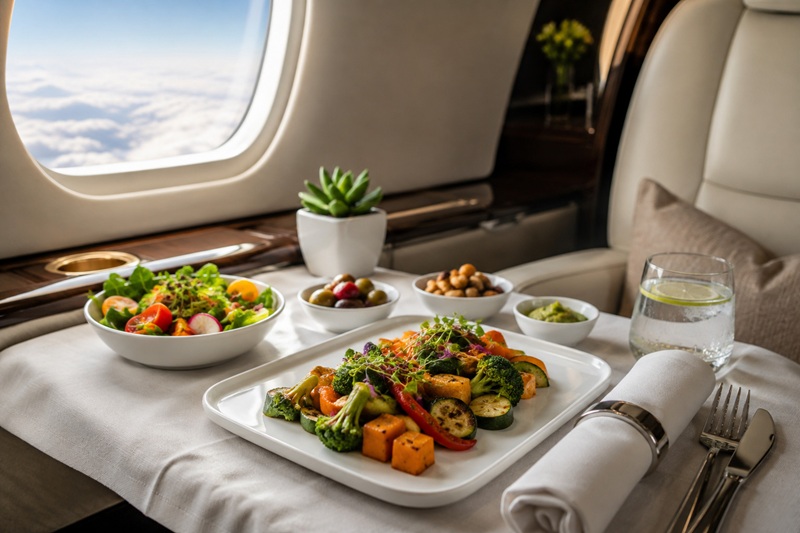
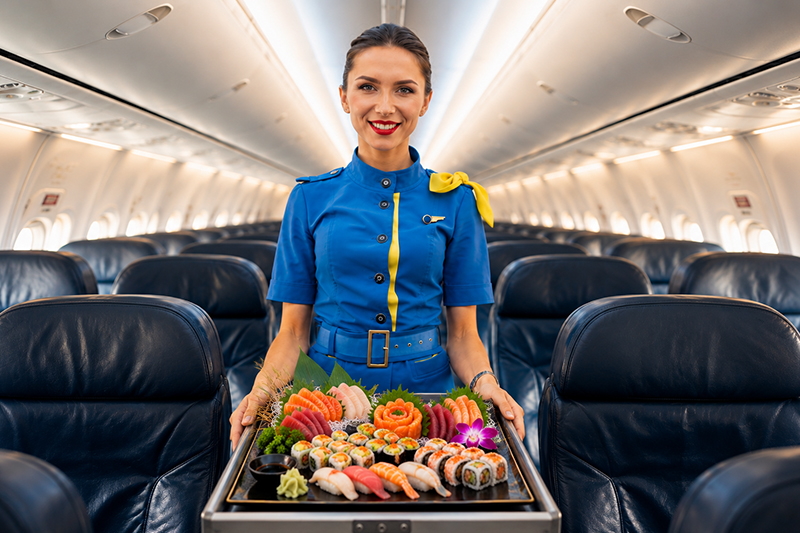
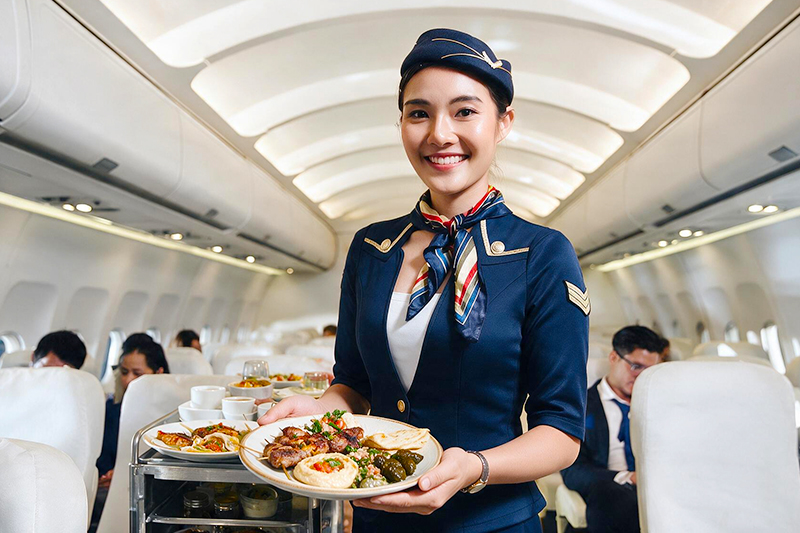
Sourcing quality food on short notice in the Caribbean has historically been the weak link in regional business aviation. Nassau breaks that pattern. The city has a mature hospitality sector, resort-based chef talent through Baha Mar and Atlantis, and a fresh seafood supply chain unmatched in the region. Coordination still matters. Effective jet catering services for Nassau operations require:
- Confirmation of dietary and cultural preferences at booking
- HACCP-compliant cold chain from kitchen to aircraft galley
- Delivery timed to handling, not to scheduled departure
- Menu design that accounts for onward leg duration and altitude effects on palate
Dark Wing Inflight coordinates Nassau catering through a regional network of hotel kitchens and independent VIP caterers, with menus available across Bahamian, Continental, Asian, Middle Eastern, halal, kosher, and dietary-restricted profiles. For crews unfamiliar with regional sourcing logic, our guide to the rules of catering on private jets is a useful starting point.
Planning a Nassau Stopover: Practical Tips
- Book handling 72 hours out during high season (December to April)
- Confirm US Preclearance eligibility for onward US legs at arrival slot request
- Place catering orders a minimum of 12 hours before wheels-up
- Request a customs officer on aircraft for overnight arrivals after 22:00 local
- Coordinate ground transport through the FBO for security continuity
For flight departments managing multi-stop Caribbean rotations, our guide to managing inflight catering across complex itineraries is often useful at the coordinator level.
The Bottom Line
Nassau earns its place on serious private aviation itineraries because it solves three problems at once. It positions operators inside the primary Caribbean transit routing. It compresses US arrival friction through preclearance. And it gives principals a destination worth spending time in rather than merely passing through. For flight departments building routes across the Atlantic basin, that combination is difficult to replicate elsewhere in the region.
Dark Wing Inflight supports Nassau operations through a curated network of Bahamian hotel kitchens, independent VIP caterers, and Michelin-trained chefs, all coordinated by a 24/7/365 multilingual team spanning 2,800-plus partners across 2,000-plus airports in 135 countries. To arrange catering for an upcoming Nassau rotation, call +44 204 577 0985, message WhatsApp +33 787 346 458, or email info@darkwinginflight.catering. For menu planning support or to explore Bahamian regional options, our team responds within the hour, day or night.
Frequently Asked Questions
Which airport do private jets use in Nassau?
Private jets use Lynden Pindling International Airport (IATA: NAS, ICAO: MYNN), located on New Providence Island approximately 15 kilometres west of downtown Nassau. It is the primary and only significant general aviation gateway serving the capital, with two dedicated FBOs handling business aviation traffic separately from commercial operations. There is no secondary business aviation field of comparable capability serving Nassau itself.
Does Nassau have US Customs Preclearance for private aircraft?
Yes. Lynden Pindling International is one of a limited number of airports outside the United States offering US Customs and Border Protection preclearance. Private jet passengers clear US customs and immigration in Nassau before departure, then arrive at any US destination as a domestic flight, which meaningfully speeds trip flow and expands the list of eligible receiving airports on the US side.
What are the FBO options at Nassau airport?
Two FBOs serve Nassau: Odyssey Aviation, the primary full-service facility with hangarage and crew rest, and Jet Nassau, a boutique operation focused on fast-track handling and discreet passenger flows. Both offer customs coordination, fuel uplift, ground transport arrangement, and dedicated catering coordination for arriving and departing aircraft.
How much notice does Nassau catering require?
Standard orders should be placed 12 to 24 hours in advance for most menu profiles. Complex or specialised menus, including allergen-restricted, halal, kosher, or premium wine service, benefit from 48 hours of notice. Through our Bahamian partner network, we accommodate short-notice orders when regional stock and preparation windows allow.
Is Nassau a reliable stopover during hurricane season?
Nassau is operationally reliable outside of active named-storm periods. Bahamas Civil Aviation Authority coordination and Nassau Airport Development Company operational planning kept the airport open through most of the 2025 season, with brief closures only during direct storm impacts. Prudent operators still build 24 hour flex into hurricane-season itineraries between June and November.