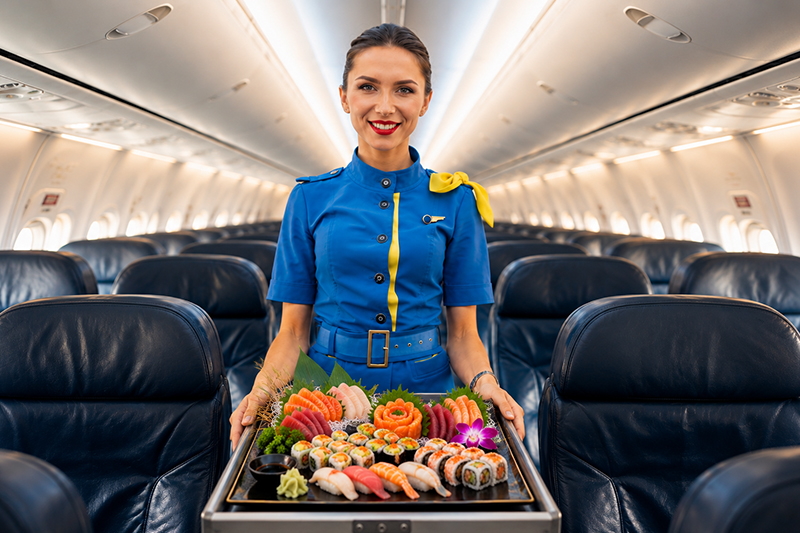
Caviar sits at the top of the private aviation service pyramid for a reason. It carries the weight of expectation before the tin is even opened. A single misstep in temperature, presentation, or timing can undermine an otherwise flawless flight. Cabin crews, principals, and flight departments increasingly view caviar not as an add-on but as a signal of how seriously the entire onboard experience has been thought through. Premium onboard service volumes in private aviation are projected to keep rising through 2026, and luxury proteins like caviar are taking a larger share of that growth. Getting this course right takes far more than buying an expensive tin. It takes sourcing discipline, chilled-chain rigour, cabin awareness, and a service culture built around detail.
Why Caviar at Altitude Behaves Differently
Cabin pressure and dry air noticeably dull taste and smell above 30,000 feet. Salt perception shifts, and umami-heavy foods often read flatter than they would on the ground. Caviar, which depends on a fine balance of brine, fat, and marine minerality, is unusually sensitive to this. A tin that tasted perfectly seasoned in the tasting room can feel muted or overly salty an hour into a long-haul leg. Understanding this reality is the first tip that separates competent service from truly five-star execution. Selection, portioning, and pairings all need to be calibrated for the pressurised environment, not the ground kitchen.
Sourcing With Purpose
Every serious caviar programme begins with the tin. Osetra, Sevruga, Kaluga hybrid, and premium farmed Siberian varieties each behave differently in the cabin. Osetra tends to hold its nutty profile well at altitude, while lighter, more delicate roes can lose definition. Sourcing should be traceable to the sturgeon farm, with clear harvest dates and salt percentages. Malossol grades, typically under 5 percent salt, are preferred for principals who dislike aggressive brine. For flight departments working across regions, a partner network matters enormously. Effective catering private jets programmes rely on relationships with specialist purveyors close to major hubs, so a tin flown into Nice, Teterboro, or Dubai has spent as little time as possible in transit.
The Chilled Chain From Kitchen to Cabin
Temperature is where most caviar service quietly fails. The product should be held between 26 and 32 degrees Fahrenheit from purveyor to galley, never frozen, and never allowed to sit above 40 degrees for more than a few minutes before service. Practical steps that consistently protect quality include:
- Booking delivery within a tight window before departure, ideally under two hours
- Storing tins on gel packs rated for sub-freezing, not standard ice
- Keeping tins sealed until the final moment before plating
- Using a chilled mother-of-pearl or bone spoon, never metal, which reacts with the roe
Cabin crews should also be briefed on the exact service plan, including when to bring the tin forward from the galley chiller. Flight departments that formalise this into their pre-flight checklist see far fewer service issues on the day. Our guide on the smartest way to manage inflight catering covers this coordination in more depth.
Presentation That Respects the Product
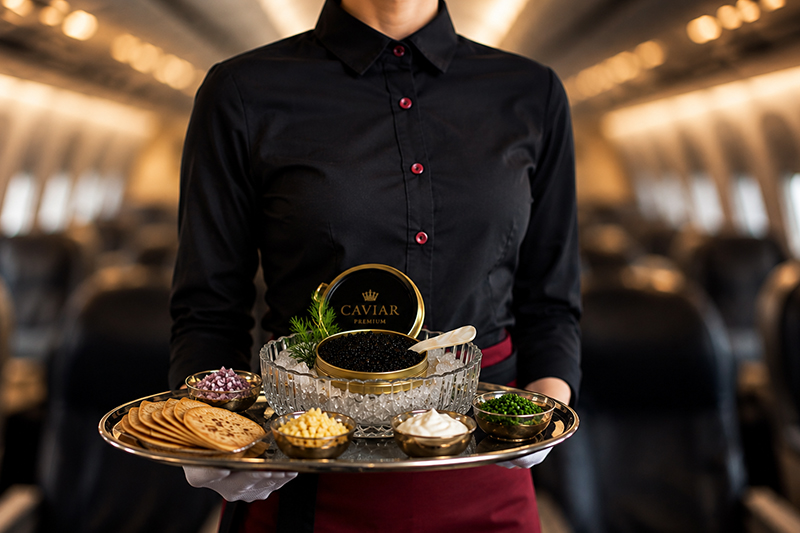
Five-star presentation is understated. A tin nested in crushed ice on a linen-lined silver coupe still sets the highest standard. Individual bone-china bowls chilled in advance work equally well for multi-guest cabins. Accompaniments should support the roe rather than compete with it. A classic set includes:
- Warm blinis or freshly toasted brioche points
- Crème fraîche held at 38 to 40 degrees Fahrenheit
- Finely chopped shallot, chive, and hard-boiled egg white and yolk served separately
- Cold, neutral bread rather than anything heavily seasoned
Champagne is the default pairing, though a well-chilled premium vodka served in a frozen shot glass remains a request from many principals. Cabin lighting also matters. Warm, indirect light shows the roe's natural sheen without the harsh reflections of overhead LEDs.
Service Timing and Cabin Etiquette
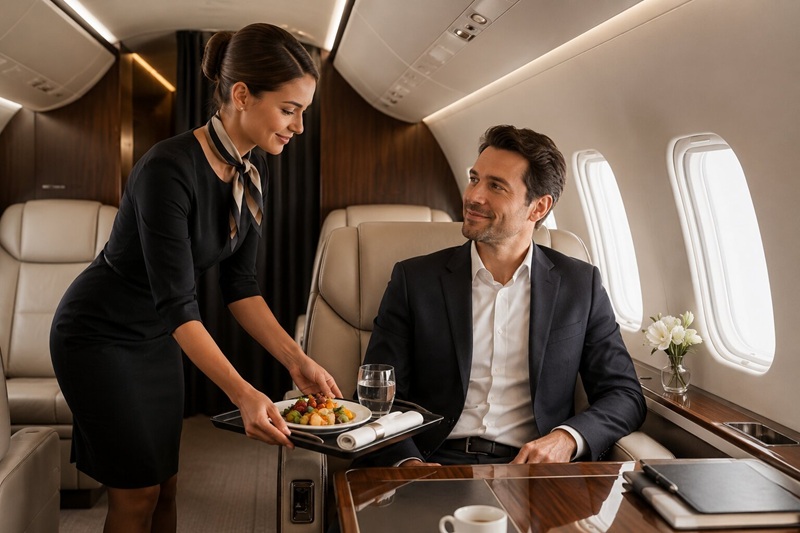
Caviar is almost always served early in the flight, after take-off but before heavier courses. Serving it too late risks palate fatigue and compromises the effect. Cabin crew should present the tin closed, open it in front of the principal, and portion at the guest's request rather than pre-plating in the galley. A standard portion is 30 grams per guest, though repeat orders on longer legs are common. Small details make the difference: a fresh spoon between tins, a napkin change before and after, and a quiet check on whether the guest prefers accompaniments served or held back. Discretion, not ceremony, defines the best cabin service.
Regulatory and Documentation Essentials
Caviar is one of the most regulated luxury foods in the world. Under CITES rules on sturgeon and caviar trade, all commercial sturgeon caviar must carry a standardised labelling code identifying species, country of origin, producer, and batch. Reputable purveyors provide full documentation with every tin, and serious private flight catering programmes retain copies for each order in case of customs inspection on international legs. This matters especially for flights routing through jurisdictions with strict luxury food import controls, where missing paperwork can delay clearance or lead to seizure. Flight departments benefit from working with catering partners who understand these controls without needing to be reminded.
Choosing the Right Catering Partner
The right partner turns caviar service from a logistical risk into a reliable brand moment. Dark Wing Inflight coordinates specialist purveyors, chilled logistics, and cabin service standards across a network of 2,800 plus partners in more than 135 countries, so principals experience the same quality in Van Nuys as they do in Nice or Singapore. For flight departments, that consistency is often the single most valuable feature of a catering programme. It is worth asking any provider three questions before placing a first caviar order: where the roe is sourced from, how the chilled chain is protected end to end, and how documentation is handled for international routings.
Conclusion
Five-star caviar service in the air is a discipline, not a decoration. It rewards flight departments and cabin crews who take sourcing, temperature, presentation, and timing seriously, and it exposes anyone who treats it as a routine add-on. Principals notice the difference immediately. A tin served at the right temperature, with the right accompaniments, at the right moment in the flight, communicates a level of care that shapes how the entire trip is remembered. As private aviation continues to grow through 2026, the expectation around premium onboard service is only rising. Building a caviar programme around traceable sourcing, tight chilled logistics, restrained presentation, and quiet, confident cabin etiquette is the most reliable way to meet that expectation consistently, at any airport the flight departs from or arrives into.
Frequently Asked Questions
What is the ideal serving temperature for caviar on a private jet?
Caviar should be served between 26 and 32 degrees Fahrenheit, straight from a properly chilled tin. Anything warmer flattens the flavour and softens the pearls. Gel packs rated for sub-freezing, not standard ice, are the safest way to hold the product in the galley before service.
How much caviar should be ordered per guest for a long-haul flight?
A standard portion is 30 grams per guest for a first service. On long-haul legs where caviar is offered a second time, plan for 45 to 60 grams total per guest. Ordering slightly above the guest count gives cabin crew flexibility without overstocking.
Which caviar varieties perform best at altitude?
Osetra and Kaluga hybrids tend to hold their profile well in pressurised cabins because their nutty, mineral notes remain distinct despite the taste-dulling effect of altitude. Lighter, more delicate roes can lose definition and are often better suited to shorter flights or ground service.
Can caviar be catered at short notice for private aviation?
Yes, if the catering provider has strong relationships with specialist purveyors near major private aviation hubs. Our team regularly fulfils caviar requests on short notice through a global partner network, provided the chilled chain and documentation requirements can be met within the available window.
What documentation should accompany caviar on international flights?
Every tin of commercial sturgeon caviar should carry the CITES labelling code showing species, origin, producer, and batch. Serious catering partners retain copies of purchase and export documents for each order, which can be presented on request during customs inspection at international destinations.