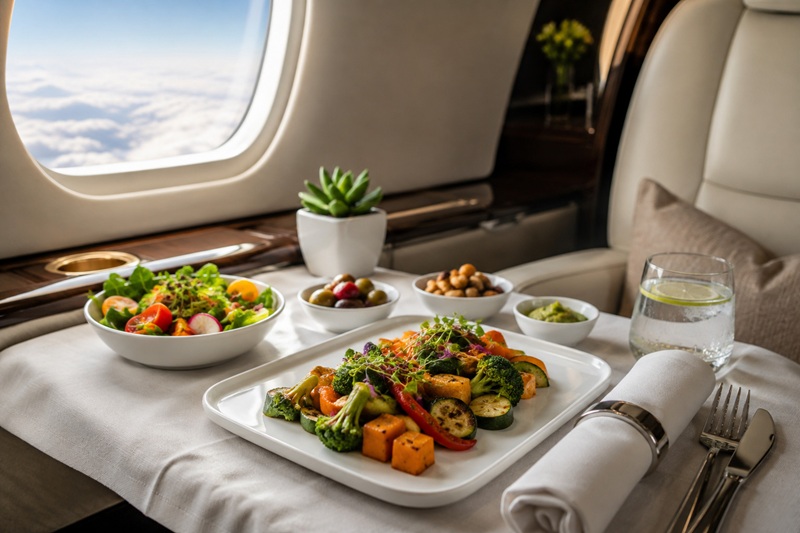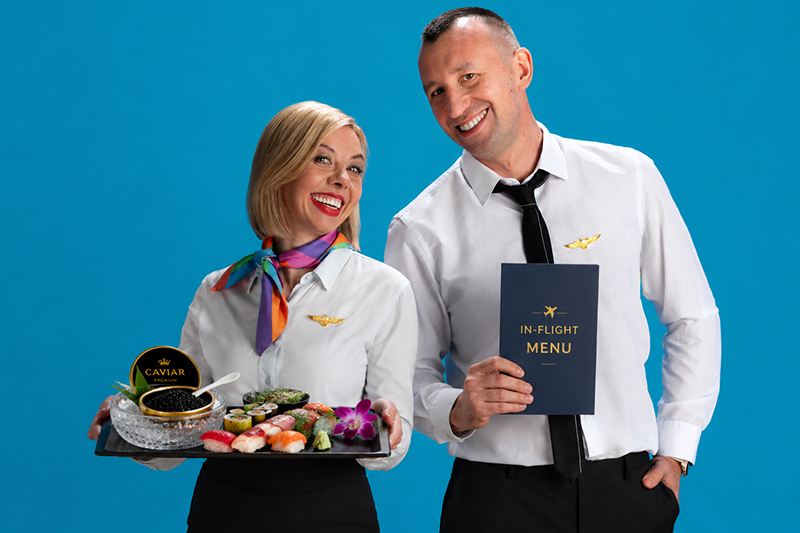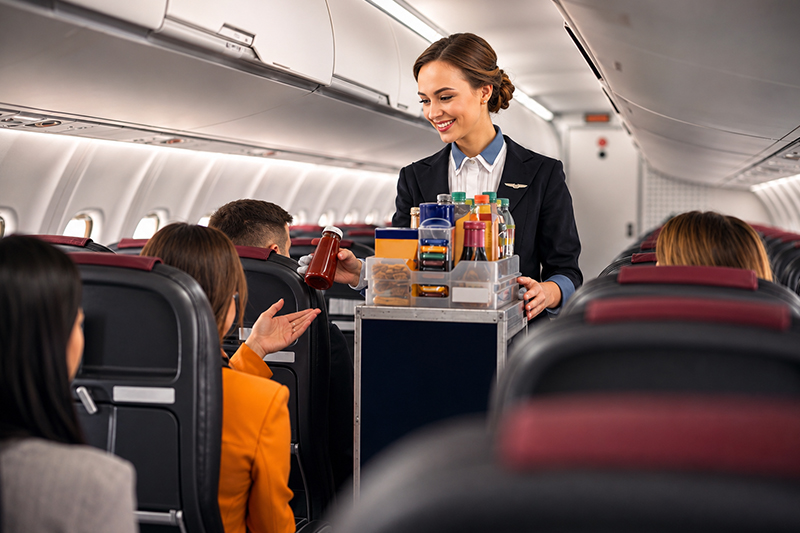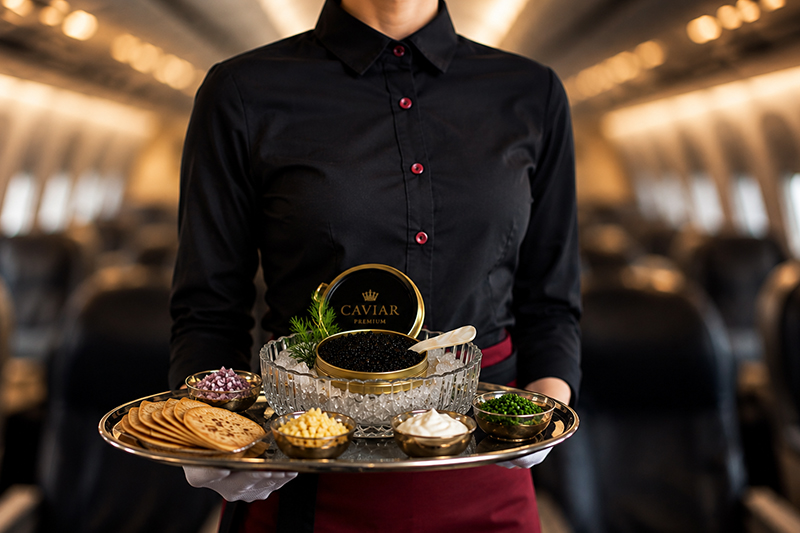
A private jet arriving in Geneva at 04:20 with two vegan passengers, one kosher principal, and a last-minute request for fresh Ossetra caviar is not a task for a good restaurant kitchen. It is an aviation problem dressed as a food problem. In 2026, this distinction is sharper than at any point in the history of business aviation, and it is the single reason a handful of specialist providers now dominate the premium end of the market while conventional kitchens struggle to scale beyond a single tail number.
Private jet movements have continued their steady climb through 2025, with WingX reporting global bizjet activity holding at record levels well above pre-pandemic baselines, and Honeywell projecting up to 8,500 new business jet deliveries through 2034 in its latest Global Business Aviation Outlook. That volume of flying does not just demand more meals. It demands a category of provider built specifically for the operational realities of the flight deck and the cabin.
The Operational Reality Behind Premium Inflight Catering
Standard restaurant kitchens are built for diners who walk in, sit down, and eat within thirty minutes. Flight catering operates on a completely different clock. Meals are prepared, chilled, transported, held at temperature, delivered airside, uplifted, stored in a galley for hours, and finally regenerated at 41,000 feet by a crew member who is not a chef.
Every one of those stages is a failure point. Specialist aviation providers design their kitchens, menus, and logistics around this reality from day one. Standard kitchens rarely can, and the failure usually shows up in the small details first: a sauce that separates on regeneration, a bread roll that turns leathery at cruise, a salad that arrives with condensation pooled in the base of the tray.
The Aviation-Specific Constraints Most Kitchens Ignore
Cabin pressure reduces the palate's sensitivity to salt and sweetness by roughly 30 percent, a phenomenon documented in research by Lufthansa and the Fraunhofer Institute, which changes how dishes must be seasoned.
Galley equipment is limited to convection ovens, chillers, and basic warming drawers, ruling out any dish that depends on last-minute searing, plating theatre, or delicate emulsions.
Airside access requires airport security passes, HACCP-compliant refrigerated vehicles, and documented cold chain records, none of which a standard commercial kitchen maintains.
Turnaround windows are often under two hours between a request landing and the aircraft departing, particularly on repositioning flights and government charters.
What Actually Defines an Elite Aviation Catering Operation in 2026
The phrase top flight catering gets used loosely, but the operators who genuinely qualify share a specific set of characteristics that a hotel banquet team or a Michelin restaurant simply cannot replicate on their own.
1. A Verified Global Supply Network, Not a Franchise
Elite providers do not own kitchens in every city. They curate a vetted network of Michelin-star chefs, five-star hotels, and specialist VIP caterers who have been audited for food safety, cold chain integrity, and aviation delivery experience. This is the model that allows a request placed in London at 22:00 to be fulfilled in Marrakech by 07:00 the next morning, using a hotel kitchen the operator has been working with for years.
At Dark Wing Inflight, this network extends to more than 2,800 partners across 2,000 airports in 135 countries, which is the practical minimum for genuinely global reach in 2026. Anything smaller leaves gaps in secondary hubs where private jets frequently divert.
2. Genuine 24/7/365 Dispatch, Not Answering Machines
Private aviation does not observe business hours. A dispatcher who understands ICAO codes, slot times, handling agents, and how to reach a pastry chef in Tbilisi at 03:00 local is not the same as a call centre reading from a script. Serious operators staff their rooms with people who have aviation backgrounds, speak the languages of the regions they cover, and know when a diplomatic charter cannot afford a customs delay on a caviar consignment. This is a small point that carries a lot of weight when a flight plan changes at short notice.
3. HACCP and IFSA Alignment as a Baseline
Hazard Analysis and Critical Control Points is the internationally recognised framework for food safety, and its principles are formalised for aviation through the International Flight Services Association operational standards. Any caterer working with private jets in 2026 without documented HACCP procedures and IFSA-aligned handling is a liability, not a partner. The
This baseline is reinforced by the EU regulatory framework on food hygiene, which governs how any operator serving flights departing European airports must handle temperature control, traceability, and allergen management.
4. Cultural and Dietary Precision at Scale
Halal, kosher, Jain, strict vegan, gluten-free, low-FODMAP, and clinical medical diets are routine requests on VIP flights, not exceptions. Standard kitchens can handle one or two of these on a given day. Specialists handle all of them across dozens of concurrent flights, with verified supplier chains and separate preparation zones to prevent cross-contamination.
Where Standard Kitchens Consistently Fall Short
It is worth being specific about the failure modes, because they are predictable and they are the reason flight departments eventually move to specialist providers after one or two bad experiences.
- Packaging: Restaurant containers are not designed for turbulence, altitude pressure differentials, or reheating in galley ovens. Dishes arrive leaking, collapsed, or reheated to a rubbery texture.
- Documentation: Aviation clients need allergen sheets, ingredient provenance, and temperature logs. Most restaurants cannot produce these on demand.
- Timing: A restaurant that runs fifteen minutes late costs a diner a delayed dessert. A caterer that runs fifteen minutes late costs the operator a missed slot, a repositioning fee, and a very unhappy principal.
- Volume flexibility: A crew of two, a family of eight, and a corporate delegation of eighteen may all need to be served from the same kitchen on the same day, with different menus.
The 2026 Benchmarks: What Flight Departments Are Actually Measuring
Procurement standards inside sophisticated flight departments have tightened considerably. In conversations across the industry through 2025 and into 2026, the criteria that repeatedly surface when selecting a VIP inflight catering partner are consistent, and increasingly they are written into formal service agreements rather than left to relationship management.
- Response time: Confirmed quote within 30 minutes of request, regardless of destination or hour.
- Menu development: Custom menus produced within 24 hours for repeat principals, with dietary history retained across trips.
- Traceability: Full ingredient provenance available for allergens, religious certifications, and high-risk items such as raw fish or unpasteurised dairy.
- Delivery accuracy: Airside delivery within a 15-minute confirmed window at 95 percent or higher.
- Multilingual coordination: Ability to brief handlers and crew in the local language of the departure airport.
These are not aspirational metrics. They are the working expectations of the flight departments running the largest fleets in Europe, the Middle East, and North America in 2026. Providers who cannot demonstrate them in writing lose the tender.
For crew managing catering coordination on repeat routes, our overview of the smartest way to manage inflight catering explains how consolidated dispatch reduces error rates across multi-leg trips.
The Chef Network Advantage
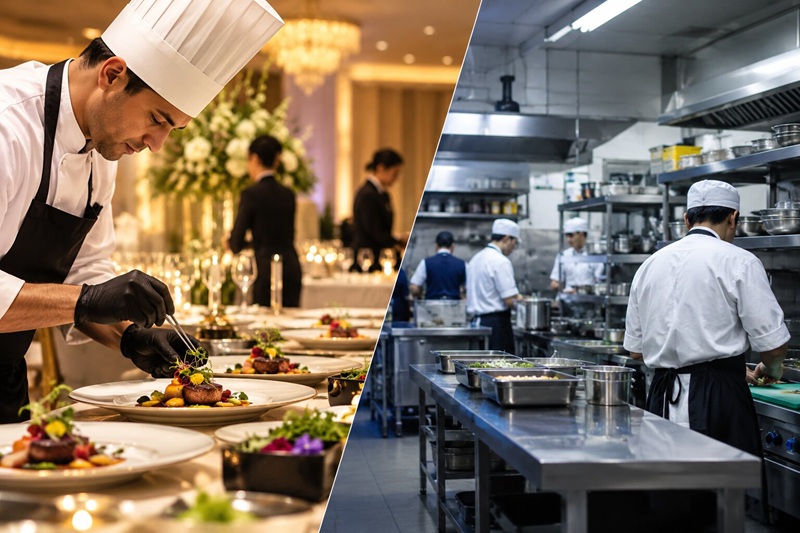
The most important structural difference between top flight caterers and standard kitchens in 2026 is access to talent. A specialist provider can, for a single flight, source a signature dish from a Michelin-star kitchen in Paris, pair it with a bento box prepared by a Tokyo hotel partner, and complete the service with a plated dessert from a boutique patisserie in Zurich, all coordinated to arrive at the FBO within the same 20-minute window. No single kitchen, however celebrated, can do this. The logistics alone rule it out, and the commercial arrangements to hold multiple chef partners on standby for one tail number simply do not exist outside a specialist network.
This model matters because the passengers on ultra-long-range aircraft, whether a Global 7500 or a G700, expect the meal on the aircraft to be indistinguishable from the meal they would receive at the destination hotel. Meeting that expectation is a network problem, not a cooking problem.
Our approach to premium private jet catering and bespoke meal options explains how signature dishes from partner chefs are packaged, transported, and regenerated onboard without loss of quality.
Technology and Data: The Quiet Differentiator
Behind the visible service, the leading operators in 2026 run on integrated dispatch platforms that hold principal preferences, allergen histories, past menus, and preferred suppliers by airport. Standard kitchens rely on email and memory. When a repeat client flies into a new city, a specialist provider already knows they take their coffee without sugar, avoid shellfish, and prefer a specific brand of sparkling water. This continuity, delivered across dozens of airports, is what conversion of a first order into a long-term account actually depends on.
Crews looking for a practical grounding in cabin service protocols will find our guide to the rules of catering on private jets a useful reference for aligning galley practices with what specialist caterers actually deliver.
Sustainability and Waste: The Emerging 2026 Requirement
One shift that has moved from optional to expected during 2025 is documented sustainability in inflight catering. Flight departments now routinely ask for reduced single-use plastics, sourcing notes on seafood, and carbon reporting on the catering leg of a trip. Elite providers have responded with recyclable galley-safe packaging, verified sustainable protein sourcing, and structured food-waste tracking that feeds into the operator's wider ESG reporting. Standard kitchens rarely produce this documentation, and when tenders now weight sustainability alongside price and quality, the absence of clear reporting is enough on its own to disqualify a supplier.
Closing Thoughts
The gap between elite aviation caterers and standard kitchens in 2026 is not a matter of ingredient quality or chef reputation. It is a matter of whether the entire operation, from menu design to airside handover, has been engineered around the realities of aviation. Standard kitchens produce excellent food for people who are sitting still. Specialist providers produce excellent food for people who are moving at 500 knots across time zones, with cabin altitude, cultural sensitivities, and unpredictable schedules all working against them at once. That is a different discipline entirely, and it is why flight departments running serious aircraft have consolidated their catering with providers built for the job. In a market where a single missed delivery can cost an operator a principal, working with a partner whose only job is aviation catering is no longer a preference. It is the baseline.
FAQs
What is considered top flight catering in private aviation?
This service category refers to inflight food service delivered by specialist providers who combine aviation-grade food safety, a curated global network of chefs and hotels, and 24/7 dispatch built for private jets. It is distinguished from standard restaurant catering by HACCP-compliant handling, airside delivery capability, and menus engineered for cabin altitude and galley equipment. We work through more than 2,800 vetted partners across 2,000 airports so that principals receive the same standard of food in a secondary European airport as they would in London or Dubai.
How do top flight caterers ensure food safety on long-haul private flights?
We follow HACCP principles end to end, from ingredient sourcing through cold chain transport, airside handover, and regeneration guidance for the crew. Every consignment carries temperature logs, allergen sheets, and ingredient provenance where required. On long-haul flights above eight hours, menus are designed with dishes that hold structurally and microbiologically over the full duty period, which means avoiding high-risk raw preparations for late-service courses and specifying reheating instructions calibrated to the specific galley equipment on the airframe.
How quickly can top flight caterers respond to last-minute requests?
For established accounts, confirmed quotes typically arrive within 30 minutes of a request, and airside delivery can be arranged within two to three hours at major hubs. At Dark Wing Inflight, our multilingual operations desk runs 24/7/365, coordinating directly with handling agents and partner kitchens in the local time zone. Last-minute requests at secondary airports depend on partner proximity, which is where a genuinely global network across 135 countries becomes the operational difference between a confirmed order and a regretful decline.
Why can standard restaurants not simply cater private jets directly?
Restaurants are built for immediate service, not for the aviation cold chain. They typically lack airport security passes, HACCP documentation, aviation-grade packaging, and menu formats designed for galley regeneration. They also cannot handle the operational tempo of aviation, where a slot change can compress a delivery window to under 45 minutes. Aviation-specialist providers exist precisely to bridge restaurant-quality food and aviation-grade logistics, drawing on partner kitchens while owning the safety, packaging, and delivery layers themselves.
What should flight departments look for when selecting a VIP catering partner in 2026?
Look for verified global reach measured in confirmed partner airports rather than marketing coverage claims, documented HACCP and IFSA alignment, 24/7 dispatch staffed by people with aviation backgrounds, and a track record with the specific dietary and cultural requirements of your principals. Ask for references from other Part 91 or Part 135 operators, request sample allergen documentation, and test the response time on a mock request before signing. Providers who cannot answer these clearly are unlikely to perform when a real turnaround pressure hits.