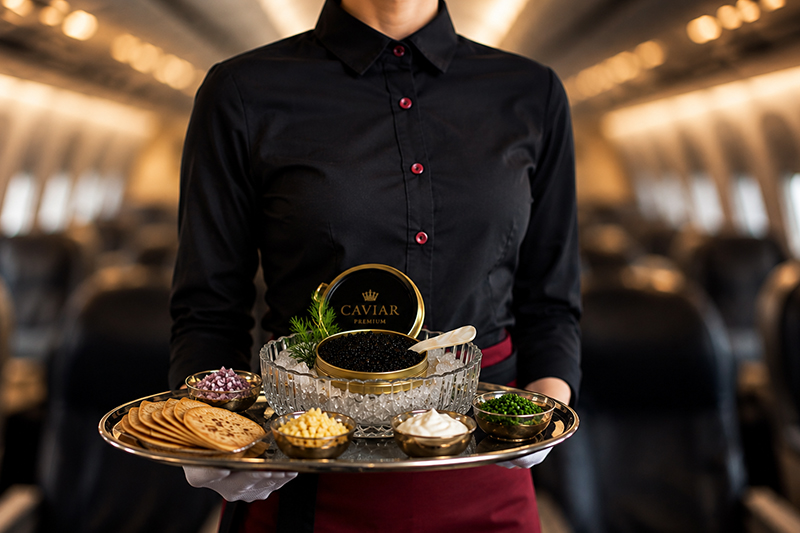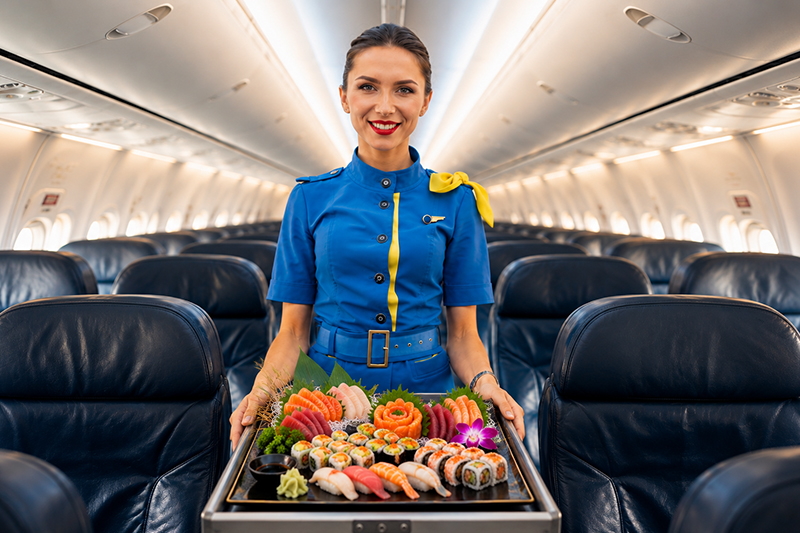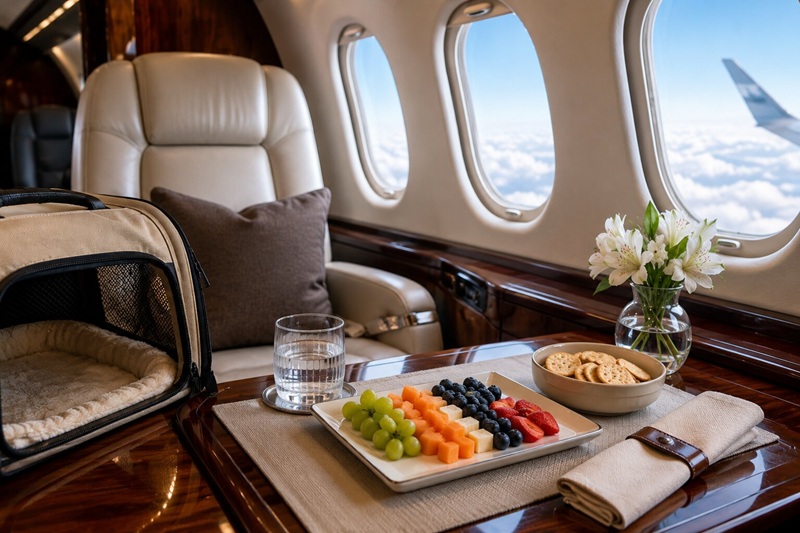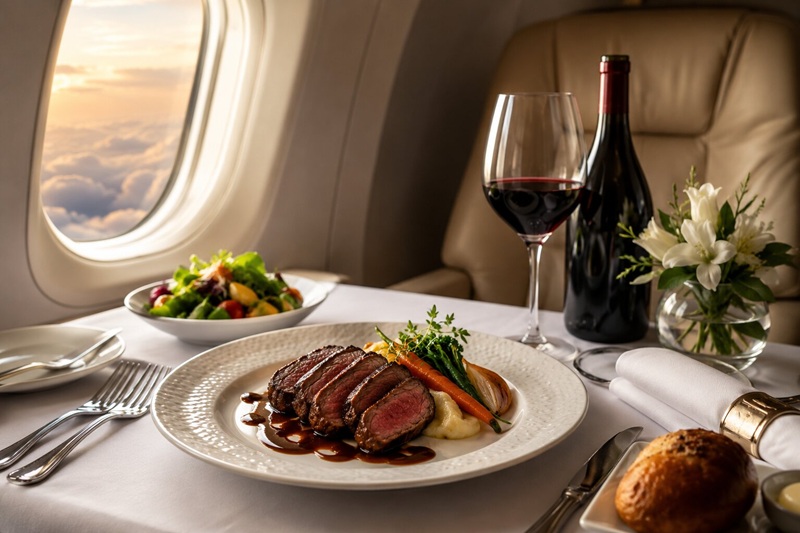
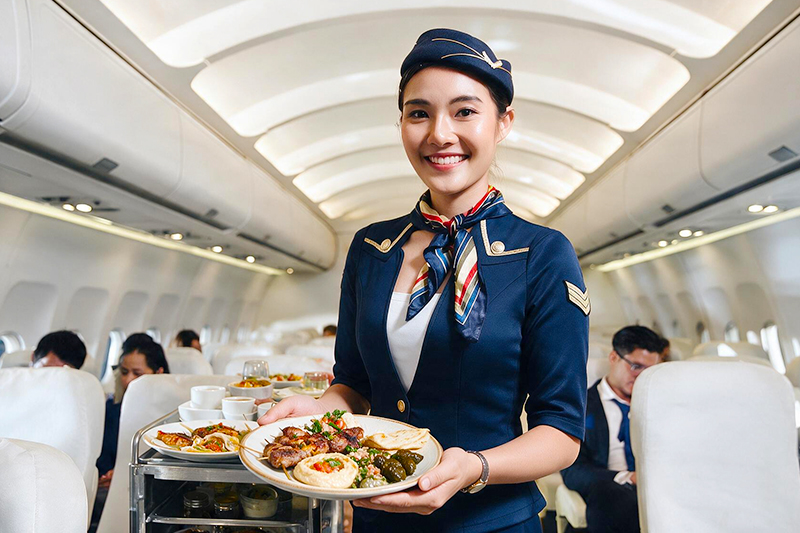
Middle Eastern cuisine has moved from regional favorite to a defining influence in premium aviation dining. Passengers flying through Dubai, Riyadh, Doha, Jeddah, and Abu Dhabi expect menus that reflect the region's heritage while meeting the exacting standards of private jet travel. For flight departments and charter operators, this shift is more than a menu preference. It shapes sourcing decisions, halal compliance protocols, temperature control planning, and cabin service choreography.
The Middle East is also one of the fastest-growing private aviation markets globally, with sustained business jet activity across the Gulf in 2026. That growth places new demands on catering partners who must deliver authentic regional dishes, honor religious and dietary requirements, and maintain the presentation standards VIP passengers expect at 40,000 feet. This blog examines how Middle Eastern cuisine is being served in private cabins today and what operators should ask of their catering partners.
The Distinct Flavor Profile of Middle Eastern Cuisine
Middle Eastern cuisine draws from Levantine, Gulf, Persian, and North African traditions. Each carries its own signature techniques, spices, and ingredient hierarchies. Levantine cooking, rooted in Lebanon, Syria, Jordan, and Palestine, leans on olive oil, sumac, za'atar, tahini, and fresh herbs. Gulf cuisine features saffron, cardamom, dried lime (loomi), and slow-cooked rice dishes such as machboos and kabsa. Persian influence brings barberries, pomegranate molasses, and delicate saffron rice preparations. North African contributions include harissa, preserved lemon, and tagine-style braises.
For private jet menus, this diversity is an asset. A single flight from Dubai to London may feature a mezze grazing selection with hummus, muhammara, and labneh, followed by a lamb ouzi service, and finish with baklava and Arabic coffee. Chefs designing these menus must understand not only the flavors but the regional context each dish carries. A Saudi principal may expect a distinctly different lamb preparation than a Lebanese passenger, even when both dishes appear on the same catering brief.
Sourcing Ingredients Across a Complex Supply Landscape
Authentic Middle Eastern cooking depends on ingredients that do not travel well or that require specific certifications. Fresh mint, parsley, and mountain thyme lose their character within hours. Aged sumac from Aleppo, Iranian saffron, and Omani honey each have distinct provenance that discerning palates recognize immediately. Sourcing at the required quality means building relationships with regional suppliers who can deliver to airport catering facilities on short notice.
Halal certification adds another sourcing layer. Meat and poultry must come from certified slaughterhouses, and cross-contamination controls apply from kitchen intake through to cabin delivery. In markets such as Dubai, Doha, and Riyadh, halal is the default. In secondary hubs across Europe, Asia, and Africa, dedicated halal supply chains are less mature, which is where a broad partner network becomes decisive.
An international inflight catering company with established regional kitchens can bridge these gaps. Dark Wing Inflight coordinates authentic Middle Eastern menus across more than 2,000 airports by drawing on local Michelin-starred chefs, five-star hotel kitchens, and specialist caterers who understand regional standards. Our approach to sourcing is explained further in our guide to premium private jet catering services and bespoke meal options.
Designing Menus for Private Jet Cabins
Cabin conditions change how Middle Eastern dishes behave. Reduced humidity dulls aroma, and pressurization can flatten the perception of salt, acid, and heat. Chefs planning menus for private jets adjust seasoning upward, favor dishes that hold well after reheating, and design plating that survives light turbulence.
Practical menu principles that work well at altitude include:
- Mezze platters served cold, plated to preserve visual contrast and texture
- Slow-braised meats such as lamb shank in ras el hanout, which improve during holding
- Rice dishes finished with fresh herbs and pomegranate at the point of service
- Grilled proteins served with vibrant sauces prepared to travel separately
- Desserts with structural integrity, such as basbousa, ma'amoul, and knafeh portions
Fresh bread is a specific challenge. Manakish, saj, and khubz lose quality quickly once prepared. Solutions include partial baking on the ground with a finishing warm-through in the galley, or last-mile delivery from bakery partners close to the aircraft. Our internal reference on the smartest way to manage inflight catering covers timing and coordination in more detail.
Halal Compliance and Religious Considerations
Halal is not a single standard. Certifying bodies differ across markets, and principals often have preferences about which authorities they trust. Some clients require Gulf Cooperation Council recognized certification, others accept regional bodies in Malaysia or the United Kingdom. Catering teams must confirm which certification applies before menu confirmation, not at the point of delivery.
Cross-contamination controls extend beyond ingredient sourcing. Kitchen zoning, utensil separation, and dedicated preparation surfaces are standard practice in certified operations. Alcohol handling is a specific area where confusion can arise. Some clients accept alcohol on board for guests while requiring their own service to remain fully halal. Cabin crew briefings should clarify these expectations before the first service.
During Ramadan, catering briefs shift materially. Suhoor and iftar meals require careful timing across time zones, and menu content should reflect the traditional foods clients associate with the holy month. The rules of catering on private jets outline broader compliance considerations that apply alongside religious requirements.
Service and Presentation at Altitude
Middle Eastern hospitality carries a strong presentation culture. Coffee service with cardamom-scented Arabic coffee, dates arranged on stone or brass, and mezze plated in symmetrical arrangements all form part of the expected experience. Private jet galleys must accommodate these elements within limited space and weight constraints.
Practical service planning includes:
- Pre-plated cold courses to reduce galley workload
- Warming plans that hold hot dishes at safe temperatures without drying
- Serviceware selected for weight, thermal performance, and visual weight on tray tables
- Beverage pairings that complement the menu, including non-alcoholic options such as jallab, tamarind sharbat, and rose lemonade
Cabin crew training matters as much as the menu itself. Serving mezze in the correct order, offering Arabic coffee at the right moment, and presenting sweets after tea rather than dessert wine all signal cultural fluency to the passenger.
Operating Across Middle East Hubs
The main private aviation gateways in the region each have their own catering ecosystem. Dubai International and Al Maktoum offer wide access to five-star hotel kitchens and specialist caterers, with short lead times possible for standard menus. Doha Hamad International serves growing business jet traffic and has strong halal supply chains. Riyadh King Khalid and Jeddah King Abdulaziz see high VIP volumes during official visits, Hajj, and Umrah seasons, when demand spikes and lead times extend. Abu Dhabi and Muscat balance government aviation with private charter traffic.
Coordinating across these hubs requires 24/7 dispatch, multilingual liaison, and a clear understanding of local regulations. Inflight catering companies operating in the region must handle customs paperwork for cross-border ingredients, coordinate with FBOs on delivery windows, and respect prayer times when scheduling drop-offs. Dark Wing Inflight manages these variables across 135 countries with a partner network built specifically for this level of complexity. More about our global capabilities is available on our main service page.
Trends Shaping Middle Eastern Inflight Catering in 2026
Several developments are shaping what VIP passengers expect from Middle Eastern menus in 2026. Plant-forward interpretations of traditional dishes are gaining traction, driven by younger principals and health-focused travelers. Chefs are reworking classics such as kibbeh with lentils and mushrooms, and offering vegan versions of manakish with cashew labneh.
Regional gastronomy is being redefined by new-generation chefs across Dubai, Riyadh, and Bahrain who blend heritage recipes with modern technique. Their influence is reaching private aviation through consulting menus and pop-up collaborations that flight departments can request as one-off experiences.
Sustainability is another area of change. Sourcing local produce from Gulf hydroponic farms, reducing single-use packaging, and coordinating shorter supply chains are becoming standard requests in briefs from corporate flight departments. Reports from bodies such as the International Air Transport Association point to sustainability as a defining priority for premium aviation service partners this year.
Conclusion
Middle Eastern cuisine on private jets is no longer a niche request. It sits at the center of how VIP catering is planned across the Gulf and increasingly across long-haul routes into Europe, Asia, and the Americas. Serving it well requires more than a recipe book. It calls for authentic sourcing, rigorous halal protocols, menu engineering that accounts for cabin conditions, and cabin service that respects the cultural weight each dish carries.
For flight departments and charter operators, the practical question is whether your catering partner has the depth to execute at this level in every airport you use. The right partner brings verified halal supply chains, regional chef relationships, and the operational discipline to deliver consistently at short notice. To discuss specific routes, menu concepts, or Ramadan planning, contact our team on +44 204 577 0985, WhatsApp +33 787 346 458, or email info@darkwinginflight.catering. Our specialists are available 24/7/365.
Frequently Asked Questions
Q1. What makes Middle Eastern cuisine well suited to private jet catering?
Middle Eastern menus offer strong flavors that hold up well at altitude, where reduced humidity and cabin pressure dull taste perception. Slow-cooked dishes such as lamb ouzi, kabsa, and mansaf improve during holding, while mezze served cold plate beautifully and require no galley work. Rich spice profiles including saffron, cardamom, sumac, and za'atar keep their character in flight, and traditional desserts such as ma'amoul and baklava travel without losing texture. The cuisine also offers exceptional variety across dietary needs, from vegetarian mezze to protein-rich mains, making it easier to serve mixed groups on the same flight.
Q2. Is all inflight catering in the Middle East halal by default?
In Gulf hubs such as Dubai, Doha, Riyadh, Jeddah, Abu Dhabi, and Muscat, halal is the standard for local catering and applies to all sourcing and preparation. Outside the region, halal availability depends on the airport and the catering partner. Dark Wing Inflight maintains verified halal supply chains across our global network, so private jet clients can expect the same standard whether departing from Kuwait or Kuala Lumpur. Certification bodies differ by country, so it is important to confirm which authority the client accepts before menu sign-off, particularly for government aviation flights.
Q3. How do inflight caterers handle Ramadan menu planning?
Ramadan planning requires coordination across time zones because suhoor and iftar timing depends on the sunrise and sunset at the aircraft's current location, not the departure airport. Menus typically feature traditional iftar openers such as dates, laban, and lentil soup, followed by main courses such as harees, thareed, or grilled lamb. Sweet offerings including qatayef and luqaimat are expected during the holy month. Cabin crew briefings cover fasting times, prayer accommodations, and beverage service protocols. Requests should reach the catering team at least 48 hours in advance where possible to allow proper sourcing.
Q4. Which Middle Eastern dishes are most requested on VIP private jet flights?
The most consistent requests include mezze grazing selections featuring hummus, moutabal, tabbouleh, and fattoush, followed by slow-cooked mains such as ouzi, machboos, or grilled kebabs. Fresh khubz, saj, and manakish are popular for morning departures. Desserts lean toward kunafa, basbousa, and Umm Ali, with Arabic coffee and mint tea closing the service. On long-haul flights, principals often request smaller mezze courses paced across the flight rather than a single large service, which suits Middle Eastern hospitality traditions and works well with cabin rhythm.
Q5. How quickly can VIP Middle Eastern catering be arranged at short notice?
Standard mezze and grilled selections can be arranged in Gulf hubs within four to six hours for most menus, and within two hours for simplified briefs at Dubai, Doha, and Riyadh where partner kitchens operate around the clock. Elaborate menus involving specialty proteins, Ramadan service, or Michelin-partner participation typically need 12 to 24 hours notice. Our 24/7 dispatch team confirms lead times per airport and per menu at the point of request. For same-day requirements, contacting the coordination line directly at +44 204 577 0985 is faster than email routing.