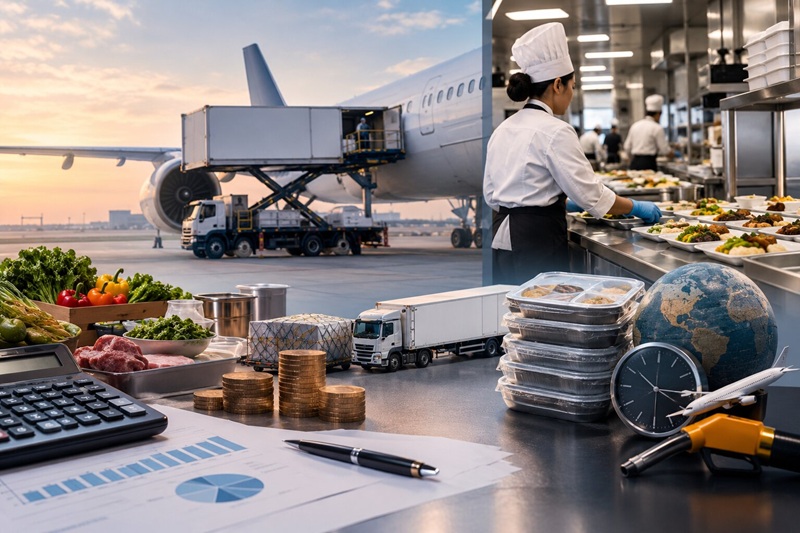
Pricing in inflight catering is one of the most misunderstood areas of the aviation supply chain. A tray that appears on a Gulfstream in Geneva or a widebody in Singapore is the endpoint of a chain covering sourcing, kitchen operations, compliance, cold chain movement, and airside delivery. Each stage carries its own cost weight, and each varies by region, airport access, and client profile.
Flight departments and charter operators are asking sharper questions in 2025 about where catering budgets actually go. This piece breaks down the real cost structure behind global aviation catering companies, moving past sticker prices into the operational economics that shape every quote.
Why Aviation Catering Pricing Looks Opaque
Inflight catering sits at the intersection of hospitality, logistics, and regulated aviation services. A quote absorbs airport access fees, security screening, HACCP compliant handling, temperature controlled transport, and delivery windows measured in minutes.
According to the IATA Global Outlook for Air Transport published in June 2025, worldwide airline operating expenses are projected to reach 913 billion US dollars in 2025, with food and catering forming a measurable share of onboard product spend. Combined with fragmented local sourcing across 135 plus countries, that scale is why identical menus carry very different prices at two nearby airports.
The Six Cost Layers Inside Every Inflight Catering Quote
A single order for a private jet or head of state flight is built from six overlapping cost layers. Understanding them helps buyers evaluate quotes with clarity.
1. Raw Ingredient and Sourcing Costs
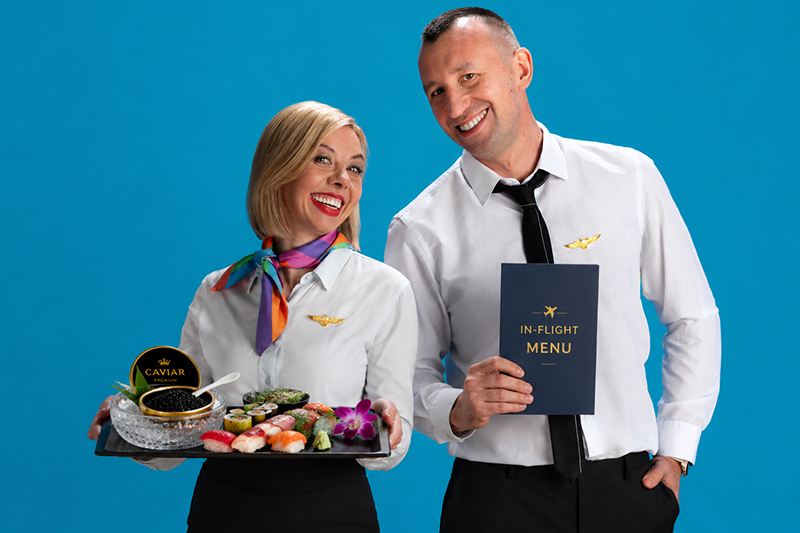
Ingredient sourcing is the most visible line item and the one most affected by commodity movement. Premium proteins, caviar, and specialty imports carry their own volatility. The FAO Food Price Index averaged around 128 points through the first three quarters of 2025, a level that continues to pressure high end menu planning.
- Local vs imported sourcing at each airport
- Certified organic, halal, or kosher supply chains
- Michelin star and 5 star hotel kitchen partnerships
- Seasonal availability and short shelf life items
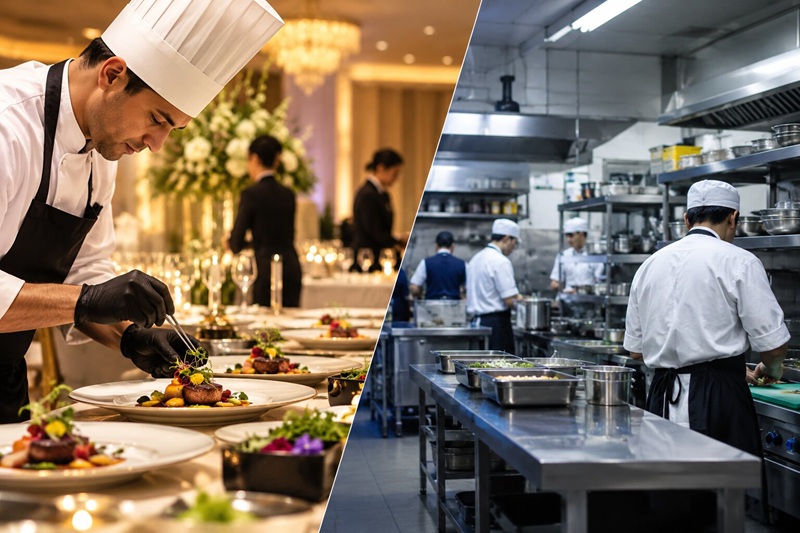
2. Kitchen Production and Labour
Skilled culinary labour is a rising cost at every major hub. Executive chefs, pastry specialists, and dietary experts command premium wages, and production kitchens run overnight shifts to serve global flight schedules. Labour typically accounts for a significant portion of unit cost, with production complexity driving the exact share.
3. Packaging, Presentation, and Onboard Materials
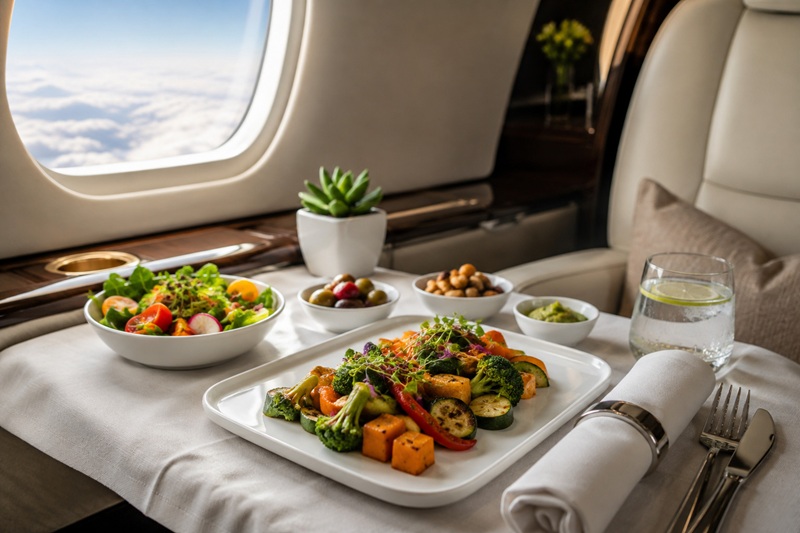
Presentation matters on a private jet in ways it does not in mass market catering. Porcelain, linen, sustainable containers, and custom trays all sit inside the cost structure. Regulatory pressure on single use plastics across the EU and parts of Asia is pushing operators toward higher cost compostable and reusable alternatives.
4. Cold Chain, Transport, and Airside Delivery
Getting food from a production kitchen to an aircraft on a remote stand is a specialised logistics exercise. Refrigerated vans, hi lift trucks, airside permits, security screening, and ramp fees all sit here. At challenging destinations, delivery costs rise sharply when a caterer must drive from a distant city to reach an FBO.
5. Compliance, Safety, and Certifications
Every serious operator runs under HACCP, ISO 22000, or equivalent food safety systems, plus airport specific security clearances. Traceability, allergen control, and cultural handling protocols such as halal certification add documentation layers. Non compliance is not an option in aviation.
6. Overhead, Technology, and 24/7 Coordination
Round the clock dispatch, multilingual coordinators, ordering platforms, and fleet tracking sit inside overhead. Larger networks invest in technology so that a request placed at 03:00 local time in Nassau is confirmed within minutes by a coordinator elsewhere. This invisible layer separates ad hoc caterers from global operators.
How Regional Economics Reshape the Same Menu
A tuna tataki starter in Nice does not cost the same as the same dish in Lagos or Astana. Regional wages, import duties, airport charges, and local supply density all reshape the cost base.
- Western Europe and North America: mature supplier networks, higher labour costs, tight compliance overhead
- Middle East and East Asia: strong premium supply, competitive labour, high airport access fees at major hubs
- Africa, Central Asia, remote islands: fewer certified kitchens, higher transport and sourcing premiums
- Latin America: strong local produce base, variable regulatory environments, cost swings tied to currency movement
This is where working across a broad partner network matters. Dark Wing Inflight coordinates across 2,800 plus partners at over 2,000 airports in 135 countries, absorbing local pricing complexity so operators receive one clean quote rather than a patchwork of regional variables.
Fixed Costs vs Variable Costs in an Airport Catering Company
The economics of a modern operator split into two broad categories. Fixed costs include kitchen leases, certifications, technology platforms, and permanent culinary teams. Variable costs move with order volume and include ingredients, packaging, and delivery.
For buyers, this matters because low volume, high specification private jet orders sit on the same fixed cost base as high volume contracts. Premium private aviation menus therefore carry a proportionally higher share of overhead recovery, a legitimate part of the price rather than a markup.
2025 and 2026 Cost Pressures Buyers Should Watch
Several forces are actively reshaping catering economics into 2026.
- Sustained food inflation on premium proteins and dairy
- Rising airport access and security screening charges at major European hubs
- Regulatory shifts on single use plastics across the EU and parts of Asia Pacific
- Growing demand for verified halal, kosher, plant based, and allergen safe production lines
- Continued private aviation growth, with WingX reporting global business jet activity through 2025 tracking close to record post pandemic levels
Buyers who understand these forces are better placed to evaluate quotes and identify caterers who genuinely control quality end to end. Our overview on premium private jet catering services and bespoke meal options walks through the sourcing and planning philosophy behind top tier orders.
What Separates a Global Operator From a Local Caterer
Local caterers can be excellent inside their home city. What they usually cannot deliver is consistent quality across a multi leg trip touching five countries in a week. Global providers invest in three areas that pure local operators do not.
- A vetted partner network with audited kitchens rather than one owned facility
- Central coordination that handles time zones, translations, and last minute changes
- Standardised safety and cultural protocols applied identically at every airport
This is the operating logic behind how Dark Wing Inflight manages orders across the network. Our guide on the rules of catering on private jets explains why safety and coordination sit at the centre of every successful trip.
How to Read a Catering Quote Like an Operator
When comparing quotes from different providers, focus on structure rather than only the total.
- Ask which items are sourced locally versus imported
- Confirm HACCP or ISO 22000 status of the production kitchen
- Check whether airside delivery, permits, and equipment rental are included
- Review the change and cancellation policy for slot movements
- Verify multilingual coordination for international legs
For departments running frequent international rotations, our guide on the smartest way to manage inflight catering can reduce both cost leakage and last minute disruption.
Conclusion
The real cost structure behind global caterers is not a single number. It is a layered economy built from ingredients, skilled labour, compliance, cold chain logistics, and around the clock coordination. Each layer moves with region, airport, and menu, which is why identical dishes carry different prices.
Buyers who look past the headline into these layers make sharper decisions and select partners who protect quality on every leg. Dark Wing Inflight built its network of 2,800 plus partners across 2,000 plus airports in 135 countries to give operators a single accountable contact for that complexity, backed by 24/7/365 multilingual service.
Plan Your Next Catering Order
Speak with our team for a quote tailored to your route.
Phone: +44 20 4577 0985
WhatsApp: +33 7 87 34 64 58
Email: info@darkwinginflight.catering
Frequently Asked Questions
What drives the cost of inflight catering on a private jet?
Ingredient sourcing, skilled labour, HACCP compliant handling, airside delivery, packaging, and 24 hour coordination all shape the final quote. Premium menus with imported items, dietary certifications, and short lead times sit at the higher end because they combine specialised sourcing with tighter production windows.
Why do prices vary between two nearby airports?
Local wage structures, airport access fees, supplier density, and permit requirements differ even within the same country. A caterer serving a major international hub with a large certified kitchen network will price differently than one covering a secondary field where ingredients and staff must travel further.
Is a global catering network more expensive than a local caterer?
Not necessarily. A global operator pools volume across a wide partner network, standardises safety protocols, and absorbs coordination overhead across time zones. For multi leg international trips this usually reduces total cost and risk compared with sourcing a new local caterer at every stop.
How do compliance and certification affect pricing?
HACCP, ISO 22000, halal, kosher, and allergen control programmes require documentation, audits, and trained staff. These systems add measurable cost, but they are non negotiable in aviation. Any quote noticeably below market should prompt questions about which certifications are actually in place.
What should flight departments watch for in 2026 catering budgets?
Continued food inflation on premium proteins, rising airport access charges, tighter rules on single use plastics, and growing demand for verified dietary programmes are the main pressures. Budgeting with a partner that operates across many countries helps smooth these regional swings.