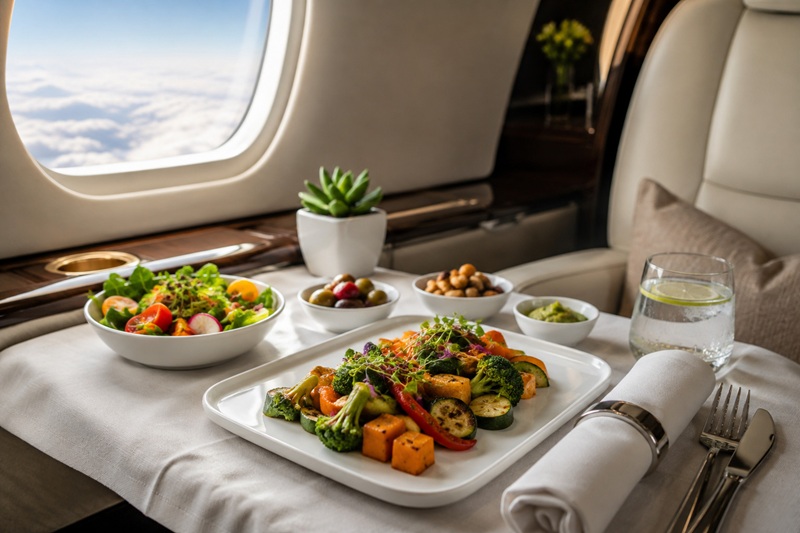
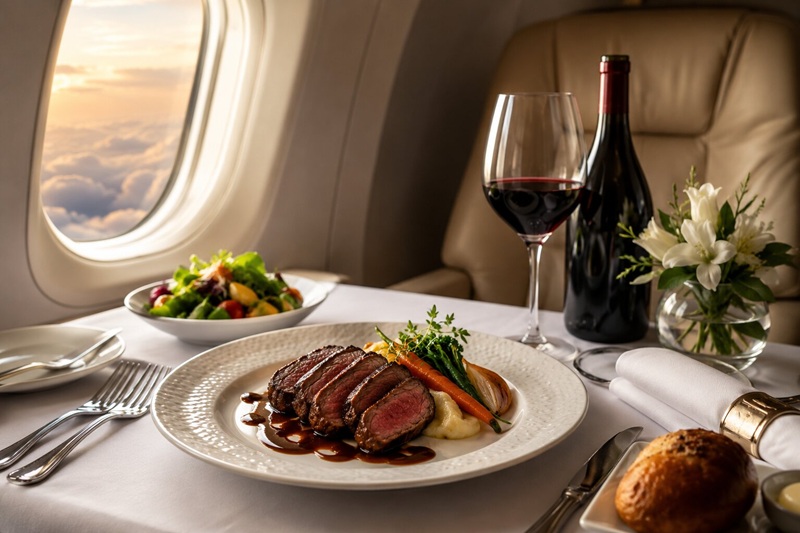
Fine cabin dining at 40,000 feet is a discipline of its own. Passengers on private and business aircraft expect the same standard they would find at a Michelin listed dining room, and few pairings signal that standard more clearly than a well chosen beef course served with the right wine. Both ingredients are demanding. Beef needs precise doneness, resting, and controlled holding temperatures between origin kitchen and cabin service. Wine reveals itself differently in a pressurised cabin, where lower humidity and altitude change how tannin, acidity, and aroma register on the palate.
Behind every plated fillet and every uncorked bottle sits a supply chain that has to move without error. According to a Business Research Company market report, the private jet charter industry is expected to expand from 24.12 billion USD in 2025 to 27.38 billion USD in 2026, and rising demand is placing new pressure on caterers to deliver restaurant grade meals with clockwork precision. Beef and wine sit at the centre of that expectation. Both are visible on the menu, both are recognised across cultures, and both leave a strong impression when handled with care.
Why Wine and Beef Define Luxury Cabin Dining
Ownership groups, charter operators, and flight departments all report that food quality is now a top three factor in caterer selection. Two items appear on premium menus more often than any other: a signature beef course and a curated wine list.
Reasons for their dominance include:
- Universal appeal across cultures, with region specific preparations available for guests from every continent
- Strong association with celebration, closing deals, and private hospitality
- Reliable performance when handled correctly, allowing catering teams to prep at origin and finish onboard
- High perceived value that matches the tone of business and diplomatic missions
- Flexibility across meal periods, from breakfast beef hash to a full dinner tenderloin
Global demand for premium cabin food is climbing steadily. The in flight catering market reached 18.03 billion USD in 2025, per Business Research Insights, driven in part by client expectations for restaurant standard beef and wine service on private and government aircraft. Operators serving heads of state, family offices, and corporate boards now treat these two categories as signature commitments rather than optional add ons. Getting them right builds trust with the principal and often decides repeat bookings on the same tail.
Selecting Beef for Altitude Dining
Not every cut behaves well in the air. Cabin pressure, holding times between departure gate and cruise, and reheating conditions all affect how a steak eats. Head chefs planning vip flight catering menus tend to favour cuts with strong marbling and forgiving fat structure, since intramuscular fat helps meat stay moist during hold and gentle reheat. Lean, low fat cuts dry out quickly at altitude, which is why they rarely appear on premium jet menus.
Preferred choices in high end cabins include:
- A5 Japanese Wagyu tenderloin, seared and rested, then sliced tableside
- Dry aged prime ribeye, portion cut, seared, and finished sous vide for controlled hold
- Angus fillet wrapped in prosciutto or a light herb crust to protect moisture
- Slow braised short rib, which reheats without loss of texture or flavour
- Rossini style fillet with foie gras and truffle, plated onboard for peak visual impact
- Beef tartare with quail egg and capers, for a chilled starter option on shorter sectors
The premium beef segment continues to expand. Fortune Business Insights values the global Wagyu beef market at 27.4 billion USD in 2025, with luxury foodservice and private aviation catering counted among its fastest growing channels. Sourcing traceable, temperature controlled beef is now a baseline expectation, not a luxury add on. Cold chain integrity from farm to galley is where operators either shine or lose the confidence of a discerning principal, particularly on ultra long haul routes where multiple hold cycles come into play.
Wine at 40,000 Feet: What Actually Changes
Cabin conditions rewrite the sensory experience of wine. Humidity levels sit close to those of a desert, which dulls the perception of aroma. Pressure changes reduce sensitivity to sweetness and salt, and can make tannin feel more aggressive on the tongue. A wine list built for the ground will not read the same way at cruise altitude, so the list must be planned for the cabin, not lifted from a restaurant menu.
Sommeliers working with private aviation catering desks generally follow a short set of guidelines:
- Choose reds with rounded, integrated tannins over tight, young structure
- Favour whites and Champagnes with clear acidity and expressive fruit, since these carry better in dry cabin air
- Serve reds slightly cooler than ground temperature to soften alcohol perception
- Decant robust reds up to an hour before takeoff for smoother evolution during service
- Avoid heavily oaked whites, which can turn flat and dull under cabin conditions
- Keep sparkling wine at a strict cellar temperature until moments before pour
Champagne remains the near universal welcome drink, with grower Champagnes and prestige cuvées from Reims and Épernay in high demand. For premium reds, Bordeaux, northern Rhône Syrah, Barolo, and Napa Cabernet perform reliably across long haul routes. White wine selections lean toward Grand Cru Chablis, aged Riesling, and top tier white Burgundy, all of which hold their aromatic profile better than heavy, oak driven styles.
Practical Pairing Principles
Pairing beef and wine at altitude follows classic ground level logic with two adjustments: dial down tannin severity, and boost aroma clarity. A short pairing reference for cabin menus:
- A5 Wagyu, lightly seasoned, pairs well with aged Pinot Noir from Burgundy or vintage Champagne
- Dry aged ribeye works with a mature Cabernet blend from Napa or Bordeaux
- Fillet Rossini calls for a Right Bank Bordeaux from Saint Émilion, or an Amarone from the Veneto
- Slow braised short rib pairs cleanly with northern Rhône Syrah from Hermitage or Côte Rôtie
- Beef tartare shows best with a grower Champagne or a Grand Cru Chablis from Burgundy
Menu planners also account for the guest profile. Executives on short corporate jet catering missions often prefer lighter, faster service with a single glass pairing, while long haul VIP flights allow for full multi course dining with dedicated pairings between courses. Aligning course length and pairing depth to flight time is one of the quiet skills that separates strong caterers from average ones. Onboard crew also need clear plating instructions per dish, so that a chef in Nice and a cabin attendant at cruise altitude finish the same plate to the same standard.
Service, Safety, and Global Sourcing
Restaurant standard beef and fine wine are only as good as the network that moves them. A caterer that cannot secure A5 grade at short notice in Nice, or a specific vintage Champagne in Tokyo, will disappoint fast. Global reach and tight quality control are the operational backbone of this category. Cold chain protocols must follow HACCP standards, wine storage must be temperature stable, and crew briefings must cover plating, portion, and service order for each course.
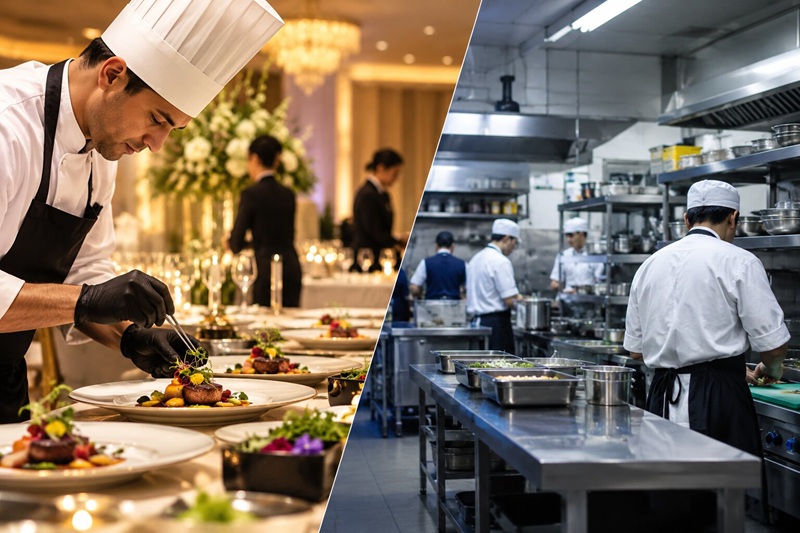
Dark Wing Inflight operates through a curated network of Michelin listed chefs, five star hotel kitchens, and specialist VIP caterers across more than 2,000 airports in 135 countries, with 24/7/365 multilingual support at the order desk. This footprint allows consistent sourcing of certified beef and rare wines across major hubs and technical stops alike. Operators looking for structured guidance on menu governance can review the rules of catering on private jets, which covers dietary safety, sourcing standards, and cabin service etiquette. For clients building signature multi course menus, the bespoke meal options guide sets out how premium plating and course structure should be planned in advance of departure.
Regional preferences matter too. Guests flying into the Middle East often expect halal certified beef with a formal Bordeaux or non alcoholic pairing, depending on the mission. European sectors tend to favour dry aged fillet with Burgundy or Rhône reds. Asia Pacific routes see high demand for A5 Wagyu and Champagne, especially on flights into Tokyo, Hong Kong, and Singapore. North American charters lean toward Napa Cabernet paired with prime ribeye or short rib. A caterer that can shift its sourcing map to match the route, the principal, and the mission profile is the caterer that gets called back for the next uplift.
Conclusion
Beef and wine remain the two ingredients that define the quality of a private aviation meal service. When both are sourced with care, prepared with technical control, and served with attention to altitude conditions, the result is a plated experience that matches ground level fine dining. Getting the details right, from cut selection to decanting time, is where reputations are built and repeat bookings are earned.
Flight departments planning premium menus can request a curated tasting brief or work directly with our menu team on a route specific plan. To review workflow tips before your next uplift, see our guide on the smartest way to manage inflight catering. To place an order, call +44 204 577 0985, WhatsApp +33 787 346 458, or email info@darkwinginflight.catering. Our team responds around the clock, in multiple languages, with confirmed sourcing across every major private aviation hub.
Frequently Asked Questions
Q: What makes wine and beef pairings the standard for VIP flight catering menus?
A: Wine and beef sit at the top of premium cabin menus because both signal quality instantly and both hold up well in service if handled correctly. A well marbled cut of beef holds moisture through a controlled reheat, while a properly chosen wine still expresses aroma and structure in dry cabin air. Guests from every region recognise the pairing as celebratory, which suits the tone of private and government aviation missions. Our menu teams treat both categories as signature commitments, sourced through Michelin listed chefs and five star hotel kitchens across all major hubs. That combination of familiarity, prestige, and technical reliability is why beef and wine remain the two most requested items on premium flight menus in 2025 and into 2026.
Q: Which beef cuts perform best on long haul private jet flights?
A: For long haul routes, we favour cuts with strong marbling and forgiving fat structure. A5 Japanese Wagyu tenderloin, dry aged prime ribeye, Angus fillet with a light herb crust, and slow braised short rib all hold their texture through multiple temperature checkpoints. Rossini style fillet is popular for a formal dinner service, while beef tartare works well as a chilled starter on the same flight. Lean cuts such as top round or eye of round dry out at altitude and rarely appear on premium menus. Every cut is portioned, vacuum sealed, and shipped under strict cold chain protocols aligned to HACCP standards. Crews receive plating instructions so the finished course matches the origin chef intent, no matter how long the sector.
Q: How does altitude change the way wine tastes onboard?
A: Cabin altitude and low humidity dampen the sense of smell, and pressure changes reduce sensitivity to sweetness and salt. Tannin can feel sharper, and heavily oaked whites often turn flat. This is why a wine list built for a restaurant will not perform the same way in the cabin. We select reds with rounded, integrated tannins, and whites and Champagnes with clear acidity and expressive fruit. Serve temperature is also adjusted, with reds served slightly cooler than ground. Our sommelier partners plan each list by route length, guest profile, and course sequence, so that the wine reads as intended at cruise altitude rather than losing character in the air.
Q: Can Dark Wing Inflight source A5 Wagyu and rare wines at short notice?
A: Yes. Our network covers more than 2,000 airports in 135 countries, with 2,800 plus vetted partners including Michelin listed chefs, five star hotels, and specialist VIP caterers. This footprint lets our order desk secure A5 grade Wagyu, prestige cuvée Champagne, aged Bordeaux, and other rare items across major hubs and technical stops. Short notice orders are handled by our 24/7/365 multilingual desk, and lead time depends on airport, sourcing distance, and any customs steps. In most cases, premium beef and fine wine can be confirmed within a few hours for departures at primary hubs, and often the same day for secondary fields when the request comes through with clear specifications and delivery windows.
Q: Are premium beef and wine options available at smaller regional airports?
A: Coverage extends beyond primary hubs. Our sourcing map includes regional and technical stop airports across Europe, Asia Pacific, the Americas, the Middle East, and Africa. At smaller fields, we rely on trusted local partners and, where needed, arrange same day transfer from a nearby premium supplier under HACCP compliant cold chain. Lead times can be slightly longer than at central hubs, so early notice always helps. Clients uplifting at regional airports typically confirm menu and vintage 24 to 48 hours in advance to secure specific items. Our order desk will confirm exact feasibility per airport, including customs handling for imported beef and wine, and will flag any constraints during the quoting stage so there are no surprises at delivery.