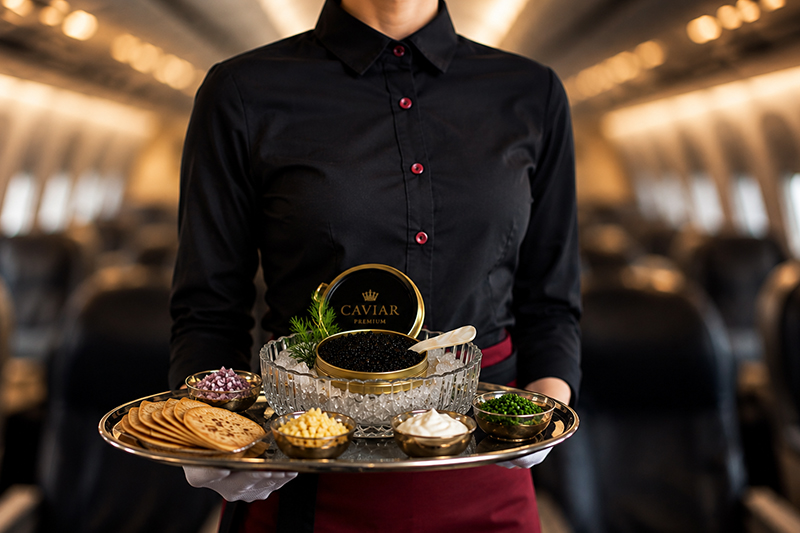

Flight departments and FBOs are quieter about catering than they are about fuel or handling, but the conversations behind closed doors have shifted sharply through 2025. Owners want food that matches their travel patterns across continents. Corporate flight attendants want reliable specification sheets they can act on with an hour's notice. Chief pilots want vendors that pass audits without excuses. The old model of picking a local kitchen based on price and proximity is losing ground to something more considered. Global consistency, allergen governance, cultural fluency, and technology fit are now the real currency of a supplier relationship. This piece unpacks what is pushing operators to reassess long standing suppliers, and what a modern partner should credibly deliver.
The Pressure Points Reshaping Vendor Decisions in 2025
Business aviation activity has held near record levels through 2025, and cabin service expectations have risen with it. According to the National Business Aviation Association, operators are contending with denser schedules, more international legs, and passengers who benchmark cabin food against fine dining standards rather than legacy inflight fare.
Several forces are combining to reopen supplier decisions:
- Regulatory tightening. Food safety authorities are expanding audit scope for temperature control, allergen handling, and traceability.
- Passenger diversity. Charter manifests routinely mix vegan, halal, kosher, low FODMAP, and pediatric requirements on the same leg.
- Route unpredictability. Diversions and short notice tech stops expose vendors that only perform well in home markets.
- Cost scrutiny. Owners and CFOs are asking why identical trays cost twice as much at one FBO versus another.
- Talent turnover. Kitchens with unstable staffing produce inconsistent output, and flight departments feel the drop first.
Each pressure on its own would justify a review. Together they explain why procurement teams, chief pilots, and cabin directors are opening RFPs that have been dormant for years.
What FBOs Now Expect From a Catering Partner
The best run FBOs treat catering as an extension of ramp service. If it slips, everything else slips with it. The current expectation list looks different from the one used five years ago.
Key expectations shaping vendor shortlists in 2026:
- Consistent quality across every base, from primary hubs to remote fields where the operator lands twice a year.
- Documented food safety controls aligned with HACCP principles set by the Codex Alimentarius Commission and enforced by national authorities.
- Menu literacy across cuisines, so a Gulf based principal, a European CEO, and an Asian delegation on the same tail number are each served food that respects their preferences.
- Digital ordering with clear audit trails, including allergen declarations and driver ETAs.
- Multilingual dispatch that does not disappear at night or on holidays.
- Live substitutions handled without drama when a product is out of stock or a leg is rescheduled.
- Transparent invoicing that ties every line to an item served.
Operators are also asking for scenario planning: what happens on a Sunday night diversion to a secondary field, what happens if a passenger switches from kosher to vegan mid trip, what happens if customs delays a cold chain. Answers to those questions now decide contracts.
Where Legacy Vendors Fall Short
Long standing single location caterers still do many things well, but they were not built for the scale and speed that modern private aviation demands. The gaps show up in predictable places.
- Limited coverage outside the vendor's home airport, forcing operators to juggle multiple accounts and invoicing formats.
- Inconsistent presentation between crews, kitchens, and shifts.
- Slow response to allergen or dietary changes made close to departure.
- Little visibility into sourcing, which becomes a problem for principals who ask direct questions about provenance.
- Weak documentation when insurers or auditors request records.
There is also a softer issue. Legacy vendors often treat aviation as a side channel to their restaurant or hotel business. Aircraft do not wait, and side channels tend to be deprioritized when the main venue is busy. This is not a moral failing, it is a structural mismatch. Operators are increasingly unwilling to absorb that mismatch when a specialist alternative exists.
The Rise of Network Backed Catering Models
A network model addresses the coverage and consistency problem at its root. Instead of one kitchen trying to serve every route, a coordinating partner curates trusted suppliers at each destination and imposes a shared standard on top. This is the operating logic behind Dark Wing Inflight, which works with 2,800+ vetted partners including Michelin star chefs, five star hotels, and specialist VIP caterers across 2,000+ airports in 135 countries, backed by 24/7/365 multilingual dispatch.
What the network model changes in practice:
- One point of contact for a global tail, with local sourcing that respects cultural detail.
- Standardized safety, packaging, and presentation briefs applied to each partner.
- Faster substitution when a specific item is unavailable at a given base.
- Cleaner reporting for finance and compliance teams.
For operators exploring this shift, our guide on the smartest way to manage inflight catering walks through the operational logic in more detail. The point is not to remove local craft, it is to make local craft reliably available on the operator's terms.
Signals of a Reliable Partner in 2026
Rethinking a supplier is only useful if the replacement is measurably better. Before signing, FBOs and operators are asking specific questions and testing the answers against live orders.
Practical due diligence checklist:
- Can the partner service every airport on the fleet's likely route map, including secondary fields and short notice diversions?
- Are HACCP records, allergen matrices, and vehicle temperature logs produced on request without delay?
- Is there a documented process for last minute changes, and does the dispatch team confirm receipt within minutes?
- Do sample menus reflect regional culinary intelligence, not a template repurposed for every city?
- Is pricing transparent per item, with no opaque handling surcharges?
The bar has moved. Operators want the kind of catering in airport environments that behaves like a serious operations function, not a hospitality afterthought. Reference our overview of premium private jet catering services and bespoke meal options for a fuller sense of how a mature program is structured, and our note on the rules of catering on private jets for the ground rules cabin crew rely on daily.
Talk to Our Team
Speak with us about coverage, menus, and audits at your key airports. Call +44 204 577 0985, WhatsApp +33 787 346 458, email info@darkwinginflight.catering, or visit darkwinginflight.catering.
Conclusion
The rethink underway across the industry is not driven by dissatisfaction with local craft. It is driven by the recognition that private aviation has become more global, more scrutinized, and less forgiving of vendor gaps. Operators and FBOs want partners who understand the aircraft, the passenger, and the paperwork with equal fluency, and who can hold that standard from a primary European hub to a remote Asian field on the same day. The 2025 to 2026 procurement cycle is separating vendors that treat catering as core aviation service from those that treat it as a side channel. For flight departments willing to test the alternatives, the reward is fewer service failures, cleaner audits, and a passenger experience that finally matches the price of the ticket.
Frequently Asked Questions
Why are FBOs reviewing their catering partners more often in 2025 and 2026?
Reviews are more frequent because passenger expectations, regulatory demands, and route patterns have all shifted at the same time. Flight departments are seeing denser international schedules, mixed dietary manifests, and closer scrutiny from insurers and auditors. A vendor that met the bar three years ago may no longer meet it today, especially on documentation, allergen governance, and last minute responsiveness. Operators are treating the review as a normal part of operational hygiene rather than a sign of dissatisfaction.
What should a modern private aviation catering contract include?
It should cover coverage scope, safety documentation, dietary handling, digital ordering, invoicing format, and a clear escalation path for diversions or same day changes. Contracts increasingly reference HACCP aligned processes, allergen matrices, and driver ETAs. Service level expectations for confirmation times and substitutions are now written down rather than assumed.
How does a network based catering partner differ from a single kitchen?
A network partner coordinates vetted local suppliers across many airports under one standard and one point of contact. A single kitchen delivers only where it operates. For operators with international routes or unpredictable diversions, the network model reduces coordination work and improves consistency, while still using local craft at each destination.
How quickly can a global partner respond to last minute private jet catering requests?
Established global partners with 24/7 multilingual dispatch typically confirm within minutes and can arrange delivery at short notice at most primary and many secondary airports. Timelines depend on airport curfews, customs procedures, and menu complexity, but the confirmation itself should not wait.
Do FBOs benefit directly from a stronger catering partner?
Yes. Better catering reduces ramp friction, avoids late departures caused by delivery gaps, and lifts the overall passenger impression of the FBO. Since guests often remember the food long after the handling, a reliable partner strengthens the FBO's own service reputation.