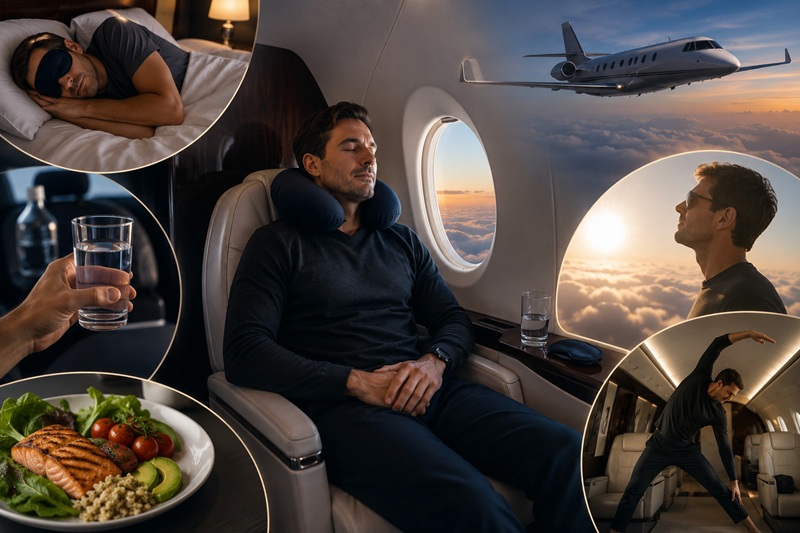
Long-haul travel across three or more time zones puts the body's internal clock under real strain. For senior executives, heads of state, and high-net-worth travellers moving between continents in a matter of hours, the aftereffects can compromise negotiations, public appearances, and personal wellbeing within hours of landing. Combating jet lag is less about a single fix and more about coordinating light exposure, sleep timing, movement, hydration, and food choices before, during, and after the flight. Private aviation offers a level of control the commercial cabin never will, which means every element of the journey can be tuned to help the body adjust faster. This guide covers what actually works, what to skip, and how to structure the in-cabin experience so that arrival feels closer to a normal morning than a recovery day.
Why Jet Lag Hits Harder Than Most Travellers Expect
Jet lag is a circadian rhythm disorder. When local time at the destination no longer matches the body's internal signals for hunger, alertness, and sleep, systems fall out of sync for several days. According to the National Heart, Lung, and Blood Institute, symptoms include daytime fatigue, poor concentration, digestive upset, and disturbed sleep, and severity tends to increase with the number of time zones crossed and with eastbound travel.
Altitude adds another layer. Cabin pressure at cruise altitude reduces blood oxygen saturation slightly, dry air accelerates dehydration, and prolonged sitting slows circulation. On a private jet, cabin altitude is often lower than commercial equivalents, which helps, but the underlying biology still applies. The traveller who ignores these factors typically arrives more fatigued than the one who plans for them.
Meal Timing Is a Powerful Circadian Signal
Light gets most of the attention in jet lag guidance, but food timing is a strong secondary cue for the body's peripheral clocks, particularly in the liver and gut. Research published in the journal Cell Metabolism has shown that time-restricted eating and strategically timed meals help realign metabolic rhythms after a schedule shift.
The practical takeaway for private jet travellers is straightforward. Start eating on destination time as soon as the flight begins. If a client boards at 10 PM local time on a westbound flight to New York from Dubai, and lunch would be reasonable on arrival, then a light meal early in the cruise, a short fast, and a fresh meal timed to destination breakfast or lunch will move the internal clock forward much faster than eating on departure time.
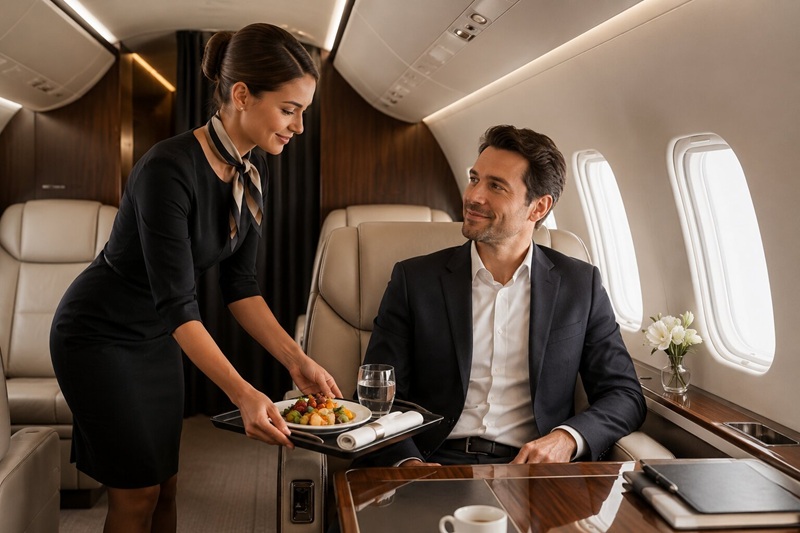
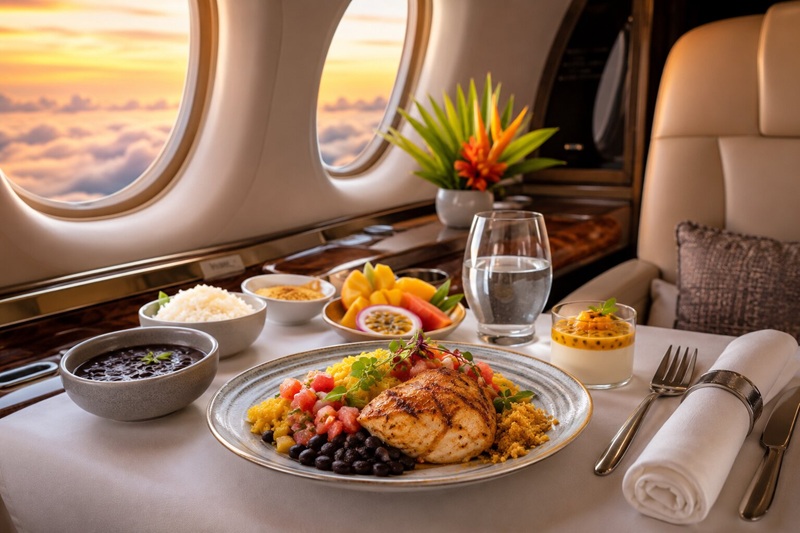
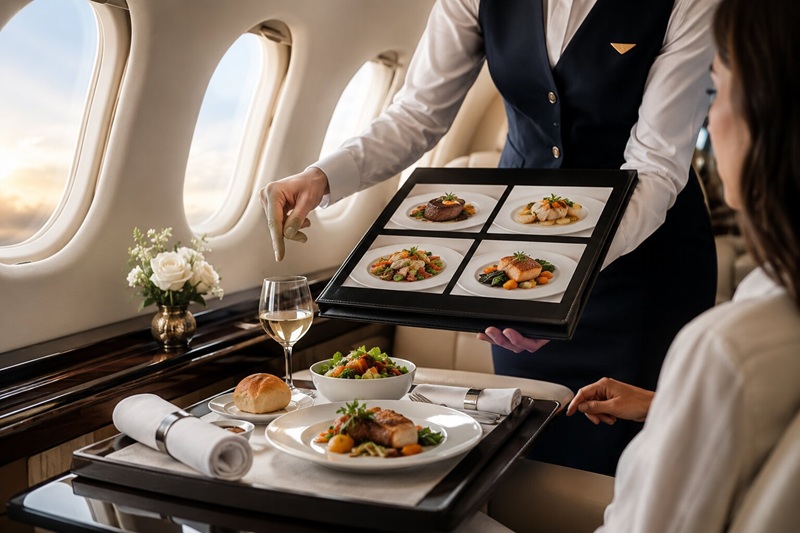
A well-planned private jet meal service accounts for this by staggering courses, offering lighter proteins and complex carbohydrates at sleep-supportive intervals, and reserving heavier dishes for periods when digestion aligns with destination waking hours. This is where thoughtful jet catering earns its value beyond taste.
What to Eat Before, During, and After the Flight
The composition of what is served matters as much as when it is served. A few principles hold consistently across long-haul routes.
Before boarding, a moderate meal built around lean protein, vegetables, and slow-releasing carbohydrates supports steady energy. Heavy, fatty, or highly salted food is best avoided in the twelve hours before departure, as it can worsen bloating at altitude and disrupt sleep on board.
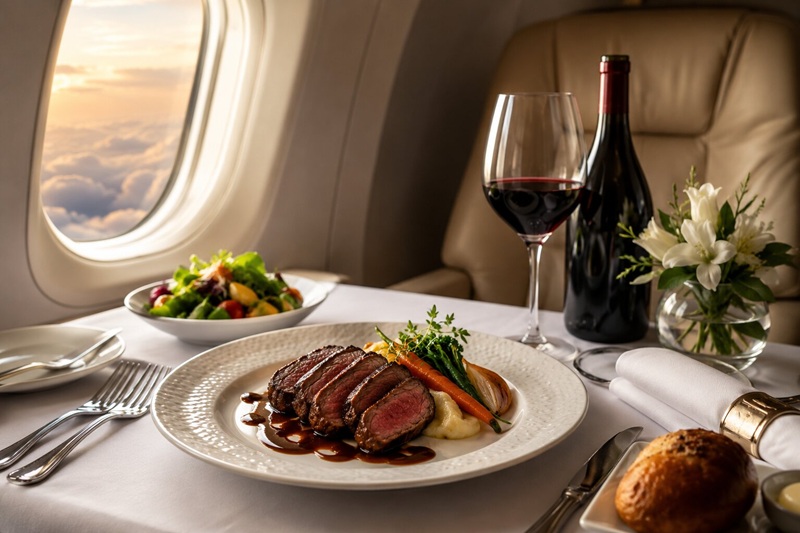
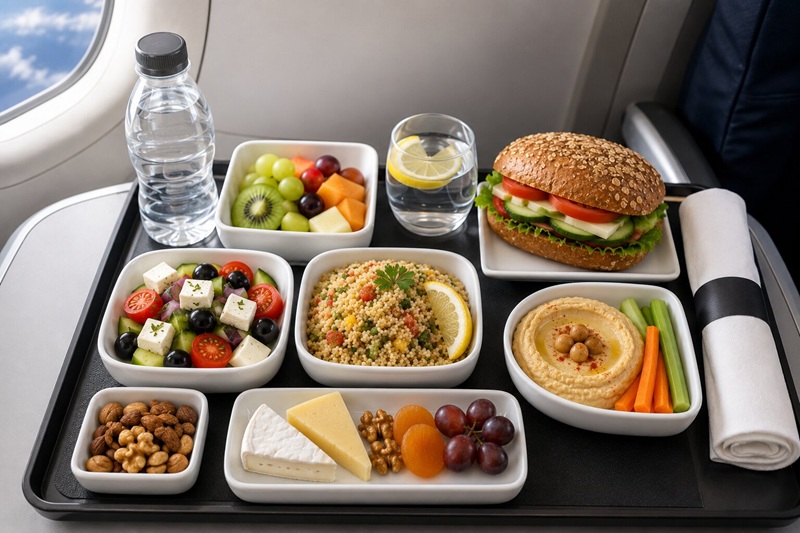
During the flight, the goal is to eat lightly on segments intended for rest and more substantially on segments intended for alertness. Grilled fish, poultry, legumes, leafy greens, seasonal fruit, and fermented foods such as kefir or miso all support digestion and help stabilise blood sugar. Refined sugars and heavy sauces should be minimised, and portion sizes kept smaller than a typical restaurant serving.
After landing, the first destination-timed meal should be the largest of the day if possible. Sunlight, movement, and a protein-forward breakfast or lunch together send a strong signal to the circadian system that a new day has started.
Cultural context matters as well. A traveller flying into Tokyo often adjusts faster with a light Japanese breakfast than with a European hotel spread, simply because the food matches destination timing and taste. Global caterers with regional sourcing across 135 countries can align menus with local timing and cuisine, which is one of the quieter advantages of working with a specialised network.
Hydration, Alcohol, and Cabin Air Realities
Cabin humidity on long-haul flights is typically low, and dehydration is one of the fastest ways to intensify jet lag symptoms. Water and unsweetened herbal infusions should be consumed steadily across the flight rather than in large volumes at meal times. Isotonic drinks or coconut water can help on very long sectors.
Alcohol deserves specific attention. It fragments sleep architecture, increases dehydration, and delays circadian adjustment. A single glass with a meal is unlikely to cause meaningful harm on a short sector, but longer flights and eastbound travel respond much better to abstinence or near-abstinence. Coffee and strong tea should be timed for destination morning and afternoon, not for the hours corresponding to destination night, regardless of how the traveller feels in the moment.
Light, Sleep, and Movement Strategies
Light is the strongest signal the circadian system receives. Bright light in the morning at destination advances the clock. Bright light in the evening delays it. For eastbound travel, morning light on arrival helps. For westbound travel, evening light delays sleep and supports adjustment. Cabin lighting on modern private jets can be programmed to mirror destination time, and closing shades during scheduled sleep windows makes a measurable difference.
Sleep on board should be treated as real sleep, not a nap. That means a proper meal window closed at least ninety minutes before bed, cabin temperature dropped slightly, phone screens dimmed or set aside, and a short wind-down routine. Movement matters too. Standing, stretching, and short walks in the cabin every couple of hours protect circulation and reduce the grogginess that accumulates on twelve-hour sectors.
How Considered Catering Supports Faster Recovery
Every element covered above can be planned into the catering brief before the flight. Menus can be structured around destination time, hydration options prepared in advance, and dishes chosen for their sleep or alertness properties. Guidance on how to structure this planning is set out in our overview of the rules of catering on private jets, which covers preparation, safety, and service standards in more depth.
For clients who want menus built entirely around individual health goals, dietary needs, and route timing, our premium bespoke meal options outline how meals are designed collaboratively with executive chefs and dietary consultants. Flight departments managing multiple aircraft and recurring schedules often find our guide to the smartest way to manage inflight catering useful for reducing coordination time while maintaining consistency across trips.
Dark Wing Inflight coordinates these details across 2,000+ airports and 135 countries, drawing on a network of 2,800+ restaurants, five-star hotels, and Michelin-starred chefs to match menus to route, time zone, and traveller preferences.
Conclusion
Jet lag is manageable when the flight is treated as part of the recovery plan rather than an obstacle to it. Meal timing, food composition, hydration, light exposure, sleep discipline, and movement each play a defined role, and the private aviation environment allows all of them to be coordinated with precision. Travellers who plan the cabin experience around destination time consistently report sharper arrivals, better sleep on the first night, and shorter recovery windows. The value of an experienced catering partner sits in the details. Menus arrive matched to time zone and cuisine. Hydration is planned rather than improvised. Dietary needs, allergies, and cultural preferences are handled quietly in the background. For flight departments and principals crossing continents regularly, this level of planning pays back on every leg, and the difference shows in how ready the traveller feels the moment the door opens on arrival.
Frequently Asked Questions
Q1. How long does jet lag typically last after a long-haul private flight?
Recovery usually takes about one day per time zone crossed, with eastbound travel taking longer than westbound. Planning meal timing, hydration, and light exposure around destination time can shorten this window noticeably. Private cabins allow far tighter control of these variables than commercial travel does.
Q2. Does eating on the plane really help reset the body clock?
Yes. Meal timing is one of the strongest secondary signals to the circadian system after light. Aligning meals with destination time helps the liver, gut, and metabolic rhythms adjust faster, particularly when courses are structured around destination breakfast, lunch, and rest windows.
Q3. What foods should be avoided on a long-haul flight?
Heavy, fried, or highly salted dishes, refined sugars, and excessive alcohol all worsen jet lag. Lighter proteins, complex carbohydrates, vegetables, seasonal fruit, and fermented foods support better sleep and digestion in the cabin, and portion sizes should stay smaller than a typical restaurant serving.
Q4. Is a private jet cabin really better for jet lag than commercial?
Generally yes. Lower cabin altitude, controllable lighting, custom meal timing, and quieter sleep environments all support faster adjustment. The benefit is largest when the cabin experience is planned around destination time rather than departure time, with menus and lighting scheduled in advance.
Q5. Can catering be customised for specific dietary or medical needs on international flights?
Yes. Our chefs and partners regularly design menus around allergies, medical requirements, religious observances, and personal preferences, with sourcing coordinated across a global partner network so that quality remains consistent from London and Dubai to Tokyo and Los Angeles.