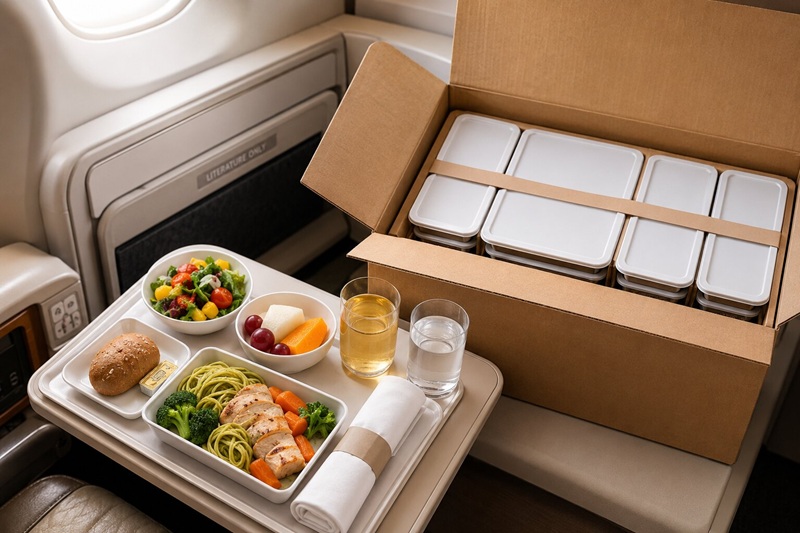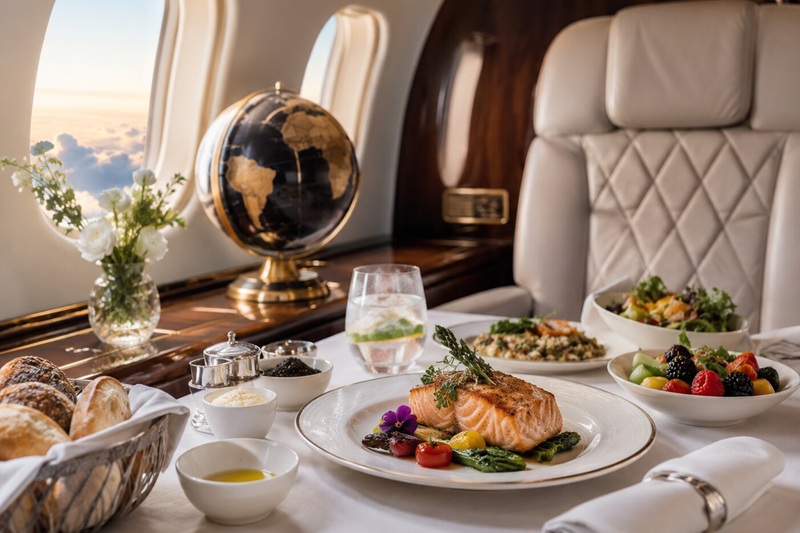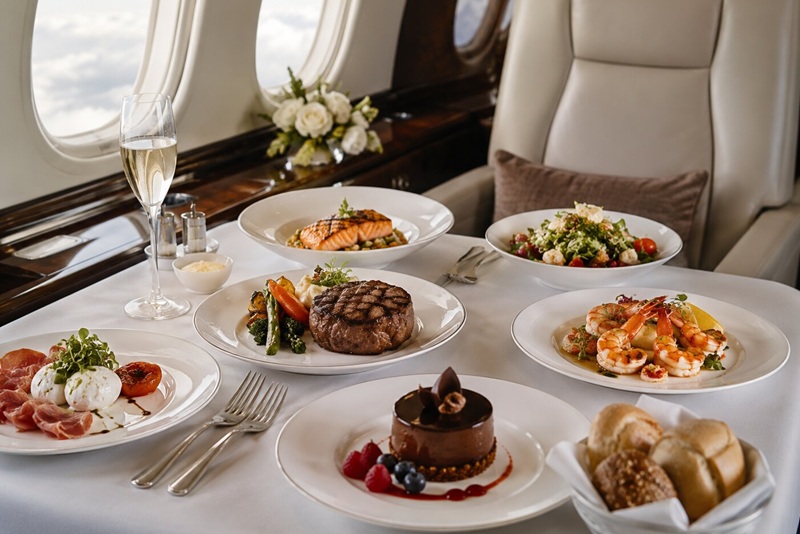
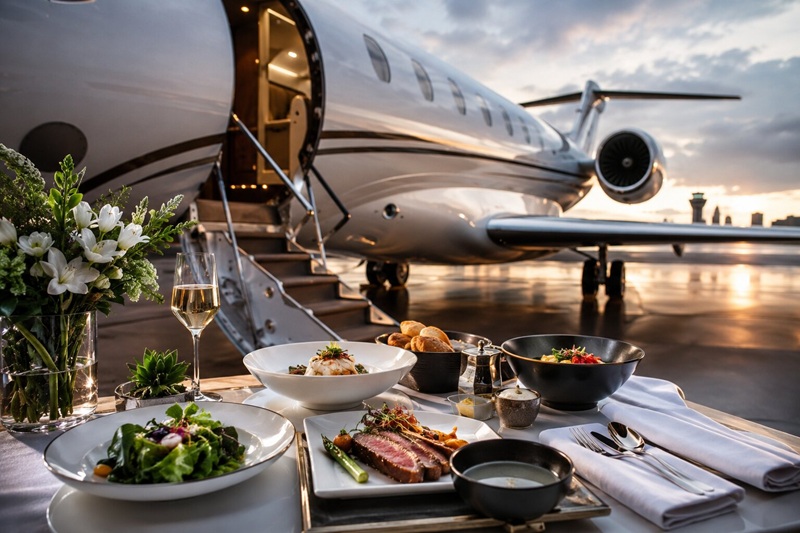
London holds a distinctive position on the global business aviation map. Farnborough, Luton, Biggin Hill, and Stansted together handle a significant share of Europe's private jet movements, and the passengers who fly through these airports arrive with expectations shaped by the city's restaurants, hotels, and members' clubs. Getting the food right on both sides of a London flight is not a small detail. It sets the tone for the meeting a passenger has just left or the one they are about to enter.
According to the European Business Aviation Association's 2025 traffic reporting, London remains among the top business aviation markets in Europe by movements, with Farnborough consistently ranked as the busiest dedicated business aviation airport on the continent. That volume translates into real operational pressure for caterers. Sourcing windows are tight, tarmac access is controlled, and menu standards are unforgiving.
Why London Sets a Higher Bar for Onboard Dining
The average London-based principal eats at Core by Clare Smyth, Ikoyi, and Sketch during the week. They know how a tuna tartare should be dressed and what a properly cured piece of Cornish sea trout tastes like. Food that would pass as premium on a domestic flight elsewhere reads as ordinary to this audience.
Three factors raise the standard here:
- Passenger palate. London flyers benchmark against Michelin restaurants, not other flights.
- Sourcing depth. British produce, from Isle of Wight tomatoes to Herdwick lamb, is expected to appear when it is in season.
- Cultural range. A single week can carry Gulf royalty, US chief executives, and Southeast Asian family offices through the same FBO, each with different dietary frameworks.
Departure Catering from London Airports
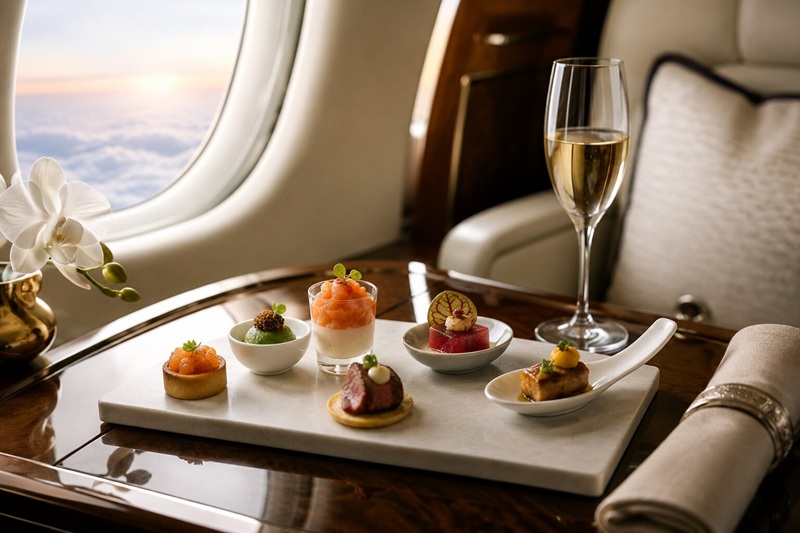
Departure catering carries the memory of the city. A breakfast tray leaving Farnborough at 06:30 for New York should reflect what a passenger might have eaten at Claridge's the morning before, not a generic hot buffet.
Key departure considerations across the main London hubs:
- Farnborough (EGLF) has strict slot and handling protocols. Catering deliveries must be coordinated with the FBOs several hours before departure for complex menus.
- Luton (EGGW) carries a heavier traffic mix and typically allows shorter lead times, but weekend congestion in summer affects loading windows.
- Biggin Hill (EGKB) suits central London pickups and works well for shorter European legs where lighter menus are appropriate.
- Stansted (EGSS) handles larger aircraft and is often used for VVIP and government movements where security protocols shape catering delivery.
For long-haul departures, the useful principle is to build menus that hold well at altitude. Cabin humidity below 15 percent flattens salt and umami perception, which is why chefs season slightly more assertively and lean on acidity, brown butter, and fermented notes to keep dishes vivid three hours into a flight.
Flight departments briefing a new caterer often find it useful to review the rules of catering on private jets before finalising a menu, particularly around allergens, kosher and halal sourcing, and cabin equipment limitations.
Arrival Catering: The First Taste of London
Arrival catering is often overlooked, and it should not be. A passenger landing at Farnborough at 14:00 from Los Angeles has been eating airline-adjacent food for eleven hours. What is loaded for the final descent, or what waits in the car, matters.
Effective arrival catering into London tends to feature:
- Light British classics: potted crab on sourdough, a small serving of Colchester oysters, or a proper cheddar with quince paste.
- Seasonal produce that signals place: English asparagus in May, grouse from mid-August, native lobster from Cornwall.
- Restorative options: cold-pressed juices, kefir, and bone broth for passengers heading straight into meetings.
Some clients prefer that arrival catering is delivered to the FBO lounge or the ground vehicle rather than loaded onboard, and we coordinate either option based on the itinerary and the passenger's onward schedule.
Working Around London's Operational Realities
Catering into London airports is shaped by conditions that do not apply everywhere else. Ignoring them causes late loads, failed clearances, and menu substitutions on the tarmac.
- Border Force and customs clearance on inbound catering, particularly for meat and dairy from non-UK EU origin, must be handled by suppliers with the right documentation. The UK Civil Aviation Authority's 2025 general aviation guidance continues to shape how caterers move perishables through controlled airside zones.
- Congestion at Luton and Stansted during peak summer weekends means catering must be pre-cleared through security several hours before ETD.
- Farnborough's residential proximity restricts night movements, which affects late-night catering loads and requires early confirmation.
- Biggin Hill has tighter airside access than Luton, and unfamiliar couriers regularly lose delivery windows.
A caterer without direct FBO relationships at each London airport ends up depending on third-party couriers, and that is where quality drops. Direct handling relationships remove that failure point.
How Dark Wing Inflight Handles London
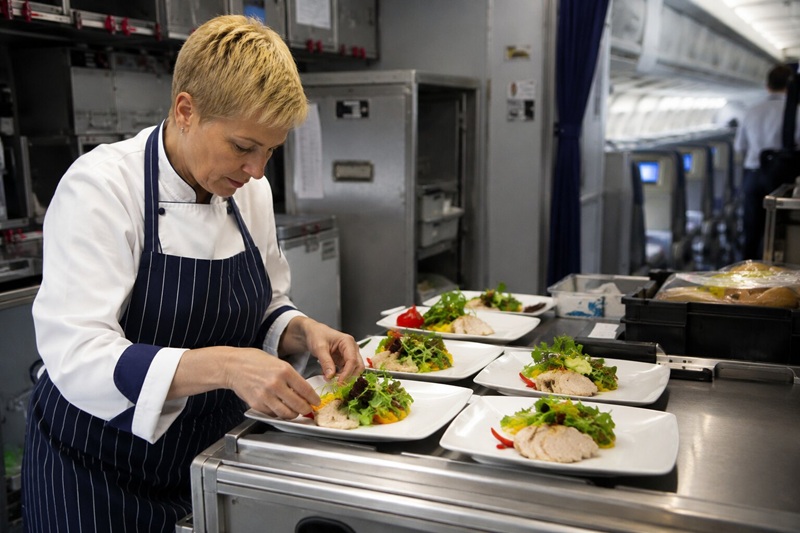
Across London's four principal business aviation airports, Dark Wing Inflight works directly with restaurants and hotels that flight departments already recognise, alongside dedicated inflight kitchens that specialise in aviation packaging and altitude-tested recipes. Our London coverage sits inside a wider network of 2,800 plus partners across 2,000 plus airports in 135 countries, with a 24/7/365 multilingual desk that handles diversions, last-minute passenger additions, and menu changes without escalation delays.
For flight departments managing repeat London movements, we build passenger profiles that persist across trips, so preferences captured on a July flight into Farnborough carry into a December flight into Biggin Hill without re-briefing. Clients running high-volume schedules often ask us about the smartest way to manage inflight catering at scale, which covers profile management, invoicing consolidation, and menu standardisation across multiple hubs.
Menu Direction for London Departures and Arrivals
Some menu directions that work reliably out of London:
- Breakfast: smoked salmon on rye, soft-boiled Burford Brown eggs, sourdough with cultured butter, seasonal berries.
- Lunch: chilled cucumber soup, poached Loch Duart salmon with samphire, English strawberries with clotted cream.
- Dinner: dressed native lobster, roast Herdwick lamb with early season vegetables, a small selection of British cheeses.
- VVIP: caviar service with blinis, Wagyu tataki, seasonal truffle when in window.
For clients requesting a fully bespoke experience, our team can develop menus with named London restaurants or Michelin chefs on request, alongside our own vip catering for private jets programme built specifically for high-frequency principals who fly the same routes repeatedly.
For departments comparing hubs and standards city-to-city, our premium private jet catering services and bespoke meal options resource sets out how sourcing standards are held consistent across cities so that London quality is matched in Nice, Zurich, Dubai, and beyond.
What This Means for Flight Departments in 2026
A flight department planning a London movement in 2026 should think about catering the same way it thinks about handling: as a service that has to work quietly and completely, without the principal ever being aware of the coordination behind it. That means one point of contact, one invoice, one profile per passenger, and consistent food quality across every FBO and every trip. When any of those break, the failure is visible to the passenger, and that is the failure a good caterer is paid to prevent.
Closing Thought
London rewards flight departments and principals who take onboard food seriously. Departure menus that reflect the city's culinary standards and arrival catering that signals a proper welcome back into London both contribute to how a trip feels, and that in turn affects how the flying is remembered. Getting either wrong is a small failure that lingers longer than it should.
Our London desk works across Farnborough, Luton, Biggin Hill, and Stansted with the same sourcing standards applied worldwide. Menus are built around passenger profiles, altitude behaviour, and seasonal British produce, and every order is HACCP-compliant and fully traceable from supplier to cabin.
To brief a London departure or arrival, or to open a corporate account for repeat London movements, reach our 24/7 desk on +44 204 577 0985, WhatsApp +33 787 346 458, or email [email protected]. Menu proposals are typically returned within two hours of a request.
Frequently Asked Questions
1. Who offers the best private jet catering for London flights?
We handle London movements directly through Farnborough, Luton, Biggin Hill, and Stansted with our own FBO relationships and a curated list of restaurants and inflight kitchens vetted for aviation standards. Our London desk is staffed 24/7, and we coordinate menus, allergens, sourcing documentation, and delivery windows in a single briefing. Passenger profiles are maintained across trips, which removes the need for flight departments to re-brief preferences on each movement. Menu proposals are typically returned within two hours of a request, and we can source Michelin-restaurant collaborations, kosher, halal, and specialist dietary programmes on the same timeline as standard menus.
2. How much lead time is needed for catering out of London airports?
For a standard menu out of Luton or Biggin Hill, we work comfortably with a four-hour lead time. Farnborough departures with complex menus, VVIP requirements, or Michelin-partnered dishes benefit from twelve to twenty-four hours' notice, largely because of ingredient sourcing rather than production. Stansted VVIP and government movements sometimes require longer, driven by security clearances rather than catering itself. For urgent tech stops, we can turn around a properly presented light meal in under two hours through our network of London airside kitchens, though menu choice narrows in that window.
3. Can catering be sourced from named London restaurants for a private jet order?
Yes. We work with named London restaurants, hotels, and Michelin chefs on request, subject to their willingness to prepare for aviation service and to the sourcing and packaging standards required for onboard delivery. Some restaurants prepare directly, some contribute recipes that our aviation kitchens execute to their specification, and some collaborate on tasting menus for repeat clients. Flight departments planning a London arrival often ask us to arrange a signature dish from a specific restaurant as a welcome course, which we can typically confirm within a few hours of the request.
4. Do you handle arrival catering into London airports as well as departures?
Arrival catering is a standard part of what we offer at every London airport. It can be loaded for the final descent, delivered to the FBO lounge on landing, or placed in the ground vehicle waiting at the aircraft. The most common request for arrivals into Farnborough and Biggin Hill is a light British menu built around seasonal produce and restorative options for passengers heading straight into meetings. Timing is coordinated with the handling agent so that food arrives fresh and at the right service temperature, ready for immediate consumption.
5. How are allergens, kosher, halal, and specialist diets handled for London flights?
Every menu we send for a London departure carries a full allergen and sourcing declaration, and we hold documentation for kosher, halal, gluten-free, and specialist medical diets across our London supplier base. For kosher meals we work with certified London suppliers who provide sealed, traceable service. Halal sourcing follows the same principle, with certification held on file per supplier. Our booking desk records passenger dietary profiles so that the same standards are applied automatically on repeat movements, and any change is confirmed in writing before loading.