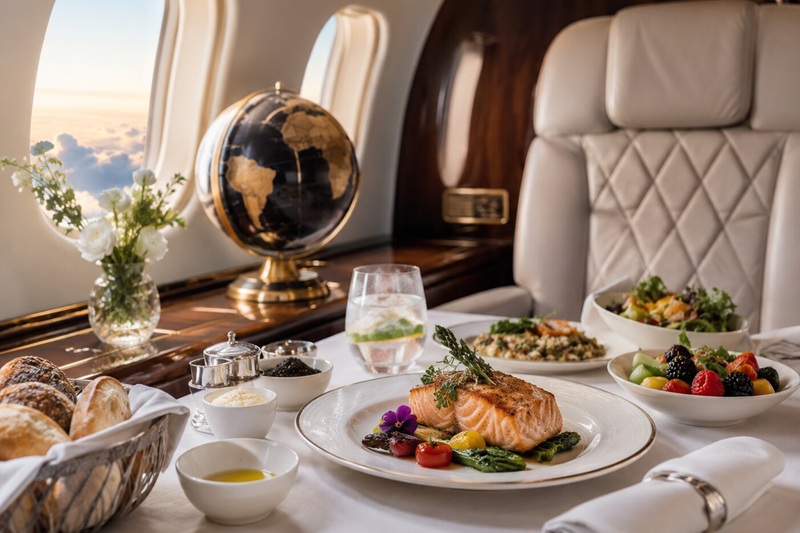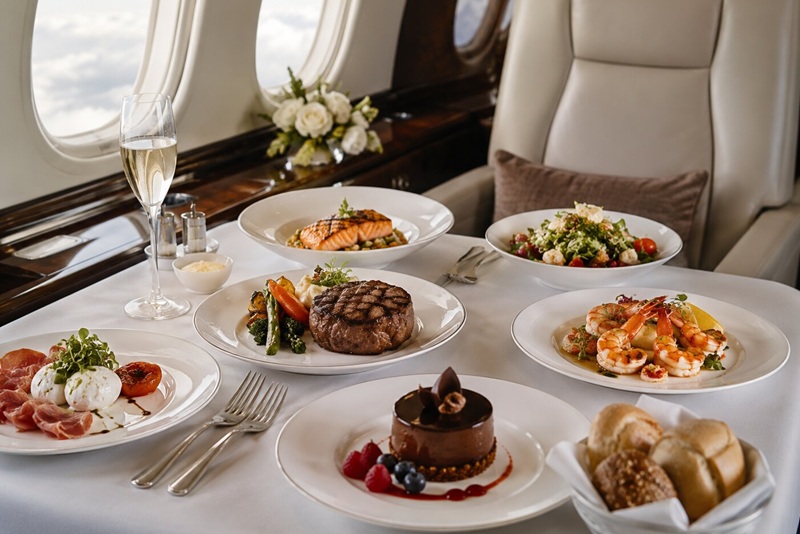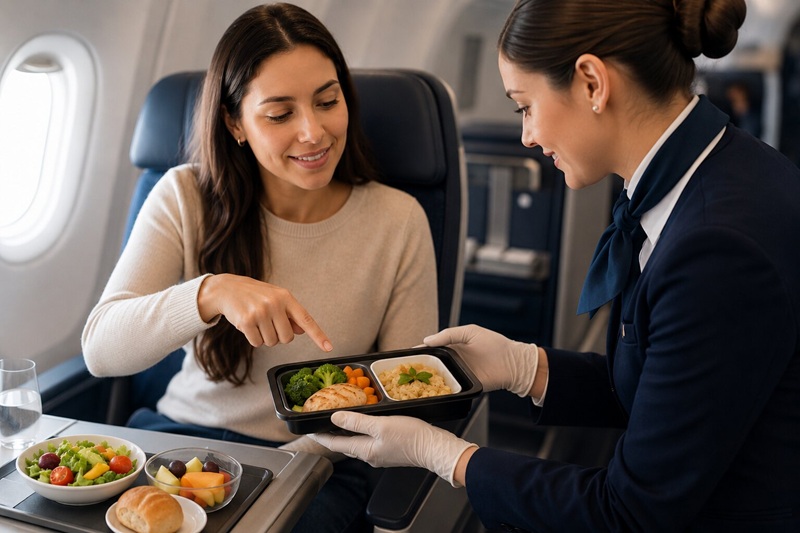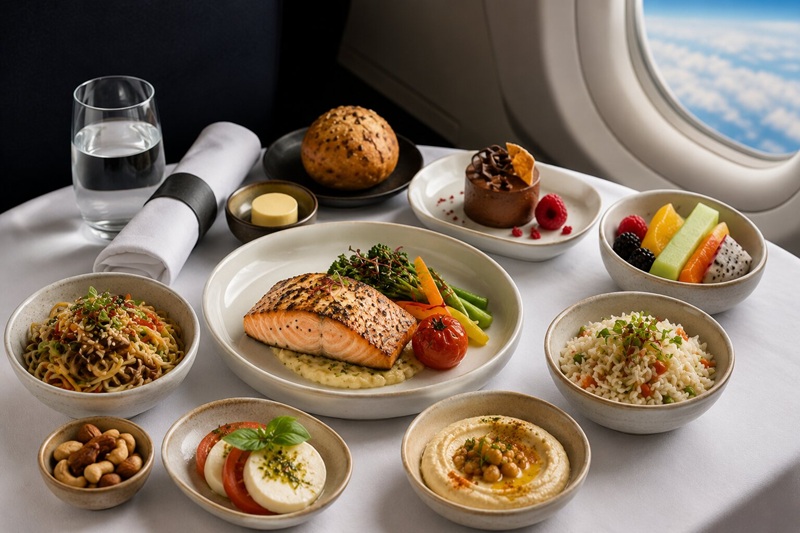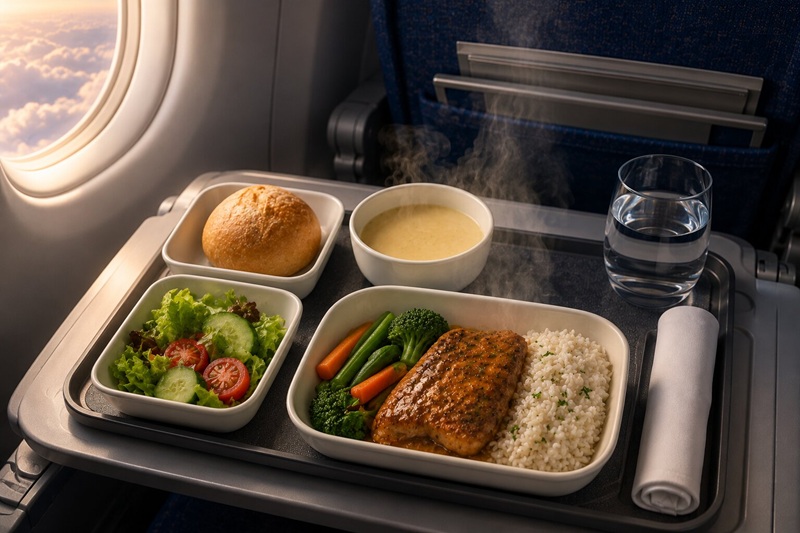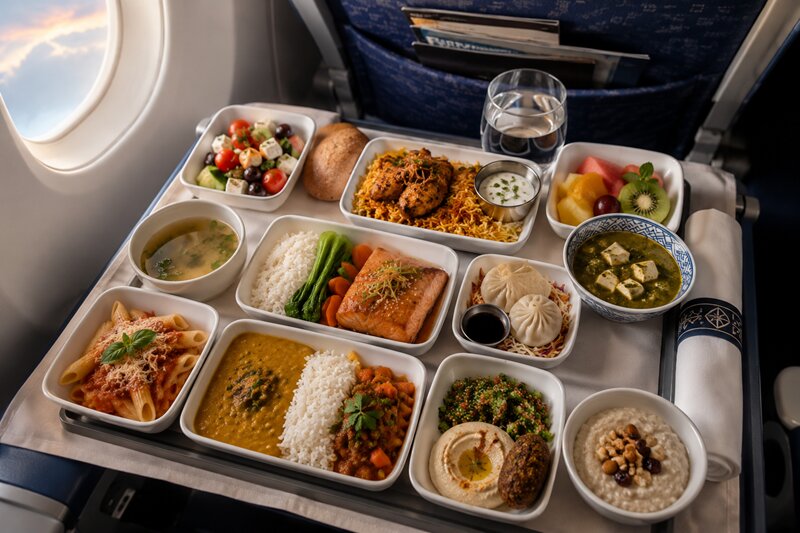
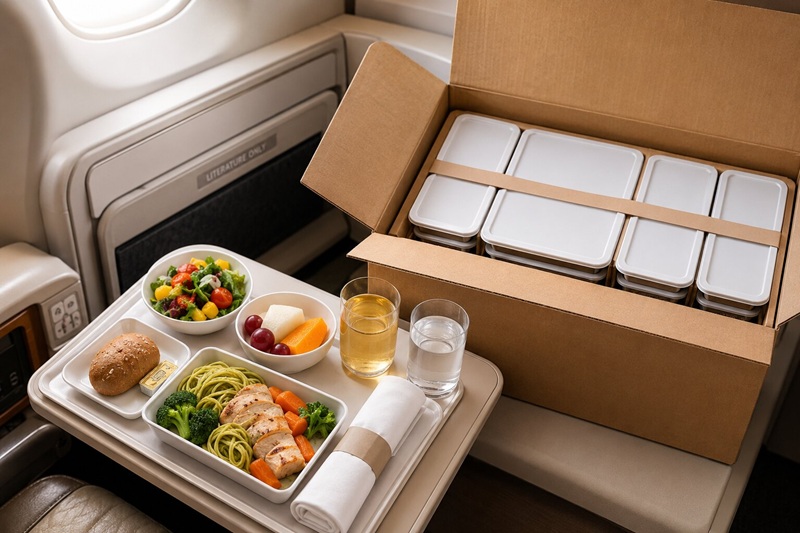
Packaging is often treated as an afterthought in aviation catering, but it is one of the most decisive factors in whether a meal arrives as it was intended. An entree that left the kitchen perfectly seared can taste rubbery and dry by the time it reaches a passenger's tray if the wrong packaging is used. Bulk packaging adds another layer of complexity. When multiple portions of the same dish are prepared for a corporate charter, a government delegation, or a large family group, the packaging has to perform consistently across every portion, every reheating cycle, and every aircraft galley type. According to the IATA World Food Safety Guidelines for Airline Catering, food surface temperatures during chilled transit must remain below 8 degrees Celsius and be documented at every stage. This guide breaks down what makes bulk entree packaging work in the air, what fails, and what catering coordinators should specify when placing high-volume orders.
Why Packaging Matters as Much as the Recipe
At cruising altitude, cabin humidity drops to roughly 12 percent and reduced air pressure dulls flavor perception. A protein that lost moisture during transit will taste even drier than it actually is. A sauce that broke during reheating will read as visually unappealing under cabin lighting. Bulk entrees face additional risks because they are prepared in larger batches, stacked during transport, and held in galley ovens for longer windows before service. The packaging has to protect each portion from moisture loss, temperature drift, mechanical damage, and cross-contamination. None of this is visible to the passenger when it works. All of it is visible the moment it fails.
The Core Requirements of Bulk Entree Packaging
Every bulk packaging decision balances four non-negotiable requirements:
Temperature integrity. Packaging must hold chilled temperatures during ground transport and even heating during galley reheating. Hot and cold zones must remain separated within the same delivery.
Reheating compatibility. The container must perform reliably in convection ovens, microwave units, and steam ovens depending on the aircraft galley.
Stacking and transport stability. Bulk orders are stacked in catering carts and transported across the airside ramp. Containers that warp, leak, or collapse under load are disqualified before they leave the kitchen.
Labeling and traceability. Each portion must be clearly labeled with contents, allergens, preparation date, and reheating instructions. Cabin crew need to identify dishes without opening them.
Materials That Perform in the Cabin
Material choice drives most of the outcome. Aluminum pans remain the industry workhorse for oven-reheated entrees because they conduct heat evenly and withstand high temperatures without warping. They are also recyclable and stack predictably during transport. For dishes that require microwave reheating, microwave-safe polypropylene or sugarcane-fiber bagasse trays are common alternatives. Bagasse has gained ground in 2025 and 2026 as operators move toward compostable solutions, though it has limitations with very wet or acidic dishes. Vacuum-sealed pouches are increasingly used for proteins and sauces that benefit from moisture retention. They lock in flavor, prevent oxidation, and reheat cleanly when transferred to a finishing tray. Sauces, dressings, and garnishes are almost always packaged separately to prevent the main entree from degrading during transit. The general principle is straightforward: the package should support the dish, not fight it.
Temperature Control and Galley Reheating
Cold-chain discipline is the spine of bulk entree packaging. Premium inflight catering services maintain documented temperature logs from kitchen to aircraft, with thermal blankets and chilled containers used during ground transport. The handoff to the aircraft galley is the highest-risk moment in the chain. Cabin crew need to know exactly which dishes go where, how long each requires in the oven, and at what temperature. Packaging design either supports this or undermines it. Clear, durable labels with reheating instructions, color-coded lids that separate hot from cold service, and stackable formats that match standard galley cart dimensions all reduce the chance of error. Industry data from Intel Market Research's 2026 inflight catering analysis shows that automated catering kitchens are now assembling up to 1,000 meal trays per hour, with IoT-enabled carts monitoring temperature in real time. That level of precision in commercial catering is filtering into private aviation as well, raising the baseline expectation for packaging consistency.
Sustainability Pressure and the Shift to Compostable Materials
Single-use plastics still dominate aviation catering packaging, but the direction of travel is clear. Regulatory pressure in Europe, California, and parts of Asia is pushing operators toward PFAS-free, compostable, or recyclable options. Bagasse, kraft paper, PLA bioplastics, and recycled-fiber blends are all being adopted at scale, though each has trade-offs around cost, heat tolerance, and shelf life. Dark Wing Inflight's coverage of sustainable VIP private jet catering explores how progressive caterers are redesigning packaging to avoid single-use plastics, using reverse logistics to recover reusable items and partnering with aviation recycling programs for what cannot be reused. For high-volume bulk orders, the sustainability question is also a cost question. Compostable packaging that fails during transit creates more waste than the single-use plastic it was meant to replace. The best packaging choices are the ones that perform reliably and reduce environmental impact, in that order.
Coordination Between Caterer, Ground Handler, and Cabin Crew
Bulk packaging only works when everyone handling the order understands what is inside it. The catering inflight handoff between ground handler and cabin crew is where most packaging failures actually occur. Labels need to be unambiguous in the language of the crew. Reheating instructions must match the equipment available in the specific aircraft galley. Allergen information must be visible without opening the package. Coordinated operations between catering teams and cabin crew require packaging that supports communication rather than relying on assumed knowledge. For high-volume government, corporate, or charter flights, this discipline is the difference between an efficient service flow and a stressed cabin.
Best Practices for Specifying Bulk Entree Packaging
Flight departments and catering coordinators can apply a few specific practices when placing bulk orders:
Confirm galley equipment in advance. Specify whether the aircraft has convection, microwave, or steam reheating capability before the menu is finalized.
Separate components that suffer in transit. Sauces, garnishes, and crispy elements should be packaged separately and assembled in the cabin.
Use durable, weatherproof labels. Standard adhesive labels can lift in humid conditions or under steam. Specify aviation-grade labeling materials.
Match container sizes to portion counts. Oversized containers waste space and create reheating inconsistency. Right-size each portion to its container.
Specify allergen and dietary markers visibly. Color coding or symbols help cabin crew identify dishes quickly during high-passenger flights.
Document temperature at handoff. Both the caterer and the receiving crew should sign off on the chilled-chain log when bulk orders are transferred.
Conclusion
Bulk packaging is the invisible infrastructure that allows in-flight catering to scale without losing quality. When the materials are right, the temperature holds, the labels are clear, and the components are separated intelligently, a single galley can serve a dozen identical entrees with the same standard as a one-off bespoke meal. When any of those elements fail, the entire delivery is compromised, regardless of how well the food was prepared in the kitchen. Catering coordinators, flight departments, and operators planning high-volume flights are well served by treating packaging as a strategic decision rather than a procurement detail. With over 2,800 partners across 2,000 airports in 135 countries, Dark Wing Inflight applies the same packaging discipline to bulk orders as to individual VIP requests, because the operational principle is the same: the meal should arrive exactly as it left, regardless of how many portions are on the manifest.
Frequently Asked Questions
What is the best material for packaging hot in-flight entrees in bulk?
Aluminum is the industry default for hot, oven-reheated entrees because it conducts heat evenly, withstands high temperatures, holds its shape under stacking pressure, and is widely recyclable. For dishes intended for microwave reheating, microwave-safe polypropylene or sugarcane-fiber bagasse trays are common alternatives. Vacuum-sealed pouches are increasingly used for sauces and proteins that benefit from moisture retention. The right material depends on the dish, the reheating method, and the aircraft galley equipment. Caterers should confirm galley capabilities before specifying packaging, since a container that performs perfectly in a convection oven may fail completely in a microwave or steam oven.
How is food safety maintained during bulk inflight catering deliveries?
Food safety in bulk delivery depends on unbroken cold-chain transport, certified packaging materials, and documented temperature logs at every handoff. IATA guidelines require that chilled food surface temperatures remain below 8 degrees Celsius during transit, with verification at each transfer point. Reputable caterers use thermal blankets, refrigerated vans, and insulated transport containers to maintain temperature integrity from kitchen to tarmac. Packaging is sealed to prevent contamination, labeled with preparation dates, and tracked through the delivery process. Any break in the cold chain triggers substitution rather than service. Dark Wing Inflight applies HACCP standards across all bulk orders, regardless of departure airport, ensuring consistent food safety performance worldwide.
Can bulk entree packaging be sustainable without sacrificing performance?
Yes, though it requires careful material selection. Bagasse, recycled-fiber molded trays, and certain PLA bioplastics now perform comparably to single-use plastics for most bulk entree applications. The main limitations are with very acidic dishes, very wet preparations, and certain high-temperature reheating cycles. Compostable packaging that fails during transit produces more waste than the plastic it replaces, so caterers should test materials before adopting them at scale. Many operators now use a hybrid approach: compostable trays for cold and ambient dishes, aluminum for high-temperature reheating, and reverse logistics to recover reusable items for cleaning and rotation.
How are sauces and garnishes handled in bulk packaging?
Sauces, dressings, garnishes, and any crispy or fresh components are almost always packaged separately from the main entree. This prevents the primary dish from becoming oversaturated during transit and reheating. Small sauce cups with secure lids, vacuum-sealed pouches for delicate finishes, and separate trays for fresh greens or herbs are standard. Cabin crew assemble the components just before service, which preserves both texture and visual presentation. For high-volume orders, the assembly instructions should be clearly written on the packaging or included as a printed insert with the delivery.
What information should be on the label of every bulk entree package?
Every bulk entree package should include: the name of the dish, the preparation date and time, a clear allergen list, reheating instructions tailored to the aircraft galley type, the portion count, and a unique identifier or batch code for traceability. Color coding for dietary categories (vegan, halal, kosher, gluten-free) helps cabin crew identify dishes without opening them. For international flights, labels should be readable in the operating language of the crew. Aviation-grade adhesive and weatherproof printing prevent labels from degrading during transit or under steam in the galley.