Comfort in the air is not what most operators think it is. Passengers do not measure it by thread counts, seat width, or the price tag of the bottle of wine on the tray. They measure it emotionally, often within the first ten minutes of boarding. A 2025 study published in Research in Transportation Business and Management found that seat comfort and food and beverage service rank as the two most pressing service attributes affecting airline passenger satisfaction. The data confirms what experienced cabin crews have long known: dining and physical comfort form the emotional core of how care is perceived at altitude. This article looks at the psychology behind that perception, why some flights feel effortlessly luxurious while others feel forced, and how operators can design inflight service that resonates with passengers long after they land.
Comfort Begins Before the First Course
Long before food appears on the tray, passengers have already started forming impressions. They notice the temperature of the cabin, the lighting, the way the cabin smells, and the demeanor of the crew greeting them at the door. These early signals shape every interpretation that follows. A passenger who feels rushed during boarding will read even a flawless meal service as transactional. A passenger who feels welcomed will read minor imperfections as charming.
This is why experienced flight departments invest as much in pre-departure preparation as they do in the meal itself. The cabin scent, the temperature setting, the placement of the welcome amenity, and the tone of the first greeting are all psychological anchors. They tell the passenger what kind of flight this is going to be. When these anchors align with the passenger's expectations, the entire flight feels coherent. When they conflict, every later detail has to work harder to compensate.
How the Cabin Environment Shapes Sensory Perception
Altitude changes how the human body perceives flavor, sound, and even touch. Industry analysis from gategroup confirms that dry cabin air and reduced cabin pressure dull the senses of taste and smell by as much as 30 percent at cruising altitude. This is not a minor adjustment. It means a meal that tastes balanced on the ground can taste flat in the sky. Passengers rarely identify the cause. They simply experience the meal as forgettable.
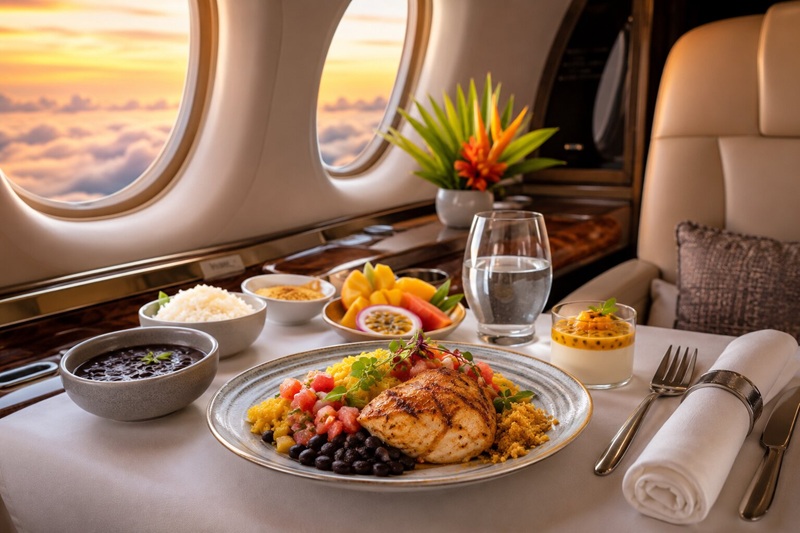
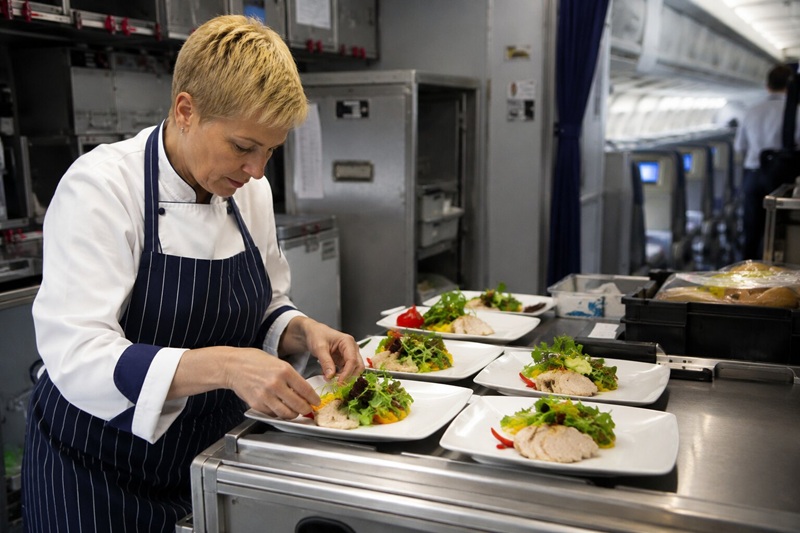
Skilled inflight catering services teams compensate for this with deliberate menu design. Umami-rich ingredients, slightly heavier seasoning, sauces that retain moisture, and dishes plated with strong visual contrast all help the brain perceive the meal as flavorful and satisfying. Background noise also plays a role. Studies on aircraft acoustics show that engine noise suppresses sweet and salty perception while amplifying perception of bitter and umami. Menu planners who understand this design dishes that lean into the flavors the cabin environment actually enhances, rather than fighting against the environment.
The Role of Timing and Rhythm
Timing is one of the most underappreciated dimensions of inflight service. Passengers cannot articulate it precisely, but they feel it immediately. A drink offered too soon after takeoff interrupts the moment of settling in. A meal served too late creates anxiety about hunger. A coffee delivered before the passenger reaches for it signals attentiveness, while the same coffee delivered three minutes after the request signals indifference.
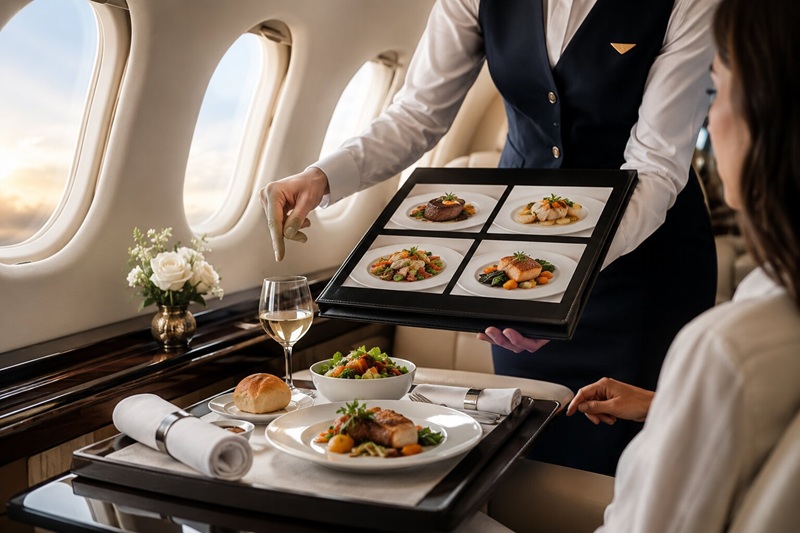
The rhythm of service is what creates the feeling of being cared for. Skilled cabin crews study their passengers in the first hour of a flight, calibrating pace to match individual preferences. Some passengers want quick, efficient service so they can work or sleep. Others want a more leisurely multi-course experience that fills the flight time with sensory pleasure. The crew that reads these cues accurately and adjusts in real time delivers what passengers describe as a memorable flight. The crew that follows a fixed script regardless of cues delivers what passengers describe as adequate.
Why Invisible Service Feels More Luxurious
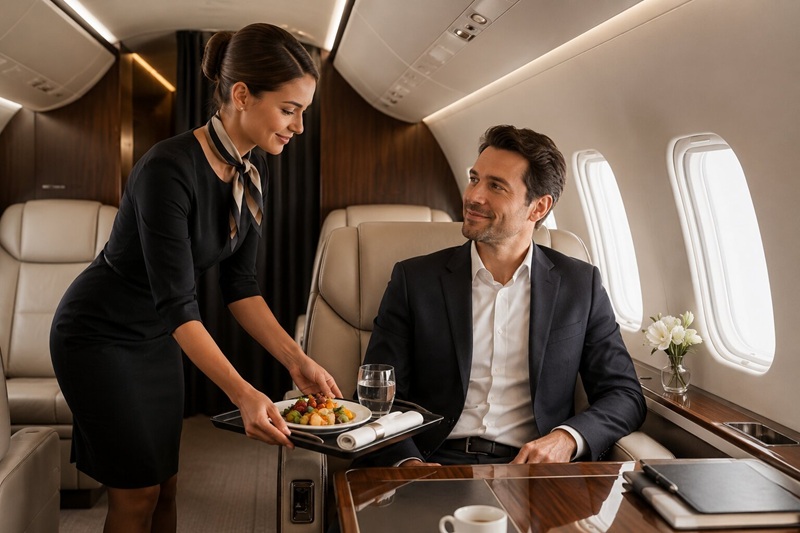
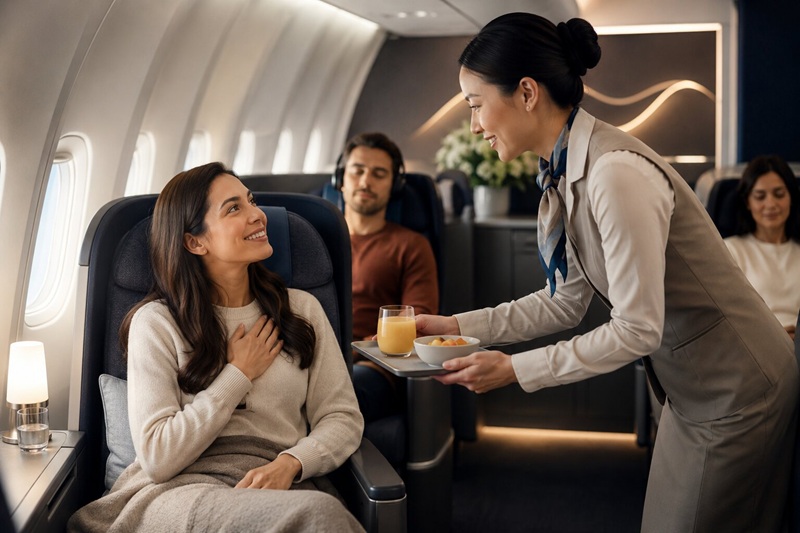
In luxury aviation, the most refined service is often the least visible. Passengers rarely notice when the crew anticipates their needs perfectly, because there is nothing to notice. There is no interruption, no awkward exchange, no question. The water glass refills before it empties. The blanket appears before the request. The plate is cleared at the exact moment the passenger finishes.
This is the principle of effortless care, and it is psychologically powerful. When effort is invisible, passengers experience the service as natural rather than performed. They feel attended to without feeling watched. Five-star private jet service teams train extensively in this kind of silent professionalism, because they understand that visible effort, however well-intentioned, can subtly remind passengers that they are being served. The goal is to make care feel like an ambient quality of the cabin, not a series of transactions.
Cultural Sensitivity as a Form of Emotional Care
Care has cultural texture. A meal that feels warm and respectful to one passenger may feel impersonal or even insensitive to another. A Saudi delegation expects certified halal preparation, served with appropriate etiquette. A Japanese executive may expect specific protocols around food presentation and timing. A French entrepreneur may judge the experience by the quality of the bread and the cheese course. Cultural sensitivity is not a bonus layer on top of good service. It is the foundation of how care is recognized in the first place. Dark Wing Inflight's coverage of cultural intelligence in private aviation explores how this awareness shapes catering decisions across global routes.
With operations spanning 2,000 airports in 135 countries, Dark Wing Inflight relies on multilingual coordination and locally vetted partners to make sure that every meal reflects the cultural context of the passenger, not just the country of departure. This is what allows a single aircraft to move between continents in a week and still deliver a consistent feeling of attentiveness to every guest on board.
Practical Principles for Designing Better Inflight Service
Flight departments, charter operators, and catering coordinators can apply the psychology of comfort and care through a few concrete practices:
Calibrate the cabin before boarding. Temperature, lighting, and scent should be set to match the passenger's preferred state, not the default.
Design menus for altitude, not for ground tasting. Adjust seasoning, moisture, and presentation to compensate for sensory dulling at cruise.
Read the rhythm of the passenger. The first hour of a flight contains nearly every cue needed to calibrate the rest of the service.
Make effort invisible. Anticipate needs rather than respond to requests whenever possible.
Train for cultural fluency. Cabin crew should understand not just the cuisine but the etiquette and expectations of the passenger's region.
Coordinate the catering inflight handoff. Communication between the ground caterer and the cabin crew determines whether the menu arrives ready to serve or arrives ready to fix.
Conclusion
Comfort in the cabin is built in the mind of the passenger long before it is built on the plate. The most respected operators in private aviation understand that physical luxury is a starting point, not a finish line. What separates a memorable flight from a forgettable one is the precision of timing, the invisibility of effort, the cultural intelligence behind every choice, and the sensory calibration of the meal itself. These elements are not visible on a spec sheet, but they are felt immediately by every passenger who steps on board. The flight departments and catering partners that take the psychology of inflight service seriously consistently deliver experiences that passengers describe in emotional terms rather than transactional ones. That distinction is what builds loyalty in private aviation, and it is what defines the standard of care that Dark Wing Inflight applies to every order across its global network.
Frequently Asked Questions
Why does food taste different on an airplane than on the ground?
At cruising altitude, cabin pressure drops and humidity falls to roughly 12 percent. These conditions reduce the sensitivity of the taste buds, particularly to salt and sweet flavors. Background engine noise further suppresses certain flavor perceptions while amplifying others. As a result, even well-prepared dishes can taste flat unless the menu has been designed specifically for altitude. Professional inflight catering teams compensate by selecting umami-rich ingredients, increasing seasoning intensity slightly, and choosing preparations that retain moisture and visual appeal during reheating. This is why altitude-optimized menu planning is now a standard part of premium aviation catering. The same dish prepared with ground-level seasoning will not perform the same way in the cabin.
What is the most important factor in passenger comfort during a flight?
Recent service quality research identifies seat comfort and food and beverage service as the two most influential factors in overall passenger satisfaction. However, the psychological experience of comfort is shaped by more than physical features. Cabin environment, crew demeanor, timing of service, cultural awareness, and the perceived effort behind each interaction all influence how cared for a passenger feels. In private aviation, where physical comfort is generally a given, these emotional and perceptual factors often determine whether a flight is remembered as exceptional or merely acceptable.
How does cabin crew timing affect the passenger experience?
Timing is one of the strongest psychological signals of service quality. A drink offered too early can feel intrusive. A meal served too late can create anxiety. A request fulfilled before it is voiced creates a sense of being known and attended to. Skilled cabin crews observe each passenger during the first hour of a flight and adjust the pace and rhythm of service to match individual preferences. This calibration is invisible to passengers but is one of the clearest differentiators between professional and exceptional inflight service.
Why does cultural sensitivity matter in inflight catering?
Cultural sensitivity affects whether a meal is experienced as care or as a missed opportunity. A halal meal from an uncertified supplier, a Hindu vegetarian plate prepared with cross-contamination risks, or a heavy Western breakfast served to a Japanese guest expecting traditional preparation all signal that the crew did not prepare. In contrast, a meal that respects the passenger's cultural context communicates attentiveness before a single word is spoken. For global private aviation operators, cultural fluency is not a refinement. It is a baseline requirement.
How can flight departments improve perceived service quality without major investment?
Most improvements in perceived service quality come from operational discipline rather than capital investment. Pre-departure cabin calibration, altitude-aware menu design, attentive timing, and cultural briefing of the crew can all be implemented immediately. Selecting a catering partner with global reach and consistent quality standards across regions further reduces variability. Dark Wing Inflight supports flight departments with 24/7/365 multilingual coordination and a network of 2,800+ vetted partners, which allows operators to apply these principles consistently regardless of departure airport.