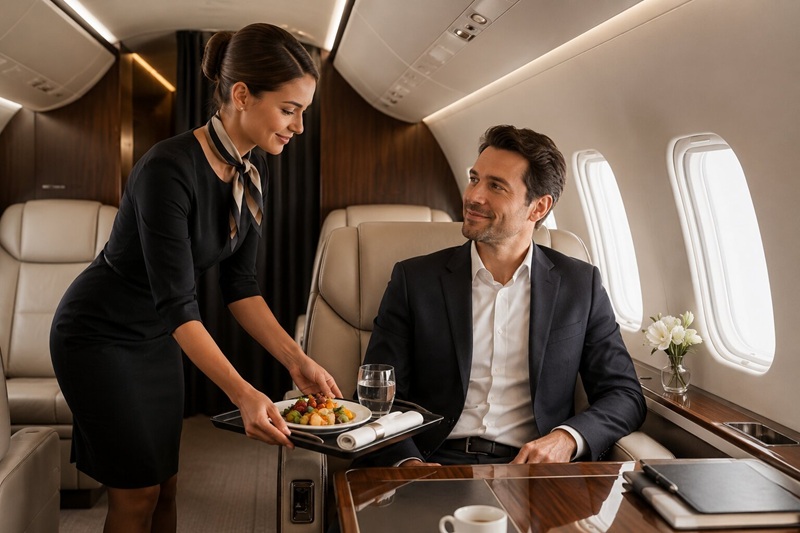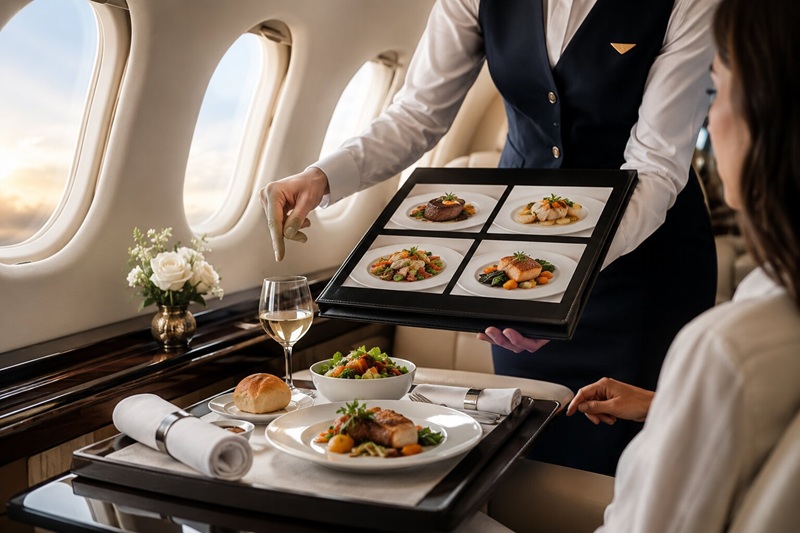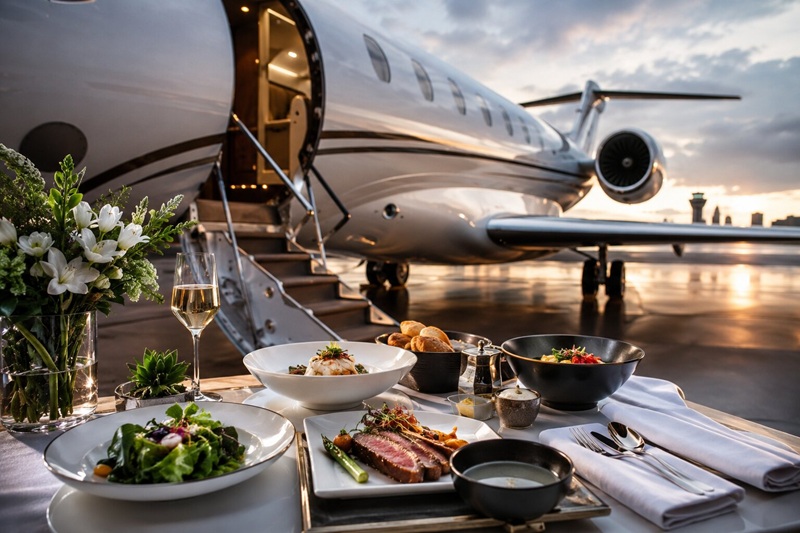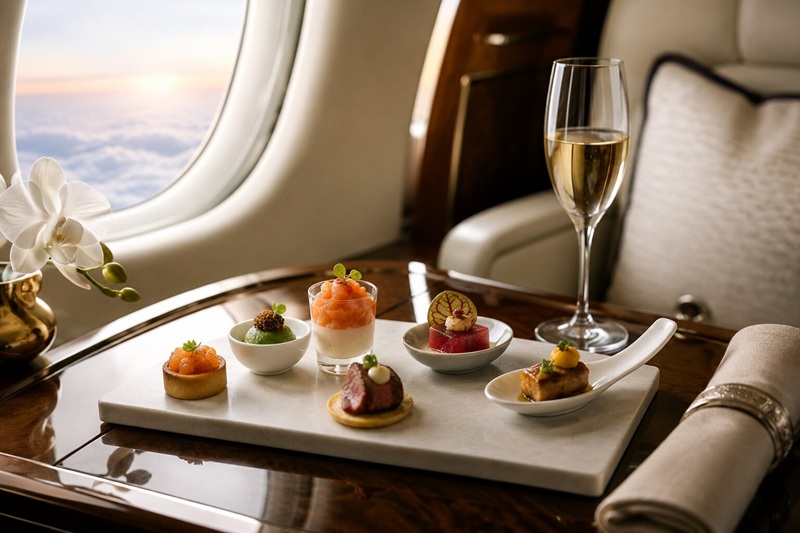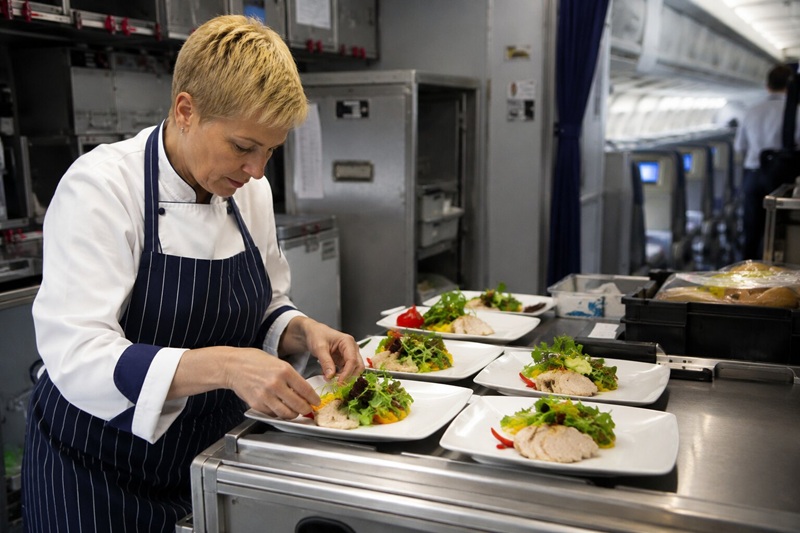
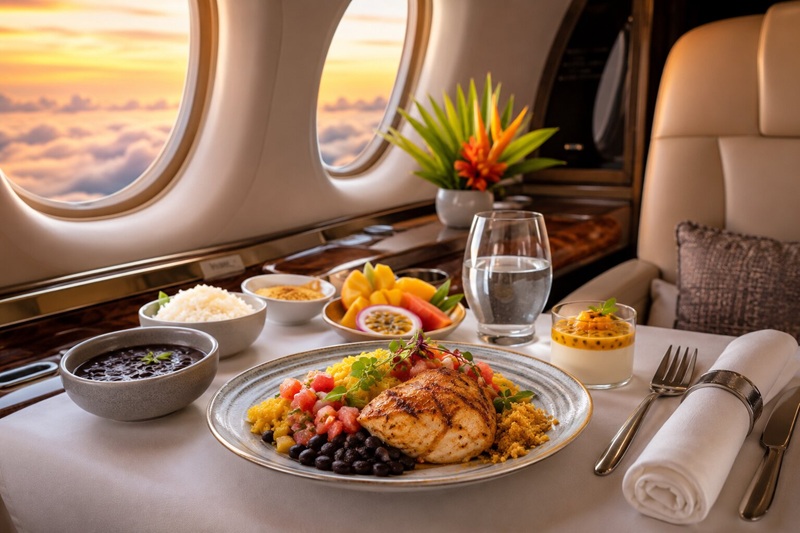
Brazil has quietly moved into the front row of global business aviation. Airbus Corporate Jets' 2025 analysis places the country second worldwide with 1,103 registered business jets, behind only the United States. Flight departments serving this fleet face a specific challenge: matching cabin catering to the depth of Brazilian cuisine without losing the safety and presentation standards VIP passengers expect.
Brazilian food is regionally layered, tropical in character, and often built around ingredients that behave differently at altitude. Getting it right on a private jet takes more than sourcing from a well-known restaurant. It calls for an operational grasp of packaging, temperature control, and menu design that holds together from Sao Paulo to Lisbon or Miami.
Why Brazilian Cuisine Is Gaining Ground on Cabin Menus
The volume side of the story is clear. Brazil recorded a 45 percent year-on-year jump in business aviation movements through the first eight months of 2025, according to figures released by Avi-Go ahead of NBAA-BACE. That growth has reshaped catering demand at airports such as Congonhas, Guarulhos, Jacarepagua, and Viracopos, where operators increasingly request menus reflecting the country's cuisine rather than defaulting to generic European or American plating.
Charter clients, foreign dignitaries, and returning Brazilian principals often ask for the same thing in different words: food that tastes like the country they are flying to or from. Well-executed regional dishes deliver that better than a copy-paste international menu.
Regional Building Blocks Worth Knowing
Brazil is not a single cuisine. It is a set of regional traditions built on Portuguese, African, Indigenous, Italian, Japanese, and Levantine influences. For private aviation food services, the regions below offer the most workable material:
- Southeast (Sao Paulo, Rio de Janeiro): Italian-Brazilian pasta, feijoada, moqueca capixaba, and the Sao Paulo pastelaria tradition.
- South (Rio Grande do Sul, Parana): churrasco cuts, chimichurri variants, and Italian-influenced polenta and risottos.
- Northeast (Bahia, Pernambuco): moqueca baiana, acaraje, tapioca, and dishes built on dende oil, coconut milk, and dried shrimp.
- North (Amazon basin): tucupi, jambu, tambaqui, and Amazonian fruits such as cupuacu and acai.
- Center-West: Pantanal-style beef, pequi, and river fish preparations.
Not every dish travels well. Fried items collapse. Delicate herb garnishes wilt. Menu design has to filter for what holds shape, temperature, and flavour through a two-hour catering window and a longer cabin service.
Signature Dishes That Perform Well at Altitude
Cabin altitude dulls sweet and salty perception, so heavier, well-seasoned Brazilian preparations often outperform lighter European plating on long-haul flights. Practical picks include:
- Slow-braised feijoada served with rice, farofa, and orange, portioned into sealed individual containers.
- Moqueca baiana or capixaba delivered in insulated packaging with sauce held separately.
- Cold-plated palm heart, endive, and citrus salads for hot-weather departures.
- Pao de queijo baked to order and packaged warm for pre-departure service.
- Brigadeiro, quindim, and pudim de leite for dessert courses that hold shape without refrigeration failure.
For principals who prefer lighter service, Amazonian fish ceviches, chilled coconut soups, and grilled palm heart salads work well on morning departures out of Rio, Salvador, or Recife.
Operational Considerations Around Brazilian Airports
Sourcing quality product in Brazil is straightforward in major hubs. The complication is logistics. Guarulhos handles most long-haul international private jet departures, but ramp access, customs, and delivery timing vary by FBO. Congonhas has tighter operational windows. Viracopos is often the fallback for larger aircraft. Jacarepagua and Santos Dumont serve Rio closer to the city.
For operators new to Brazilian departures, our overview of the rules of catering on private jets covers the documentation, packaging, and delivery standards that apply regardless of the departure airport.
Food Safety and Tropical Climate Realities
Brazilian ramp temperatures routinely sit between 28 and 38 degrees Celsius through much of the year. That changes how meals are packed, held, and delivered. HACCP-aligned cold chain handling is not optional. Items containing coconut milk, seafood, or dairy require insulated transport, sealed thermal packaging, and delivery windows tight enough to avoid extended holding on the ramp.
For long-range departures to Europe, the Middle East, or the United States, meals are portioned for reheating rather than plated fresh so cabin crew retain control over final service temperature.
Cultural Fit, Dietary Preferences, and Customization
Brazilian principals often request a mix of regional dishes and international expectations. A typical brief includes feijoada or moqueca as the anchor course, alongside a lighter Mediterranean or Japanese-Brazilian option for other passengers. Kosher, halal, gluten-free, and low-sodium variations of Brazilian dishes are all executable, but they need kitchen partners who understand the cuisine's structure rather than substituting ingredients blindly.
For a broader look at how customization is handled across our network, our note on premium private jet catering and bespoke meal options explains how requests are matched to the right kitchen for a given departure.
How Dark Wing Inflight Approaches Brazilian Departures
Dark Wing Inflight works with vetted restaurant, hotel, and Michelin-affiliated kitchen partners across Brazil's main private aviation airports. Menu build, sourcing, packaging, and ramp delivery are coordinated through a single point of contact, with 24/7 multilingual support covering Portuguese, English, Spanish, and French. Operators managing tail numbers across multiple Brazilian bases usually find the smartest way to manage inflight catering a useful reference for standardizing orders across departures without losing regional character.
Our global inflight catering platform also lists coverage across additional Brazilian and Latin American airports for teams evaluating provider options ahead of scheduled or ad-hoc trips.
Closing Thoughts
Brazilian cuisine is one of the more rewarding regional traditions to work with in the private aviation catering space, but only when menu, packaging, and ramp logistics are handled with the same discipline as the food. Regional variety, tropical climate, and the country's rapidly growing business aviation volume make Brazil a market where planning matters more than improvisation.
For flight departments and principals preparing departures from Sao Paulo, Rio, Belo Horizonte, Salvador, or any smaller Brazilian FBO, our team can build a menu that reflects the country's cuisine while meeting international safety and presentation standards. Reach us on +44 204 577 0985, WhatsApp +33 787 346 458, or by email at [email protected] to walk through requirements ahead of your next Brazil rotation. Same-day quotes and menu proposals are available around the clock, including short-notice requests out of Guarulhos, Congonhas, and Viracopos.
Frequently Asked Questions
Which Brazilian dishes work best on long-haul private jet flights?
Slow-braised, well-seasoned dishes hold up best. Feijoada, moqueca baiana, and picanha with farofa perform reliably because they retain flavour at cabin altitude and reheat without losing structure. Chilled options such as palm heart salads, ceviches, and coconut soups suit shorter or early-morning departures. Delicate fried items and herb-heavy garnishes are usually avoided because they lose quality during the catering window. Desserts such as brigadeiro, quindim, and pudim de leite hold shape without relying on active refrigeration. Menus out of Sao Paulo, Rio, or Salvador typically pair a Brazilian anchor course with a lighter international option so mixed passenger groups are covered.
Which Brazilian airports are covered for VIP inflight catering?
We coordinate deliveries into all major Brazilian gateways, including Guarulhos (GRU), Congonhas (CGH), Viracopos (VCP), Santos Dumont (SDU), Jacarepagua (SBJR), Confins (CNF), and Galeao (GIG). Coverage extends to Salvador, Recife, Fortaleza, Brasilia, and smaller FBOs across the Midwest. Restaurant, hotel, and specialist kitchen partners are pre-vetted for HACCP-aligned handling, packaging, and ramp delivery timing. For operators new to a specific airport, we confirm FBO access, delivery windows, and customs handling ahead of the day. Same-day and short-notice orders are accepted around the clock, and the support desk operates in Portuguese, English, Spanish, and French.
How is food safety maintained during tropical Brazilian departures?
Food safety on Brazilian ramps is handled through strict cold chain protocols, sealed thermal packaging, and delivery windows tight enough to avoid extended holding in high ambient temperatures. Partner kitchens work to HACCP-aligned standards, and packaging is selected based on meal type, sector length, and expected cabin service time. Seafood, coconut-based sauces, and dairy items receive priority handling because tropical humidity and ramp heat accelerate quality loss. Meals for reheating are portioned so cabin crew retain control over final service. Delivery is timed to the confirmed departure slot rather than the scheduled block time. Documentation on temperature control, allergen labelling, and sourcing is available on request.
Can Brazilian menus be adapted for kosher, halal, or dietary restrictions?
Yes. Kosher, halal, gluten-free, low-sodium, vegetarian, vegan, and allergen-specific variations of Brazilian dishes are handled through our partner network. Certified kosher and halal kitchens supply meals that retain the character of the original dish rather than reducing it to a bland substitute. A halal picanha service can be prepared with certified beef, and a gluten-free feijoada is straightforward once the accompaniments are adjusted. Cross-contamination controls, labelling, and separate packaging are standard. Requests are confirmed in writing ahead of the flight, and dietary tags are attached to each meal container so cabin crew can identify them without opening packaging. Multi-restriction orders benefit from earlier lead times.
How much notice is needed for Brazilian catering on a private jet?
Standard lead time is 12 to 24 hours for full custom menus, which allows sourcing, preparation, and ramp delivery to be coordinated without shortcuts. Short-notice orders down to four hours are accepted at major hubs such as Guarulhos, Congonhas, Viracopos, and Santos Dumont, provided the menu draws from partner kitchens' active offerings. Michelin-standard tasting menus, multi-dietary orders, or specialist regional dishes benefit from 48 to 72 hours so the right kitchen partner can be selected and product sourced fresh. For repeat operators, we hold preferred menus and principal preferences on file so subsequent orders turn around faster.