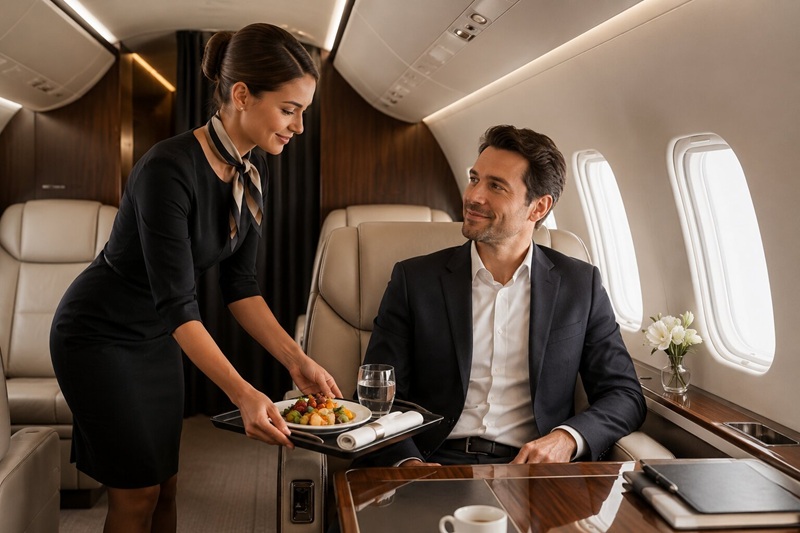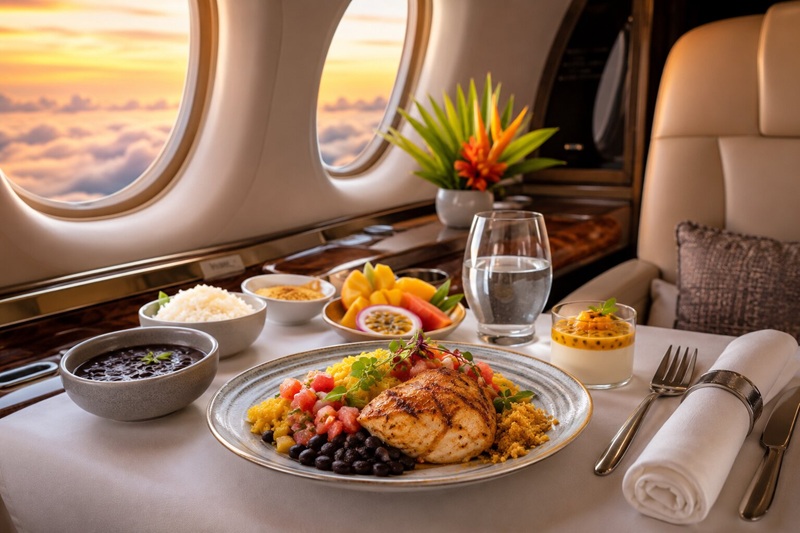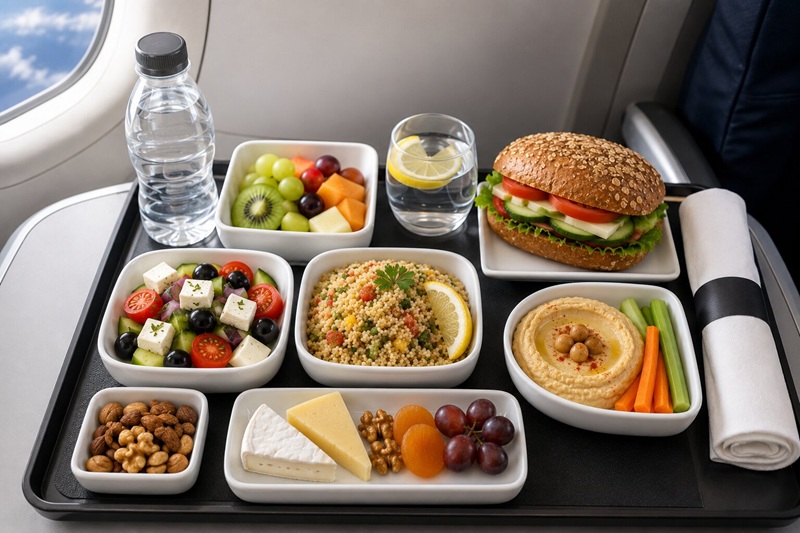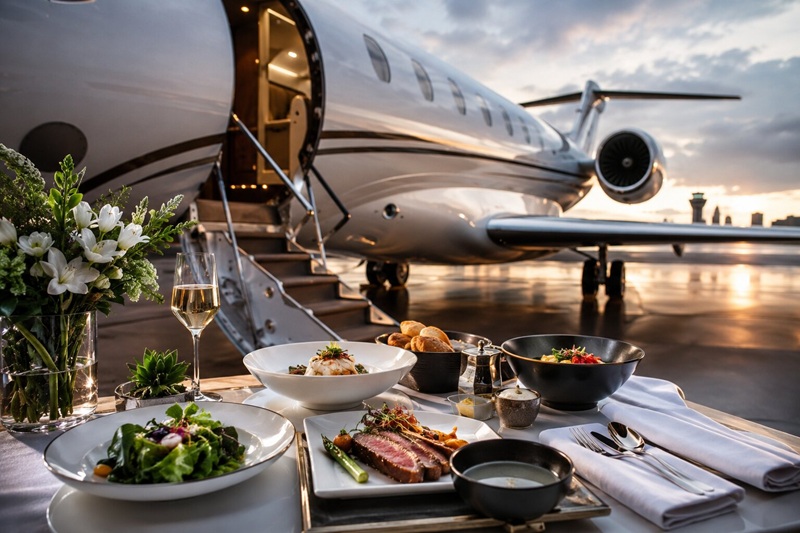
Ordering food for a private jet looks straightforward from the outside. A menu, a phone call, a delivery to the aircraft. In practice, every order sits at the crossroads of aviation safety, kitchen logistics, cultural expectation, and time pressure that leaves no room for error. Flight crews and operators understand the reality quickly: a late trolley, a missed allergen note, or a poorly packed hot dish can quietly undo an otherwise flawless trip.
This guide breaks down how a professional catering order actually comes together in 2025, and what separates a smooth handover in the galley from a scramble on the ramp.
Why a Private Jet Order Is Not a Restaurant Order
A restaurant plates food for a table ten feet from the pass. A caterer serving business aviation delivers to a moving asset, often on tight slot windows, sometimes at 3 a.m., and increasingly to airports without a home kitchen. Global business jet activity is projected to keep rising through 2026, with sustained demand at secondary and remote fields, according to the IATA 2025 industry outlook. That expansion has pulled inflight catering into places where legacy caterers simply do not operate, which is why global partner networks now matter more than any single kitchen.
Add temperature control, packaging that survives turbulence, HACCP documentation, security screening, and last-minute passenger changes, and the order becomes a coordinated operation rather than a purchase.
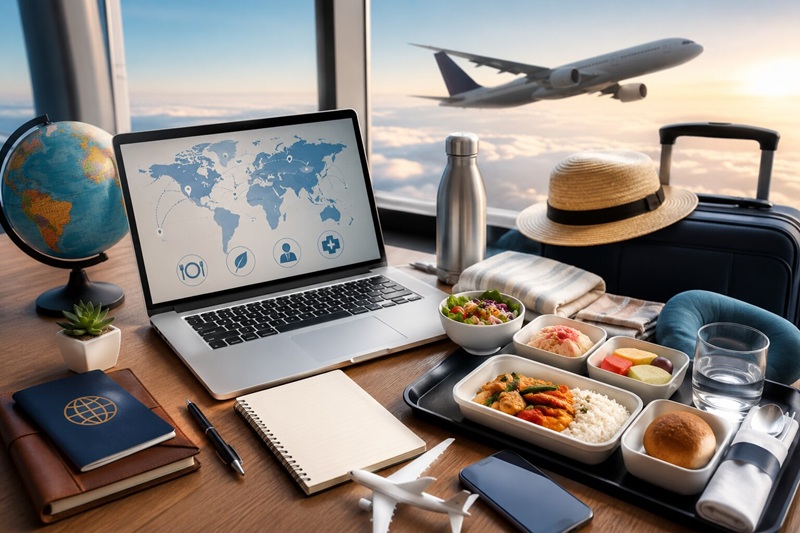
The Real Timeline Behind an Order
Most operators send catering requests between twelve and forty-eight hours before ETD. The gold standard is twenty-four hours, but VIP trips routinely land inside the four-hour window, especially for repositioning legs or unplanned diversions.
A practical timeline typically looks like this:
- 24 to 48 hours out: menu confirmation, dietary flags, headcount, china and linen preferences.
- 12 hours out: kitchen production begins, allergens double-checked, packing plan finalised.
- 3 to 4 hours out: quality control, temperature log initiated, driver briefed.
- 90 minutes out: airside delivery, handover to crew, seal check and paperwork sign-off.
The tighter the window, the more the network behind the order matters. Local sourcing, pre-cleared airside vehicles, and multilingual dispatch teams turn a rushed request into a controlled one.
Menu Design: Where Craft Meets Constraint
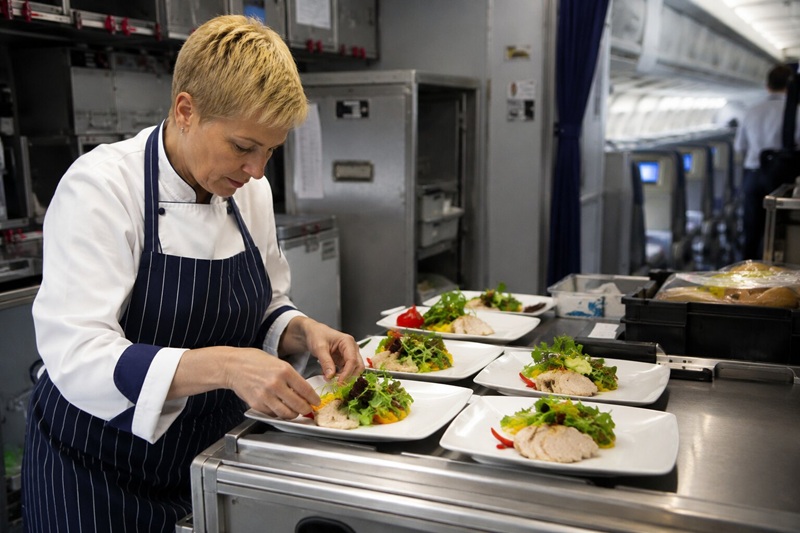
A galley is not a kitchen. Ovens are small, hold times matter, and presentation has to survive a plated reheat at altitude. Skilled culinary teams design around three constraints at once: how the dish tastes on the ground, how it reheats at cruise, and how it looks after twenty minutes in a chafing dish.
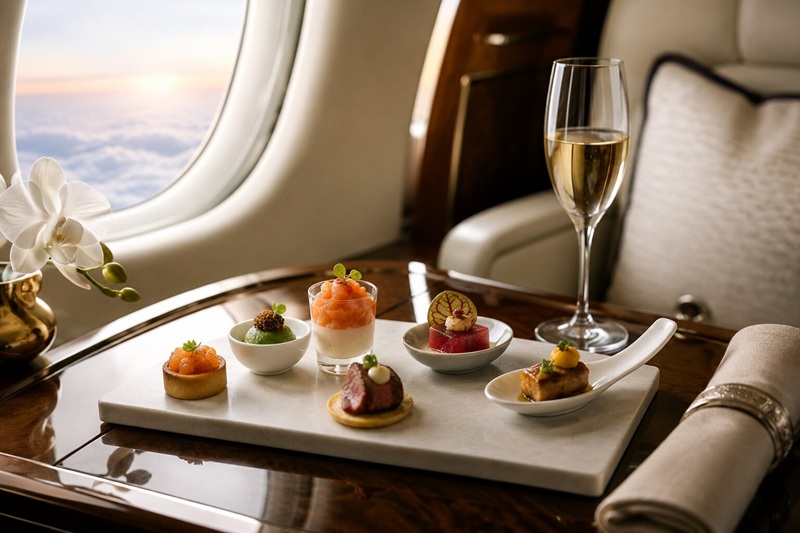
Dishes that travel well share a few traits. Sauces are held separately. Proteins are cooked slightly under to allow for a second heat. Garnishes are added in the air, not the kitchen. Cold canapes carry hero status on short legs because they need no intervention from the crew.
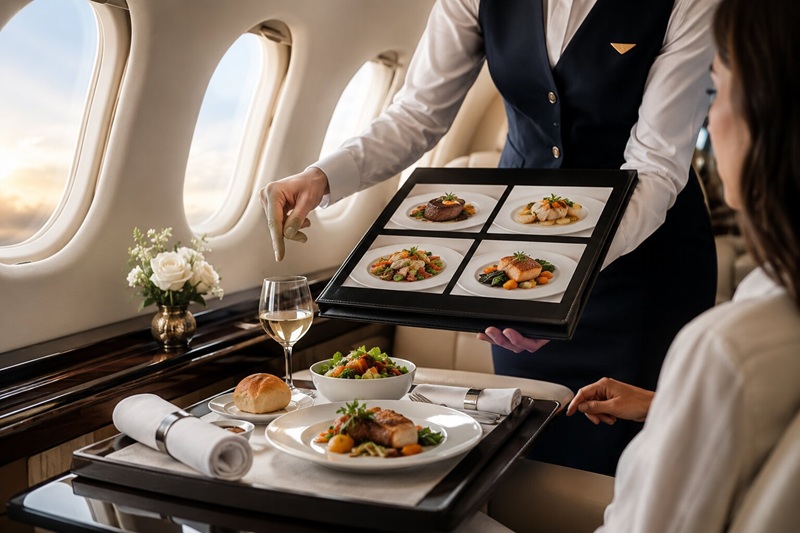
Menu structure also follows passenger intent. A five-hour business hop calls for a light protein, a hydrating starter, and one indulgent element. A twelve-hour heavy jet mission calls for staggered service, a proper hot main, and a breakfast layer timed to the arrival window. Increasingly, principals are asking for plant-forward menus, low-histamine options, and locally sourced produce, a shift documented in the World Economic Forum 2025 food and consumption briefing.
Sourcing, Safety, and the Cold Chain
The invisible half of any premium order is temperature discipline. Cold items must hold below 5 degrees Celsius from kitchen to aircraft. Hot items either travel hot in insulated carriers or, more commonly, travel chilled with reheat instructions for the crew. HACCP documentation follows every step, and the best operators log temperatures at pack-out, at loading, and at handover.
Sourcing sits on top of that. VIP menus lean on Michelin-trained chefs, five-star hotel kitchens, and regional specialists who understand what a caviar service or a wagyu presentation demands at 41,000 feet. For sensitive cargo like fresh seafood or specialty dairy, the FDA 2025 food safety guidance sets a floor that professional aviation kitchens routinely exceed.
At Dark Wing Inflight, that discipline runs through a network of more than 2,800 restaurants, VIP caterers, luxury hotels, and Michelin-star chefs across 2,000 airports in 135 countries, which is what makes reliable sourcing possible at both London Luton and a remote Central African field on the same night.
Special Requests, Dietary Precision, and Cultural Fluency
Dietary requests are the fastest way to test a caterer. Kosher for a Tel Aviv leg. Halal certified through arrival meals in Riyadh. A strict FODMAP protocol for a principal recovering from surgery. Nut-free galley protocols for a family with a severe allergy.
Precision here is non-negotiable. Allergen cross-contact controls, separate prep zones, sealed transport, and named certification bodies are the baseline expectation for principals paying luxury rates. Cultural fluency matters just as much: knowing that a Ramadan flight needs a suhoor tray timed to local sunrise, or that a delegation from Tokyo expects precise ochoko sizing for sake service, is what turns a competent order into a memorable one.
For a closer view of these expectations, our guide to the rules of catering on private jets breaks down the regulatory and etiquette layers in one place.
Common Mistakes That Quietly Sink an Order
The most expensive errors are almost never dramatic. They are small oversights that compound.
- Vague headcounts that leave the galley short on the return leg.
- Late allergen disclosures received after production has started.
- Missing china preferences, forcing the crew to plate on generic ware.
- Poor labelling, which slows the crew during service.
- Underestimating security screening time at busy FBOs.
Experienced operators fix these by using a single point of contact, a written standing menu for repeat principals, and a briefing note attached to every order. A closer look at how to systemise this is set out in our operator-focused piece on the smartest way to manage inflight catering, which walks through the process from confirmation to loading.
For principals who want a working reference for premium menu construction, our bespoke meal planning framework for private jets offers a practical starting point.
What Good Looks Like in 2026
The direction of travel is clear. Faster confirmations, tighter allergen protocols, more plant-forward menus, and stronger cold chain evidence. Principals are also asking for greater transparency on sourcing, on carbon reporting, and on the actual identity of the kitchen preparing their food. Forecasts through 2026 suggest continued growth in ultra-long-range missions, which raises the bar for staggered service planning and second-meal quality.
Providers that combine local kitchen craft with global coordination, twenty-four hour multilingual dispatch, and clean HACCP paperwork will keep winning the trips that matter. That is where mature flight catering services separate themselves from ad hoc suppliers.
A Final Word
A well-run catering order is invisible. It arrives on time, labelled correctly, at the right temperature, with allergens flagged, china chosen, and a briefing note the crew can act on in seconds. Everything else, from menu creativity to caviar service and rare wine pairing, sits on top of that discipline.
Operators and flight departments planning upcoming trips can request a tailored menu, a standing order framework, or a same-day quote across any of the 2,000 airports served worldwide. Reach the team on +44 204 577 0985, WhatsApp on +33 787 346 458, or email [email protected]. Twenty-four hour multilingual dispatch is available every day of the year, and every request is handled by a named coordinator from confirmation to delivery.
Frequently Asked Questions
Q1. How far in advance should a private jet catering order be placed?
Twenty-four hours is the working standard for full menu customisation. Shorter windows are workable through global networks with airside access, and many premium orders are confirmed inside four hours on repositioning or diverted legs. The earlier the request, the more room the kitchen has for specialty sourcing, allergen controls, and china selection.
Q2. Can dietary and religious requirements be guaranteed on international flights?
Yes, provided the caterer works with certified suppliers and applies documented cross-contact controls. Kosher, Halal, Jain, gluten-free, low-FODMAP, and severe allergy protocols are all served daily on VIP missions. The key is written confirmation of the certification body, sealed transport, and a briefing note that travels with the trolley.
Q3. How is food safety managed between the kitchen and the aircraft?
Through a documented cold chain. Cold items hold below 5 degrees Celsius, hot items travel in insulated carriers or as chilled reheats, and temperatures are logged at pack-out, loading, and handover. HACCP compliance is standard on premium orders, and reputable providers can share their food safety paperwork on request.
Q4. What is the difference between hotel catering and specialist aviation catering?
Hotel kitchens plate for service at the table. Specialist providers plate for a galley, a reheat cycle, and turbulence. Packaging, labelling, cold chain evidence, and airside delivery discipline are what set aviation catering apart. Both can be excellent, but only one is built for the aircraft environment.
Q5. Which airports are usually the hardest to cater from, and how is that solved?
Remote fields, secondary strips, and destinations with limited FBO infrastructure are the usual pressure points. The fix is a global partner network with pre-cleared vehicles, multilingual dispatch, and backup kitchens within reasonable range. Coverage across a wide airport footprint, rather than reliance on any single kitchen, is what keeps quality consistent.