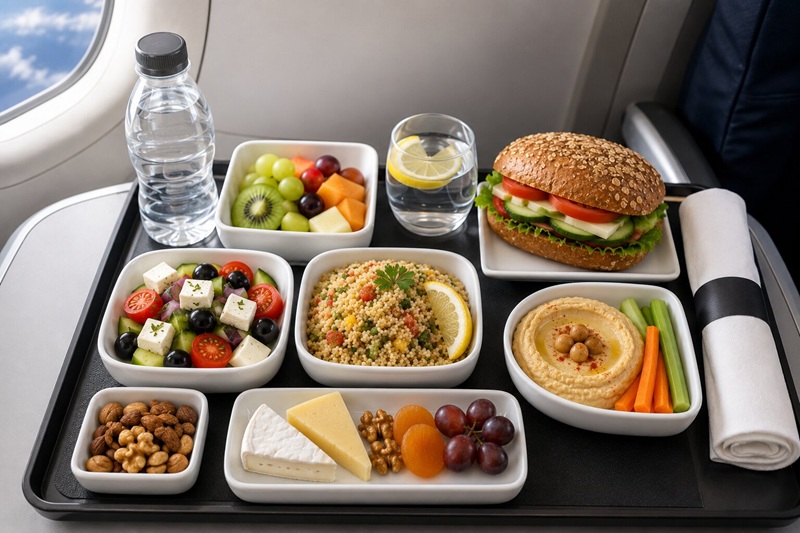
The Reality of Catering on Light Jets and Turboprops
Not every private aircraft has a galley with an oven or microwave. Light jets such as the Cessna Citation Mustang, HondaJet Elite, Embraer Phenom 100, and turboprops including the King Air 350 and Pilatus PC-12 typically fly with no active heating equipment onboard. On these aircraft, every menu decision must account for one non-negotiable fact: the food will be served at the temperature it was loaded.
That constraint shapes the entire ordering process. Flight departments planning cold service need menus built for stability, safety, and presentation over several hours in the cabin. According to the Honeywell 2025 Global Business Aviation Outlook, light jets continue to account for a meaningful share of forecast deliveries through 2035, which means demand for well-executed cold catering is only rising.
Why Cold Catering Is the Standard for Small-Cabin Aircraft
Small-cabin aircraft prioritise range, weight, and simplicity over galley amenities. The trade-off is straightforward: no ovens or microwaves, no reheating in the air. Everything served must be safe and appealing at chilled or ambient temperature.
The main considerations for operators and caterers:
- Weight savings from removing galley heating equipment translate into fuel and payload benefits
- Cold service reduces onboard preparation risk during turbulence
- Menus can be plated in advance, sealed, and loaded ready to serve
- Cabin crew or the sole pilot can present the meal with minimal effort
The role of catering here is not to work around a limitation. It is to design menus that treat cold service as the primary format, not a downgrade.
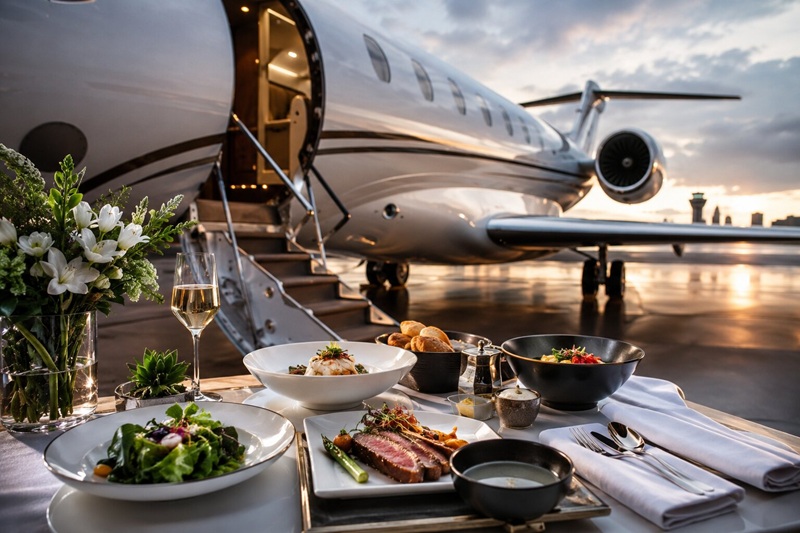
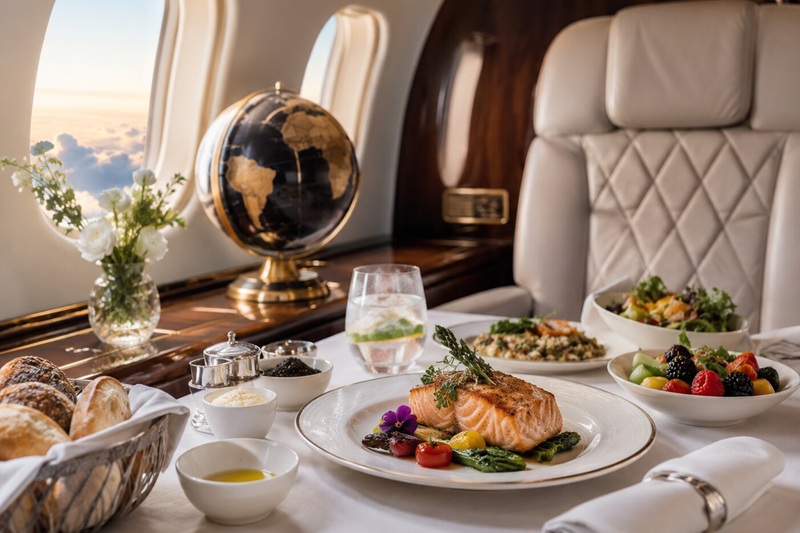
There is also a client expectation piece. Principals paying for a light jet charter or flying their own turboprop expect the food to reflect the same standards they would find in a private club or a fine dining restaurant. Cold does not mean casual. The finest raw bar in Paris, the sushi counter in Ginza, and the caviar service on any yacht in the Mediterranean are all cold by design. The same logic applies at 41,000 feet.
Matching Menu to Mission Profile
Before selecting dishes, match the menu to the flight. A one-hour hop between London and Paris asks for something very different from a five-hour transcontinental leg or a repositioning flight with a light snack service. Three factors drive the menu brief:
- Flight duration and the number of service rounds expected
- Time of departure, which sets whether breakfast, lunch, dinner, or a late snack is the anchor
- Passenger profile, including principals, family, business colleagues, or crew rest catering
A well-briefed caterer will ask these questions before proposing anything. If the answer is a one-hour flight at 15:00 with two principals, the right answer might be a small charcuterie plate, fresh fruit, and a single dessert bite. Loading a five-course tasting menu on that mission wastes food and burns budget.
Cold Menu Ideas That Perform Well in the Cabin
The right menu balances flavour, texture, and shelf stability. Below are categories that consistently work for flights of two to six hours, which covers most light jet missions.
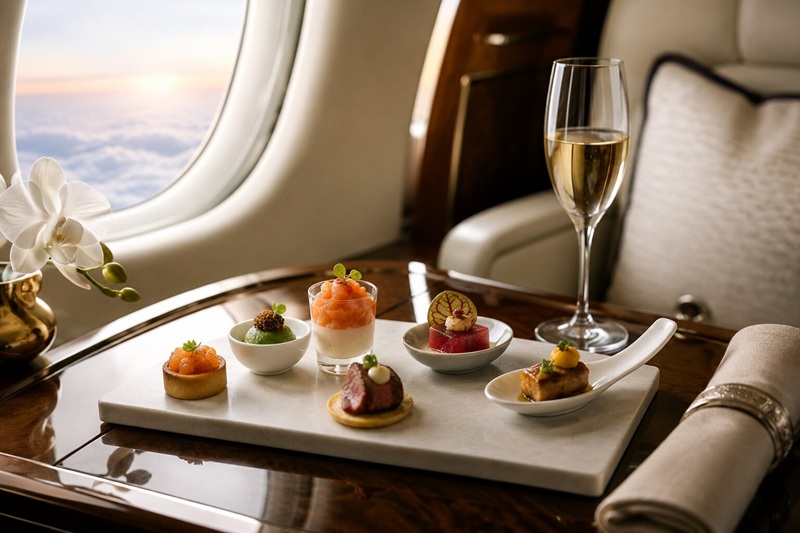
Chilled Starters and Canapés
- Beef tataki with citrus ponzu and micro herbs
- Smoked salmon roulade with dill crème fraîche
- Burrata with heirloom tomatoes, basil oil, and aged balsamic
- Tuna tartare on crisp wonton with avocado and yuzu
- Foie gras terrine with fig chutney and toasted brioche
Cold Main Courses
- Poached lobster tail with lemon aioli and shaved fennel
- Roast beef tenderloin sliced cold with horseradish cream and pickled shallots
- Confit duck leg with orange gastrique, served room temperature
- Chilled seared tuna niçoise with quail eggs and haricots verts
- Vitello tonnato, thinly sliced veal with tuna caper sauce
Salads and Grain Bowls
- Quinoa bowl with roasted vegetables, feta, and pomegranate
- Lobster and mango salad with a light citrus vinaigrette
- Freekeh salad with pistachios, herbs, and preserved lemon
- Classic Waldorf reimagined with smoked chicken
Charcuterie, Cheese, and Bread
- Selection of Iberico, prosciutto di Parma, and bresaola
- Cheese board with Brie de Meaux, aged Comté, and blue Stilton
- Artisan crackers, walnut bread, and fruit compotes
- Marinated olives, cornichons, and quince paste
Sandwiches and Handhelds Elevated
- Lobster rolls on brioche with brown butter
- Wagyu roast beef on sourdough with truffle mayo
- Open-faced smoked salmon on rye with capers and dill
- Miniature club sandwiches with free-range chicken and pancetta
Desserts That Travel Well
- Individual pavlovas with berries and passion fruit curd
- Chocolate ganache tarts with sea salt
- Panna cotta with seasonal fruit compote
- Petit fours, macarons, and hand-dipped truffles
- Fresh fruit platters with edible flowers
Beverage Pairings That Do Not Need Heating
Cold cabins are not restricted to cold drinks. Most light jets carry a coffee flask or hot water thermos, and many turboprops have a small beverage station. The catering brief should account for what the aircraft can and cannot serve.
- Chilled Champagne and sparkling wine, decanted still wines, and craft beer for adult service
- Cold-brew coffee in glass bottles, ready to pour without brewing
- Iced tea infusions, cucumber and mint water, and pressed juices
- Hot beverages prepared on the ground and loaded in insulated thermal carafes for the first hour
- Herbal tea sachets and instant premium coffee sticks for aircraft with hot water only
Beverage service on a cold catering flight often lifts the perceived quality of the meal more than the food itself. A perfectly chilled bottle of Krug does more for a light jet cabin than an average hot main course ever could on an equipped aircraft.
Packaging, Cold Chain, and Presentation
Cold catering succeeds or fails on the ground before the aircraft ever moves. The packaging brief for a no-galley flight is different from a heavy jet with full kitchen support.
Best practice for light jets and turboprops:
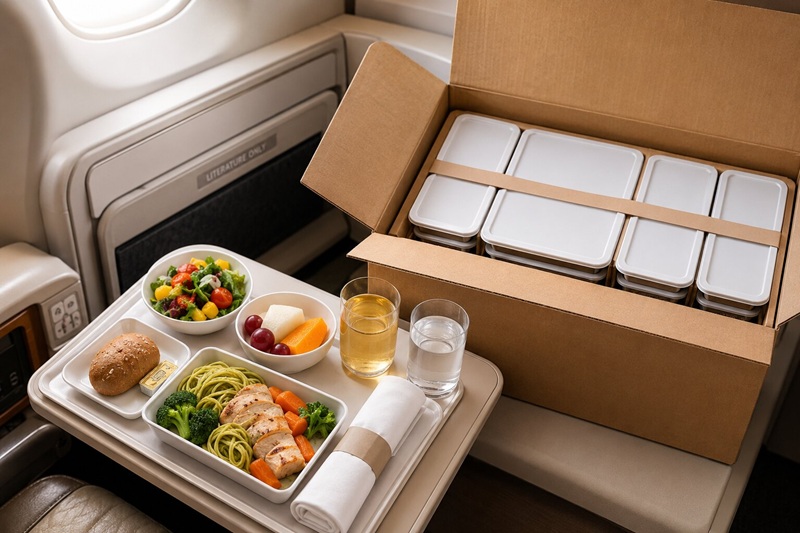
- Vacuum-sealed portions where possible to lock in freshness and prevent leakage
- Insulated cool bags with food-grade gel packs sized for the flight duration plus a two-hour buffer
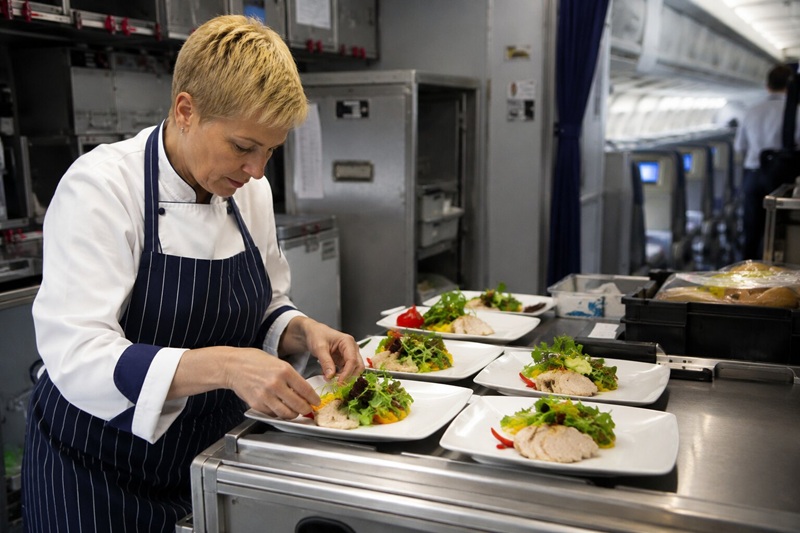
- Plated presentation on lightweight porcelain or premium disposable ware, wrapped and labelled
- Separate packaging for items sensitive to moisture, such as crackers and toasted breads
- Clear labelling with contents, allergens, and use-by time
Detailed handling protocols, from loading temperatures to acceptable holding windows, are covered in our guide to the rules of catering on private jets, which is a useful reference for flight departments building internal SOPs.
Food Safety Without an Onboard Heat Source
Cold service does not lower the safety bar. It raises it. Without the ability to reheat, every step of the cold chain matters. The FDA Food Code 2025 Supplement continues to reinforce the principle that potentially hazardous foods should be held at 5°C or below, and time-temperature control remains the central pillar of safe cold service.
Practical rules for operators:
- Confirm the caterer works to HACCP standards and can provide temperature logs on request
- Ask for the loading temperature of every chilled item
- Match ice pack quantity to the longest expected time between catering pickup and last service
- Avoid raw shellfish, soft-poached eggs, and rare fish for flights exceeding four hours unless cold chain is verified end to end
- Keep dairy-heavy desserts refrigerated until the final approach snack service
Dietary Preferences and Cultural Sensitivity
Cold menus adapt well to specific dietary needs because the caterer has full control at the plating stage. Common requests our partners handle include kosher, halal, vegan, gluten-free, low-sodium, and diabetic-friendly formats. Cultural preferences also matter on international sectors, where a Middle Eastern client may prefer mezze-style spreads and a Japanese principal may expect sushi-grade fish handled with cold chain precision.
Menu customisation at this level is the reason many operators move away from generic catering platforms and towards specialist providers. Our overview of premium private jet catering services and bespoke meal options walks through how tailored menus are built for repeat clients.
How Dark Wing Inflight Approaches Cold Catering
Dark Wing Inflight coordinates cold service through a partner network that includes VIP caterers, five-star hotel kitchens, and Michelin-recognised chefs across more than 2,000 airports in 135 countries. The value for a light jet operator is direct: one point of contact, consistent presentation standards, and cold chain protocols that hold up whether the aircraft is departing Teterboro, Le Bourget, or a regional field with no dedicated FBO kitchen.
Our 24/7 coordination desk handles short-notice changes, dietary updates, and multi-leg planning where different caterers must produce compatible menus. More on this workflow is covered in the smartest way to manage inflight catering.
Bringing It Together
Cold catering for aircraft without ovens or microwaves is not a compromise. It is a discipline. The best in-flight catering programmes for light jets and turboprops start with menus designed for cold service, backed by rigorous packaging, verified cold chain, and presentation that matches the standards of the cabin. Flight departments that treat cold service as a specialisation, not an afterthought, consistently deliver a better experience to principals and passengers.
For operators planning trips on aircraft without heating equipment, the right partner removes the guesswork. Our team builds cold menus that suit the mission profile, the client, and the airport of departure.
To request a quote or discuss a specific trip, contact us on +44 204 577 0985, WhatsApp +33 787 346 458, email [email protected], or visit darkwinginflight.catering.
Frequently Asked Questions
1. What food options work best on private jets without ovens or microwaves?
Cold menus perform best. Options include chilled seafood such as poached lobster and tuna tartare, cold roast meats, charcuterie and cheese boards, grain bowls, artisan sandwiches, and desserts like panna cotta or chocolate tarts. The rule is to select dishes that taste as good at chilled or ambient temperature as they would hot, and to avoid anything that relies on reheating to be enjoyable.
2. How long can cold catering safely stay in a private jet cabin?
With correct packaging and gel packs, cold catering can safely hold in the cabin for the duration of most light jet flights, typically two to six hours. Perishable items should be kept at or below 5°C until service. For flights beyond six hours, or where there is no cabin refrigeration, discuss timing with the caterer so packaging is matched to the flight duration plus a safety buffer.
3. Which aircraft typically require cold catering only?
Light jets and turboprops are the main category. This includes the Cessna Citation Mustang, HondaJet Elite, Embraer Phenom 100, Beechcraft King Air series, Pilatus PC-12, and TBM 940. Some very light jets have a coffee maker or hot water flask but no oven or microwave, so hot beverages are possible while food service remains fully cold.
4. Can dietary and cultural preferences be accommodated in cold menus?
Yes, and cold service actually makes customisation easier because everything is plated and sealed on the ground. Kosher, halal, vegan, gluten-free, low-sodium, and diabetic-friendly menus are all standard. Regional preferences, such as Japanese sushi-grade selections or Middle Eastern mezze, are built into the menu at the ordering stage and prepared by partner caterers with the relevant expertise.
5. How do I book cold catering for a flight at short notice?
Contact a specialist provider with a global partner network that operates around the clock. Our 24/7 desk handles short-notice cold catering orders, coordinating with local partners at the departure airport to prepare and deliver plated cold menus within the required window. Aircraft catering services for last-minute departures depend on the caterer having pre-approved suppliers at the airport, which is why network reach matters more than any single kitchen.