Ordering Catering Across Borders Is Not a Uniform Process
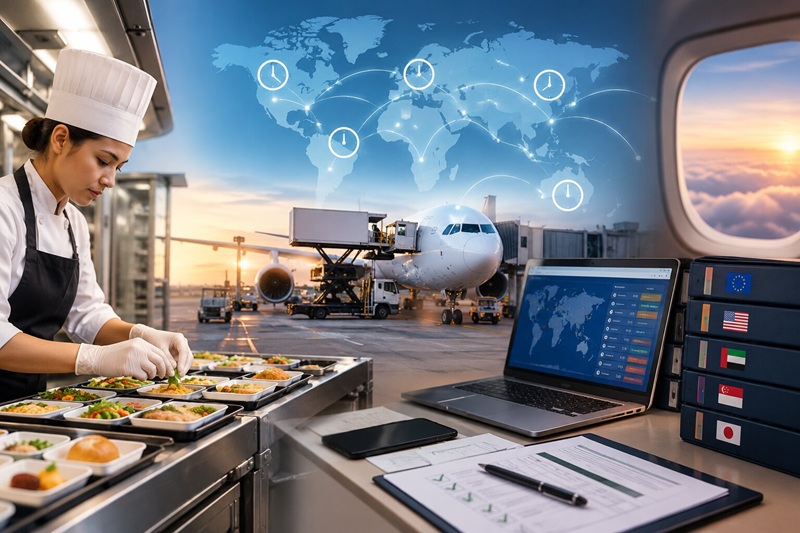
Placing a catering order for a private jet departing from Teterboro is a fundamentally different process from placing one at Suvarnabhumi in Bangkok or Lanseria in Johannesburg. The menu options, lead times, delivery logistics, food safety frameworks, and payment systems change from airport to airport and from country to country. According to analysis from Intel Market Research, the global airline catering market is projected to grow from USD 19.8 billion in 2025 to USD 29.3 billion by 2034, with catering firms navigating over 25 different certification frameworks worldwide. For private aviation operators flying international routes, understanding these regional differences is essential to placing orders that arrive on time, meet passenger expectations, and comply with local regulations.
This guide breaks down the key variables that change when ordering catering across international routes and how flight departments can navigate them effectively.
Lead Times Vary Dramatically by Region
In North America and Western Europe, catering orders can typically be placed with 12 to 24 hours of notice, and many providers accommodate same-day requests at major FBOs. The private aviation infrastructure in these regions is mature, with established caterers near most high-traffic airports.
In the Middle East, lead times are similar at major hubs like Dubai, Abu Dhabi, and Doha. However, at secondary Gulf airports or across North Africa, lead times can extend to 48 hours or more, particularly for specialized dietary requirements.
In Southeast Asia, Sub-Saharan Africa, and parts of South America, advance ordering is not a recommendation but a necessity. Airport access protocols, limited local supplier networks, and customs clearance processes for food deliveries can add significant time to the order-to-delivery cycle. A flight departing from a regional airport in Indonesia or a private terminal in Lagos may require 48 to 72 hours of notice to guarantee the quality and completeness of the order.
Food Import Regulations and Customs Restrictions
One of the most significant differences in ordering across borders is how each country regulates food entering the airport environment. Australia and New Zealand enforce some of the strictest biosecurity controls in the world, restricting the import of fresh meat, dairy, fruit, and certain plant-based products. Catering for private jets arriving in Sydney or Auckland must be sourced locally rather than carried onboard from a previous international leg.
The United States, through its FDA food safety regulations, restricts certain imported food products and requires specific handling standards. The EU, Japan, Singapore, and the UAE each maintain distinct protocols. Carrying leftover catering across borders risks confiscation or delays.
The practical implication is that each departure point on a multi-stop international itinerary should be treated as a fresh catering event. Carrying provisions across borders introduces compliance risk that experienced operators avoid by sourcing locally at each stop.
FBO Delivery Protocols Differ by Airport
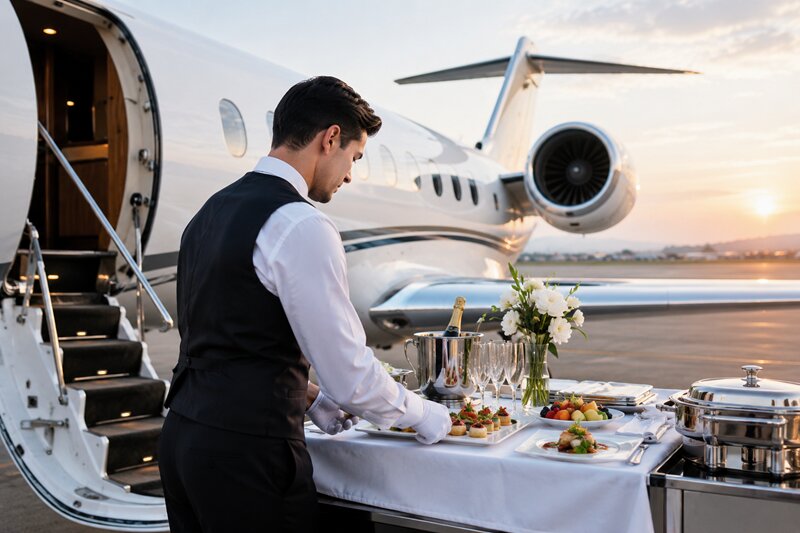
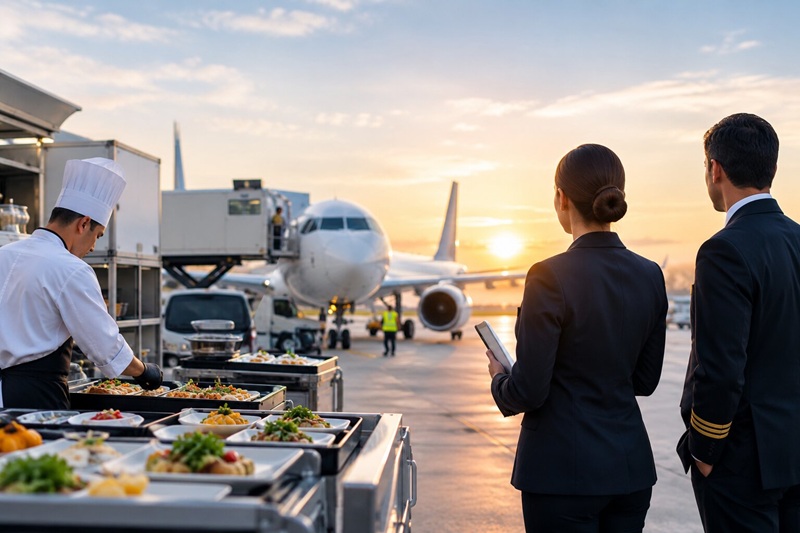
FBO delivery logistics are another variable that changes internationally. In the US and Europe, catering vehicles have streamlined ramp access and deliver directly to the aircraft. At airports in Africa, Central Asia, and parts of South America, deliveries must pass through additional security screening or escort requirements that extend the delivery window.
Some airports require catering providers to hold specific airside access credentials that not all local suppliers possess. In these cases, the caterer may need to hand off the delivery to an authorized ground handler for the final leg from the security perimeter to the aircraft. Dark Wing Inflight manages these logistics through our network of 2,800+ vetted partners across 2,000+ airports in 135 countries, with each local partner trained in the specific access protocols at their airport, ensuring that deliveries reach the aircraft on schedule regardless of the location.
Local Sourcing Quality and Consistency Challenges
The availability and quality of catering ingredients varies enormously across markets. Departing from Paris or London, a flight department can access virtually any ingredient at premium quality. Departing from a secondary airport in Central Africa or the Caucasus, options may be limited to what local suppliers can source regionally.
This does not mean the quality must be lower, but it does mean the menu needs to be adapted to what can be sourced reliably and safely at each location. The role of inflight catering companies with genuine global networks is to bridge this gap, matching passenger expectations with local sourcing realities. For practical tips on how to manage these challenges, our guide on the rules of catering on private jets addresses common scenarios for international operations.
Currency, Payment, and Invoicing Across Borders
Payment processes for cross-border catering orders add another layer of complexity. Some local caterers in emerging markets operate on a cash-on-delivery basis and do not accept credit cards or wire transfers. Others require advance payment in local currency before confirming the order. For flight departments accustomed to consolidated invoicing in US dollars or euros, managing multiple currencies and payment methods across a multi-stop itinerary creates administrative overhead.
Working with a single global catering partner simplifies this entirely. Rather than negotiating payment terms with a different supplier at each airport, the flight department receives one consolidated invoice covering all legs of the trip. Dark Wing Inflight provides this consolidated billing structure through our 24/7/365 multilingual service, removing the currency and payment friction from international catering coordination.
Communication Barriers and Time Zone Coordination
Ordering catering where the local supplier speaks only Mandarin, Arabic, or Portuguese while your crew communicates in English creates obvious coordination risks. Menu descriptions may be misunderstood. Dietary requirements may be lost in translation. Delivery times may be miscommunicated across time zones.
Multilingual support from a catering provider is not a luxury for international inflight catering operations. It is an operational necessity. A provider who can communicate directly with local suppliers in their native language while coordinating with the flight department in English, French, or German eliminates translation errors and speeds up the ordering process. For a deeper look at how Dark Wing Inflight manages catering coordination globally, our article on the smartest way to manage inflight catering covers operational frameworks for multi-airport trips.
How to Maintain Consistency Across International Routes
The core challenge is not any single variable but the accumulation of all of them: different lead times, regulations, FBO protocols, supplier capabilities, payment systems, and languages. Each is manageable alone. Combined across a five-stop itinerary, they overwhelm flight departments coordinating independently.
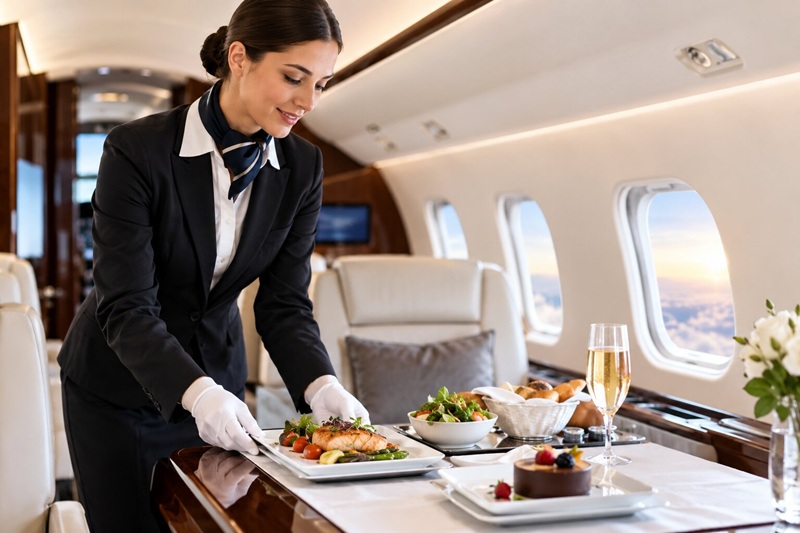
The most effective solution is a single catering partner with verified local relationships at every airport on the route. This partner absorbs the regional complexity on behalf of the flight department, translating one standard catering brief into locally executed orders that meet the same quality standard at every stop. Dark Wing Inflight's bespoke meal options are designed for exactly this purpose, providing consistent VIP-standard catering across 135 countries.
Final Thought
Ordering catering at a single airport is a logistics task. Ordering it across five countries on three continents is an operational discipline. The differences in lead times, regulations, delivery protocols, and communication standards make international catering one of private aviation's most complex recurring challenges. Flight departments that invest in the right partnership eliminate the variables that lead to delays and disappointed passengers.
Frequently Asked Questions (FAQs)
Why do catering lead times differ so much between international airports?
Lead times depend on local infrastructure, access protocols, and supplier availability. Major hubs in North America, Europe, and the Gulf enable same-day or 12-hour ordering. Secondary airports in Africa, Southeast Asia, and South America may require 48 to 72 hours due to limited networks and customs processes.
Can I carry leftover catering from one country to the next on a private jet?
This is risky and often prohibited. Countries like Australia, New Zealand, and the US enforce strict food import regulations that prohibit bringing fresh food across borders. Leftover catering may be confiscated or trigger delays. The safest practice is sourcing fresh at each departure point.
How do I handle payment for catering orders at airports in different countries?
Working with a single global catering partner that offers consolidated invoicing is the most efficient approach. This eliminates the need to manage multiple currencies, payment methods, and local billing practices. Dark Wing Inflight provides consolidated billing in your preferred currency, covering all airports across a multi-stop itinerary.
What should I do if the local catering provider at an international airport does not speak my language?
Use a catering partner with multilingual coordination capabilities. Dark Wing Inflight's 24/7 team communicates with local suppliers in their native language while coordinating with your flight department in English, French, German, or other languages, ensuring that menu details, dietary requirements, and delivery timing are communicated accurately.
How can I ensure consistent catering quality across multiple international stops?
Consistency comes from a provider with verified partnerships at every airport on your route. A single contact who translates your catering brief into locally executed orders ensures quality does not vary by geography. Providers with global networks of pre-vetted partners deliver the most reliable results.