For high-net-worth individuals, government officials and corporate executives, the choice between a private jet and a helicopter is rarely just about getting from point A to point B. It is a decision influenced by distance, comfort needs, operational priorities and the monetization of the entire travel experience including what gets served onboard.
Helicopters serve a clear purpose, whether it is last mile connectivity, reaching remote landing zones or short trips to and from within cities. But, for VIP travel outside of these specific situations, private jets always have an edge. Here is why.
Range and Mission Capability
Helicopters are operationally efficient for short distances, typically under 500 kilometres. Beyond that range, they demand multiple fuel stops, increase the time it takes to travel considerably and significantly reduce the comfort of passengers.
Private jets, on the other hand, fly on intercontinental routes. A light jet has a range of 3,000 to 4,000 km when flying non-stop. A long-range aircraft of large cabin exceeds 12,000 km. For a VIP executive flying from London to Dubai or a government delegation travelling from Paris to Singapore, a helicopter simply cannot achieve that mission.
The difference in the range is not marginal, it is categorical. And for time-sensitive VIP travel, that distinction determines the difference between which platform is viable.
Comfort, Privacy, and Productivity
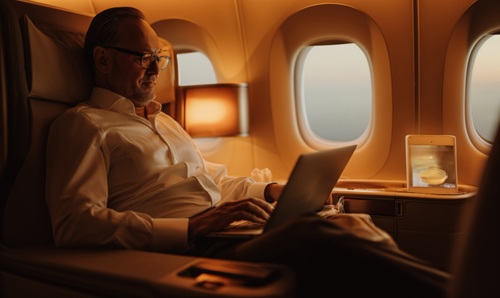
The cabin environment has a major effect on the way VIP travellers use their time in the air. Private jets have standing headroom, custom seating, soundproofing, connectivity infrastructure and privacy configurations. Passengers can hold private meetings, rest completely or work uninterruptedly.
Helicopter cabins are small. Noise levels are much higher, despite using active noise-reduction headsets, and the vibration profile makes it hard to work, sleep or have any meaningful conversation. For a 1 hour transfer, this is tolerable. For anything longer, it is not.
For VIP clients whose time and mental bandwidth are finite resources, the experience of being in a cabin on a private jet is not a luxury, it is a functional requirement.
Inflight Catering: A Non-Negotiable for Private Jet Travel
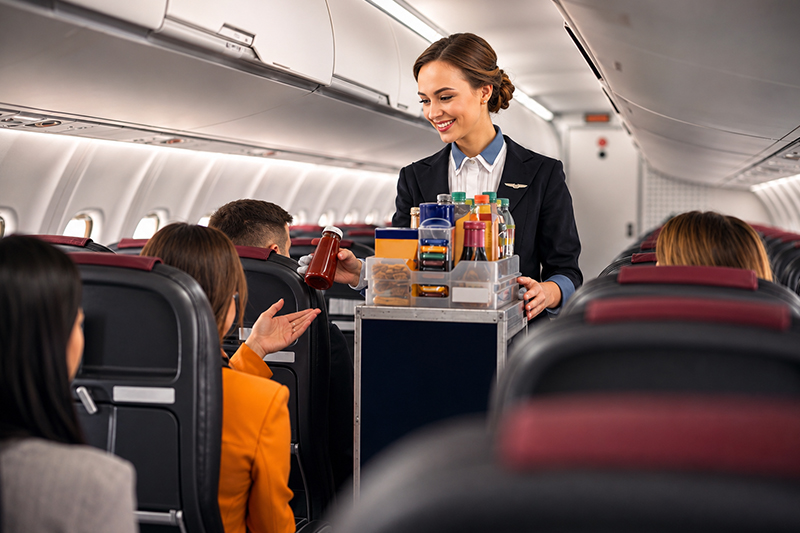
One of the most obvious differences between helicopter and private jet travel is being able to offer meaningful inflight catering. Helicopters provide virtually no viable catering infrastructure due to space constraints, vibration and short flight times making it impractical to serve anything other than packaged snacks or beverages.
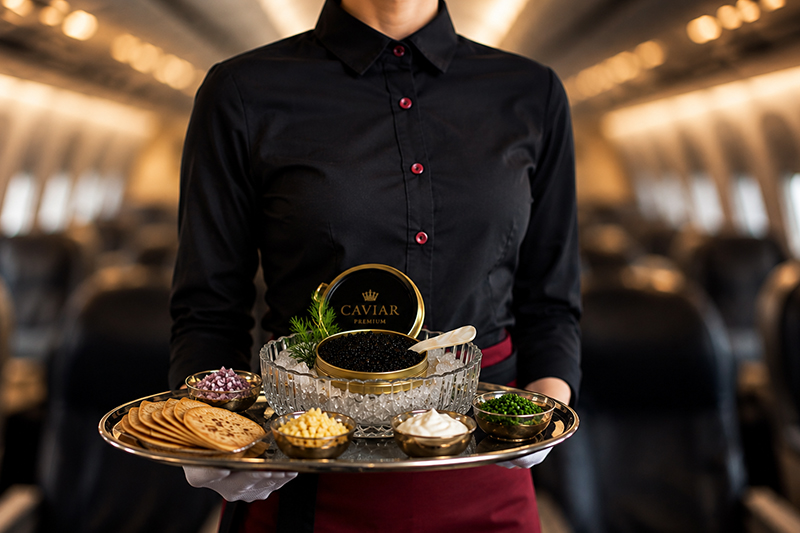
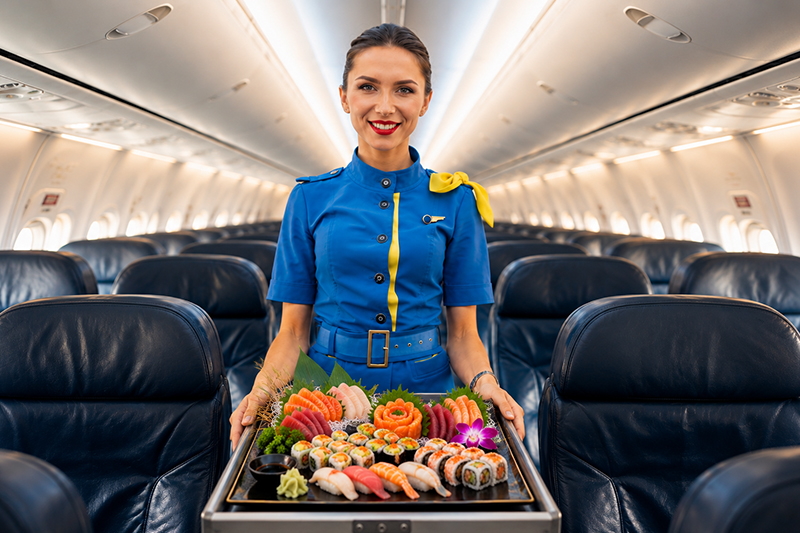
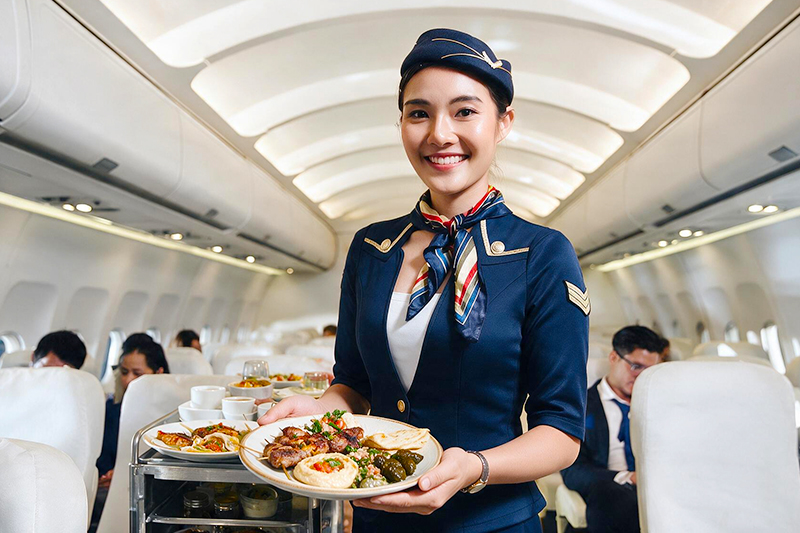
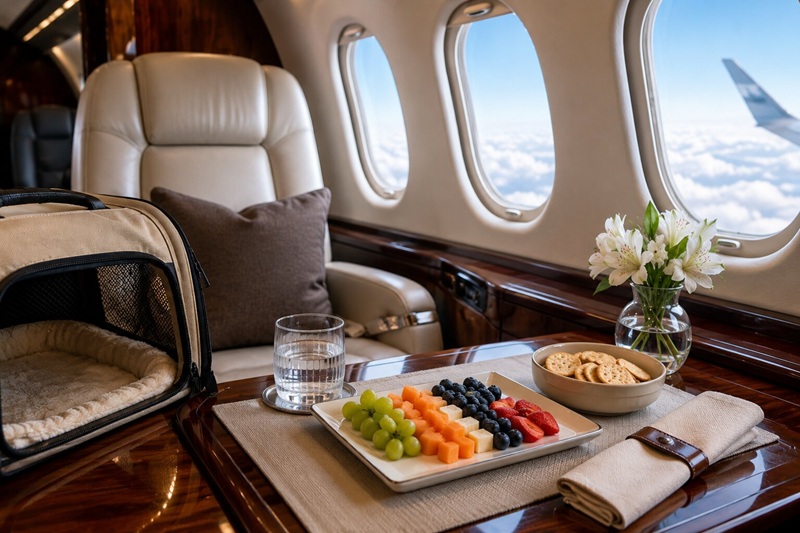
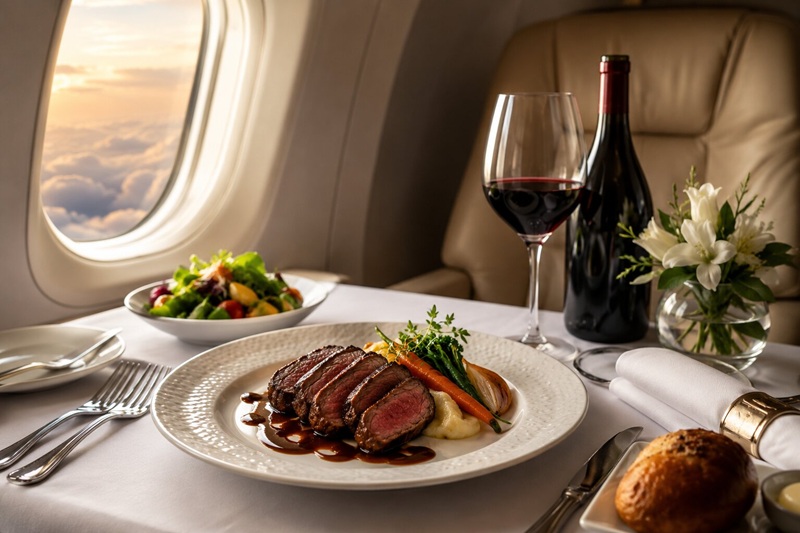
Private jets, however, are equipped to provide full multi-course meals, dietary-specific menu, regional cuisine and high beverage service. For government delegations, corporate executives or high net-worth individuals with specific nutritional or cultural preferences, this is of considerable significance.
VIP flight catering on a private jet is coordinated in advance, sourced from vetted culinary partners, and delivered to precise timing and safety standards. For operators with demanding clientele, that level of service is built into the mission profile — not added as an afterthought.
Passenger Capacity and Delegation Travel
Government and corporate VIP travel often involves groups; delegations, security personnel, advisors and support staff. Most helicopters are set up for four to eight people. Private jets scale from four-seat light jets to 19-seat large-cabin aircraft and may be set up for multi-zone configurations, with separate working areas and rest areas.
When travel involves more than one stakeholder that needs to work as a group, helicopters are a logistical problem. Private jets bring the entire delegation together, allow for confidentiality and allow for productive use of flight time.
Baggage, Equipment, and Operational Requirements
VIP and government travel often involves sensitive equipment, large baggage, medical supplies or communication hardware. Helicopter cargo capacity is severely restricted. Private jets have special cargo holds that can be used to meet these needs without affecting cabin space.
In the case of military charter operations in particular, the ability to carry both personnel and mission-critical equipment on the same platform has clear operational value.
Why Catering Becomes a Decision Factor
It might seem secondary, but inflight catering is increasingly a decisive factor in private jet selection, particularly for charter operators who serve repeat VIP clientele. When clients are travelling in aircraft that can support full catering service, the quality and reliability of what gets served onboard reflects directly on the operator.
VIP catering for private jets requires coordination across multiple functions: sourcing from certified culinary partners, managing cold-chain compliance, meeting HACCP standards, accommodating dietary and cultural requirements, and delivering on precise departure timelines across diverse airports globally.
Dark Wing Inflight supports operators and flight departments across more than 2000 airports in 135 countries, collaborating with a network of 2800+ partners including Michelin-star chefs, 5-star hotels and certified VIP caterers. Available 24/7/365, the service is organized around the particular demands of private jet catering, from routine missions to complex government and diplomatic itineraries.
Ready to Coordinate Inflight Catering for Your Next Private Jet Mission?
Whether you are a flight department manager, charter department manager, or government aviation manager, contact the Dark Wing Inflight to learn more about catering needs for your specific routes and aircraft.
Frequently Asked Questions
Q1: Why do VIP travellers prefer private jets over helicopters for long-distance travel?
Private jets can provide the range, cabin comfort, as well as inflight service capability, that helicopters cannot provide. For routes greater than 500 kms, jets are operationally superior as they cruise faster and can carry more passengers, full baggage and complete catering service. Helicopters are good for short transfers but private jets set the standard for VIP long-haul travel.
Q2: Can you get inflight catering on a helicopter?
Meaningful catering on a helicopter is pretty much impractical. Cabin space, flight times, vibration and lack of a proper galley make it impossible to serve hot meals or menus with a variety of courses. Private jets by contrast are specifically built to accommodate full VIP catering services such as temperature-controlled meals, premium beverages and dietary customisation.
Q3: What type of catering is available on private jets for VIP clients?
Private jet catering varies from cold platters and gourmet sandwiches for short sectors to multi-course hot meals prepared by Michelin-star chefs for longer routes. Menus can be tailored for dietary, cultural or medical needs. Providers such as Dark Wing Inflight arrange the sourcing, packing and delivery to HACCP compliance standards for all global airports.
Q4: How far in advance should VIP catering be ordered for a private jet?
The general rule is to allow at least 24 hours before leaving but complex or destination-specific menus may need 48 to 72 hours. In the case of diplomatic or government missions where requirements are strict, it is best to coordinate in advance. Dark Wing Inflight is 24/7/365, as well as accepting urgent requests throughout their world-wide network of partners where operationally feasible.