
A head of state lands in Riyadh at 02:10 local time. The aircraft has a 90 minute turn, the principal follows strict dietary law, and two delegates carry severe nut allergies. The menu was approved in Geneva. The meals will be prepared in Saudi Arabia. Nobody on board will accept a substitution.
For VIP charter aviation, this is an ordinary brief. It is also why choosing a catering partner deserves the same scrutiny as choosing an operator or a ground handler. A missed allergen, a late delivery, or a meal packed for a restaurant table instead of a galley can compromise a mission before the wheels leave the ground.
This guide sets out what flight departments, charter brokers, and government protocol teams should verify before trusting a provider with a high-profile flight. Each point covers what to check and why it matters.
Why Catering Choice Carries Mission-Level Risk
On a commercial airliner, catering is a volume operation. On a VIP charter, it is a bespoke order for a small group whose time, health, and reputation carry real weight.
Three factors raise the stakes:
- Short lead times. Many charter requests arrive with hours of notice, not days.
- Changing locations. The same client may depart London Luton on Monday and Lagos on Thursday.
- High cost of error. A protocol slip with a foreign delegation or a food safety incident on a medical flight has consequences far beyond a poor review.
The seven criteria below are built around these realities.
7 Criteria for Choosing a VIP Charter Catering Partner
1. Documented Food Safety and Allergen Control
Ask for evidence, not assurances. A credible provider shares its HACCP plan, kitchen audit records, and temperature logs on request.
The reason is simple. The World Health Organization's 2026 foodborne disease estimates link unsafe food to around 866 million illnesses and 1.5 million deaths every year. At cruising altitude, there is no clinic down the corridor.
Allergen handling needs the same rigour. The U.S. FDA's 2025 allergen labelling guidance expanded how milk and eggs are interpreted as major allergens, so sources beyond cows and chickens now count. A capable caterer tracks rule changes like this across every market it serves.
What to request:
- Current HACCP certification for each kitchen in use
- An allergen matrix for every dish on the menu
- Cold chain temperature records from kitchen to aircraft door
2. Kitchen Coverage at the Airports You Actually Use
A large partner count means little if none of those kitchens sit near your regular routes. Map the provider's coverage against your last twelve months of flights.
Europe shows why. The EBAA Yearbook 2026, built on full-year 2025 traffic data, profiles the 50 busiest business aviation airports on the continent. Paris Le Bourget, Geneva, and Nice are well served. The harder test is a secondary field such as Sion or Bodrum, or a remote stop in Central Africa or the Pacific Islands.
Ask the provider to name the kitchen it would use at three of your most difficult destinations. Vague answers usually signal last-minute subcontracting.
3. Genuine 24/7/365 Response With Multilingual Coordinators
Charter schedules ignore office hours. A departure slips by four hours, or the principal adds three guests at midnight. The catering desk must respond within minutes, in the language of the local kitchen and the handling agent.
Test this before you sign. Send an inquiry late on a weekend and time the reply. Note who answers: a coordinator who can act, or a service that only takes a message.
4. Cultural and Religious Dietary Competence
Royal, diplomatic, and corporate flights often carry passengers who follow halal, kosher, Jain, or other strict dietary practices. Competence here goes deeper than a menu label.
A strong partner will:
- Source halal and kosher private jet meals from certified kitchens, with certificates available on request
- Plan around fasting periods such as Ramadan, timing pre-dawn and sunset meals to the flight schedule
- Understand presentation norms, including serving order, cutlery, and portion customs for Gulf, East Asian, and South Asian delegations
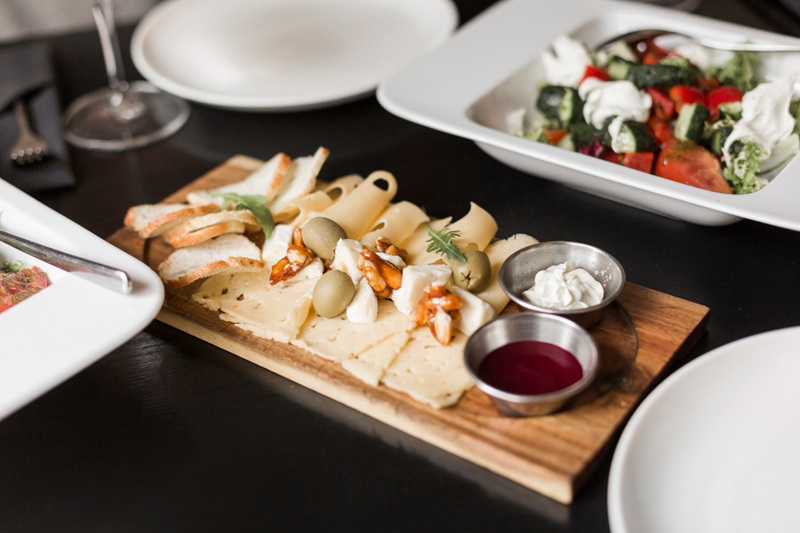
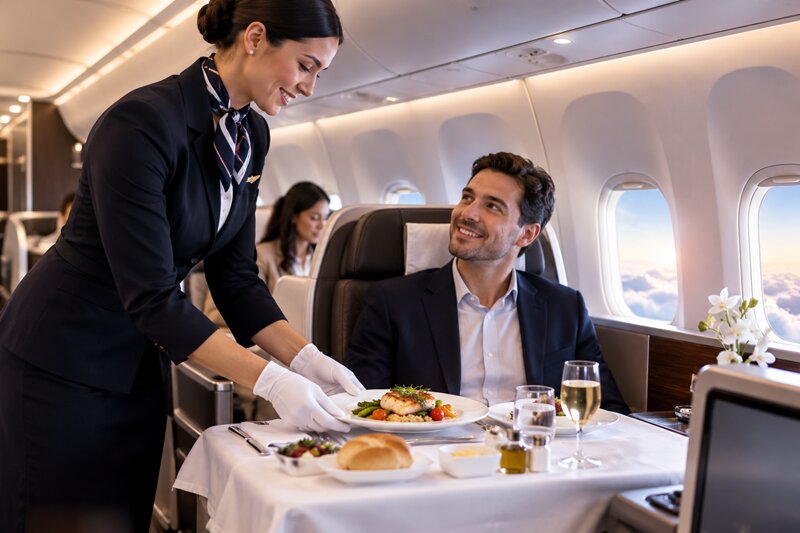
Reviewing bespoke private jet meal options before a mission helps protocol teams brief the caterer precisely. Cultural errors rarely show up on an audit, yet they are often what a protocol office remembers.
5. Packaging and Reheating Built for the Galley
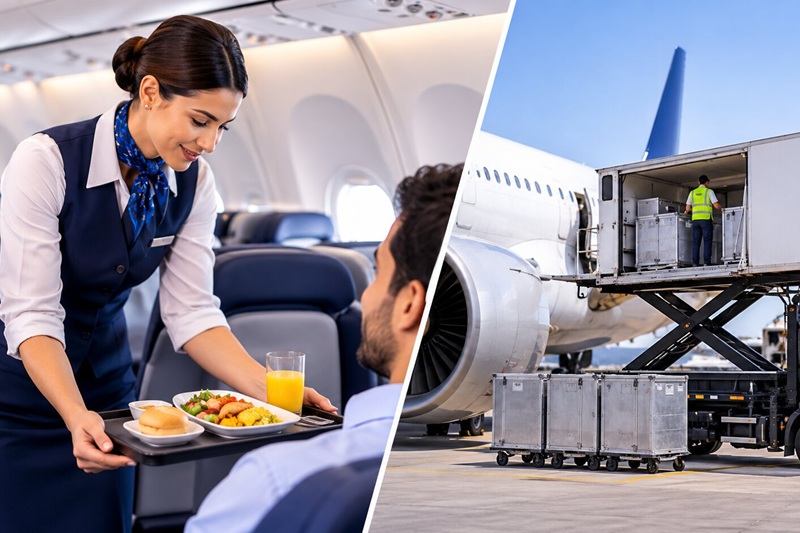
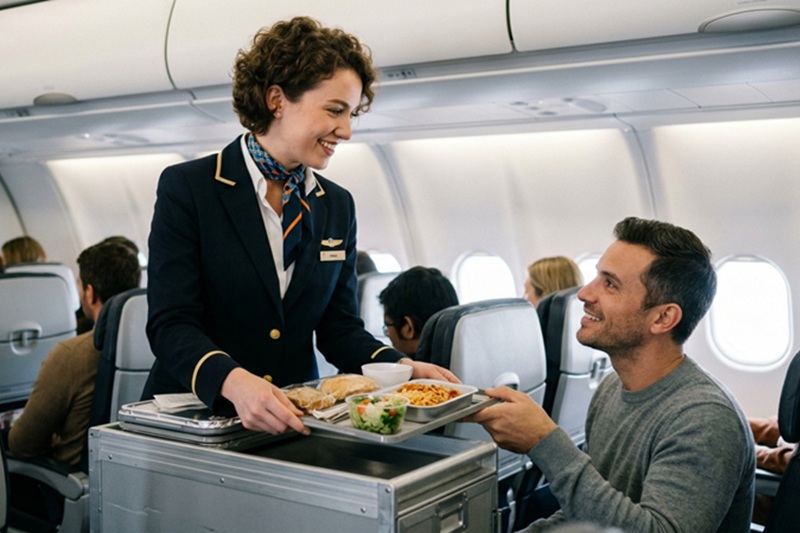
Restaurant food is designed to be eaten within minutes. Aircraft meals may wait hours, then be reheated by cabin crew in a compact convection oven.
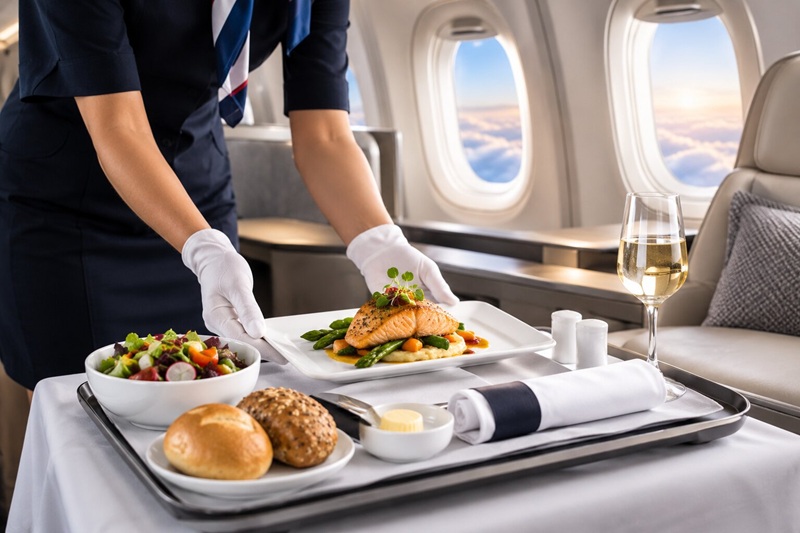
Good partners plate for the aircraft, not the dining room. They ask which galley equipment is on board, separate sauces from proteins, and include plain reheating notes. They also adjust seasoning, since dry cabin air and lower pressure dull the perception of salt and sweetness. These core rules of catering on private jets explain the galley constraints in more depth.
6. Security and Discretion for Government and Military Flights
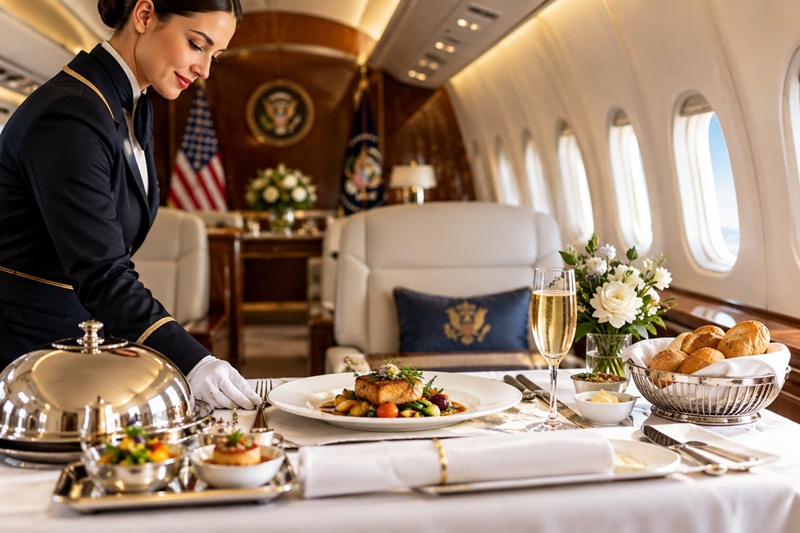
For state, defence, and diplomatic missions, the catering chain is part of the security perimeter. Government flight catering requires controls that most restaurant suppliers have never needed.
Look for:
- Vetted staff and a named point of contact for every order
- Tamper-evident seals and a documented chain of custody to the aircraft
- Confidentiality agreements covering passenger names, routes, and menus
- Willingness to follow the operator's or embassy's own security protocols
7. Clear Pricing, Cut-Off Times, and Change Handling
Opaque pricing creates friction after the flight. Ask how each quote is built: food cost, delivery, airside access fees, packaging, and any after-hours surcharge.
Then ask about changes. What is the cut-off for menu edits at a given airport? What happens to cost if the flight cancels two hours before departure? Clear answers signal operational maturity.
How to Vet a Catering Partner in Five Steps
- Audit your own flight history. List your top airports, typical passenger counts, and recurring dietary needs.
- Request documentation. Collect HACCP certificates, allergen procedures, and insurance details.
- Run a live test order. Order a small but complex meal at a secondary airport. Judge timing, labelling, and presentation.
- Interview the coordination desk. Ask how it handled a recent short-notice change. Specific stories beat general claims.
- Agree on escalation paths. Confirm who you call when something goes wrong at 03:00 local time.
This process takes a few weeks. It saves far more time across a year of operations.
Red Flags That Signal the Wrong Partner
- No written HACCP documentation, or reluctance to share it
- Quotes that arrive without itemised costs
- One generic menu offered for every airport and passenger profile
- No clear answer on who prepares food at a remote destination
- Slow or automated replies outside business hours
Scenario: A Short-Notice Delegation Out of Nairobi
Consider a realistic brief. A ministerial delegation of twelve departs Jomo Kenyatta International at 06:00. The request lands at 19:00 the evening before. Four passengers need halal meals, one is gluten intolerant, and the principal prefers light coastal Swahili dishes.
A capable provider confirms a certified kitchen within the hour, shares an allergen breakdown, and schedules delivery two hours before departure, with airside clearance arranged through the handler. The crew receives labelled containers and simple reheating notes.
This is the standard Dark Wing Inflight works to across a global network of 2,800+ partners, including Michelin-star chefs, 5-star hotels, and specialist VIP caterers at 2,000+ airports in 135 countries.
Choosing a Partner You Never Have to Think About
The best catering partner is the one that stays invisible during a mission. That comes from verified safety systems, real coverage at your airports, responsive coordination, and respect for every passenger's culture and health needs.
Use the criteria and five vetting steps above to compare providers on evidence, not promises. For practical planning tips, see the smartest way to manage inflight catering across multiple trips.
Dark Wing Inflight supports private, government, and military flight departments with HACCP-compliant kitchens, multilingual coordinators available 24/7/365, and menus shaped around each passenger's needs. Share your next itinerary with our team for a tailored quote.
Speak to our coordinators now: call +44 204 577 0985, message us on WhatsApp at +33 787 346 458, or email info@darkwinginflight.catering.
Frequently Asked Questions
What should I look for when choosing a VIP private jet catering provider?
Focus on five areas: documented HACCP food safety, kitchen coverage at your regular airports, round-the-clock response, cultural dietary competence, and transparent pricing. Ask for evidence in each area rather than relying on brochures or headline partner counts.
How far in advance should I order flight catering services for a VIP charter?
Aim for 24 to 48 hours where possible. This gives the kitchen time to source specialty ingredients and confirm certifications. Experienced providers can still arrange last-minute private jet catering within a few hours at major airports, although menu choice may narrow.
Can one flight carry halal, kosher, and allergy-specific meals together?
Yes, provided the caterer works with certified kitchens and runs a strict allergen system. Each meal should be packed, sealed, and labelled separately, with certificates and ingredient lists available to the crew.
Is HACCP-compliant inflight catering available at remote airports?
In most regions, yes, but it depends on the provider's network. Ask which kitchen would serve a specific remote airport, such as a secondary field in East Africa or the South Pacific, and request its documentation before the flight.
What makes catering for diplomatic and military flights different?
Security and protocol. These missions need vetted staff, sealed containers, a documented chain of custody, and confidentiality agreements. Menus may also follow formal protocol for visiting heads of state or senior officials.