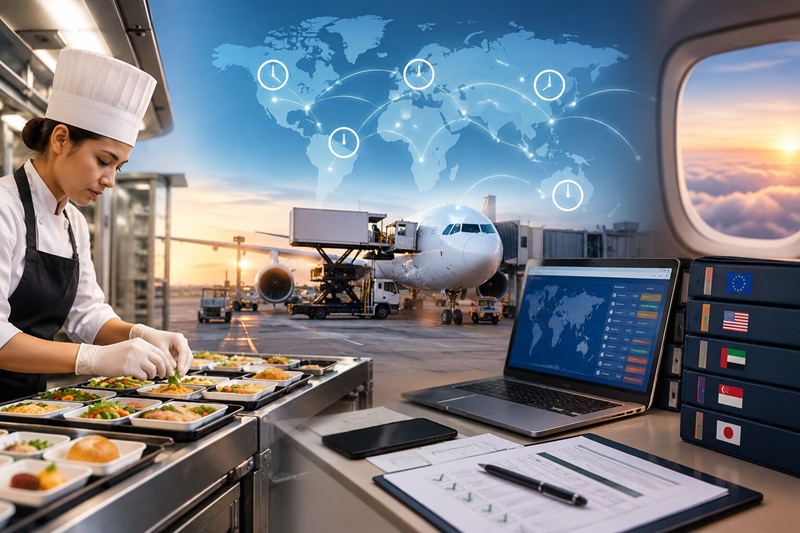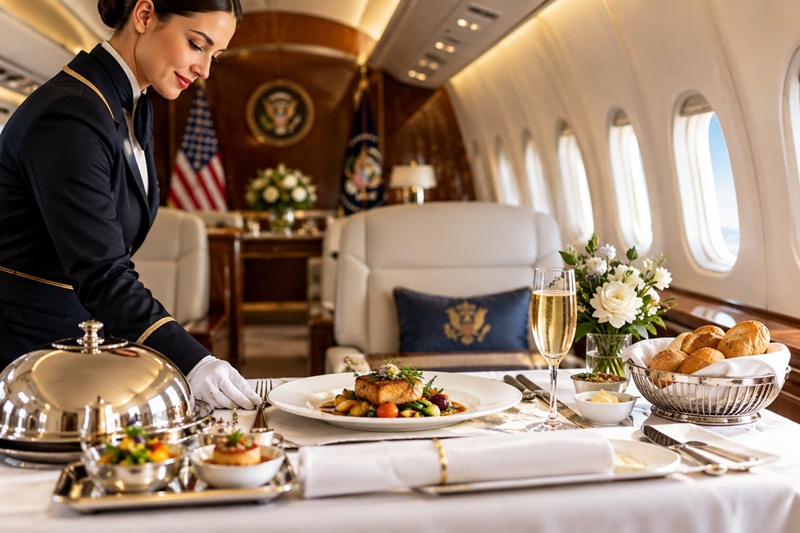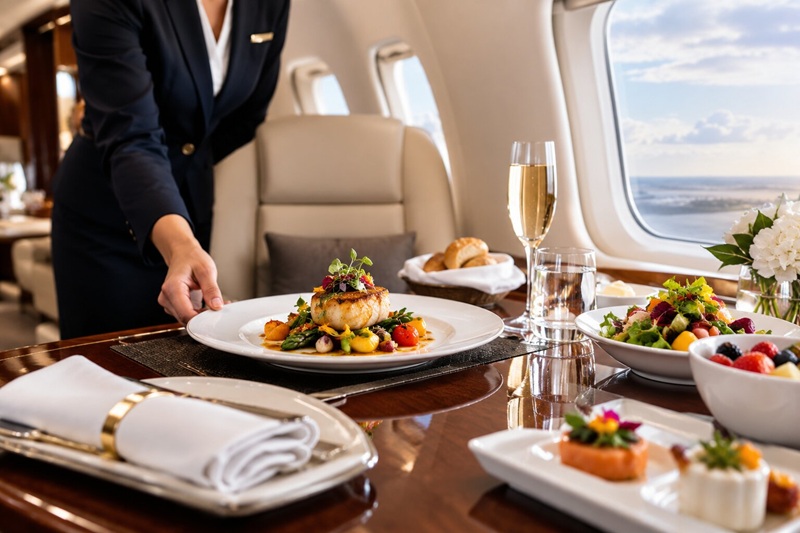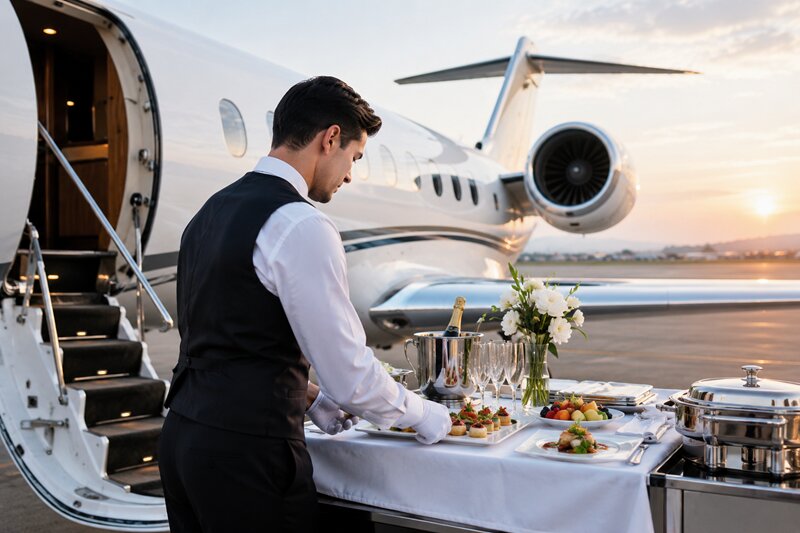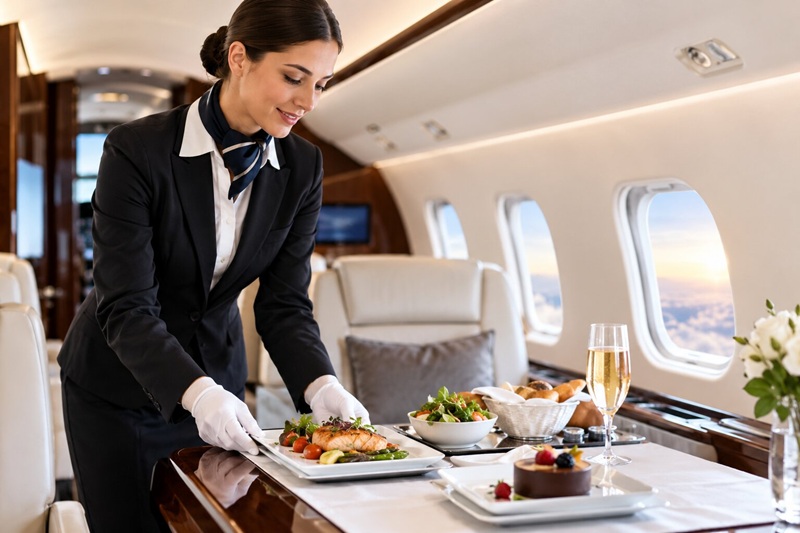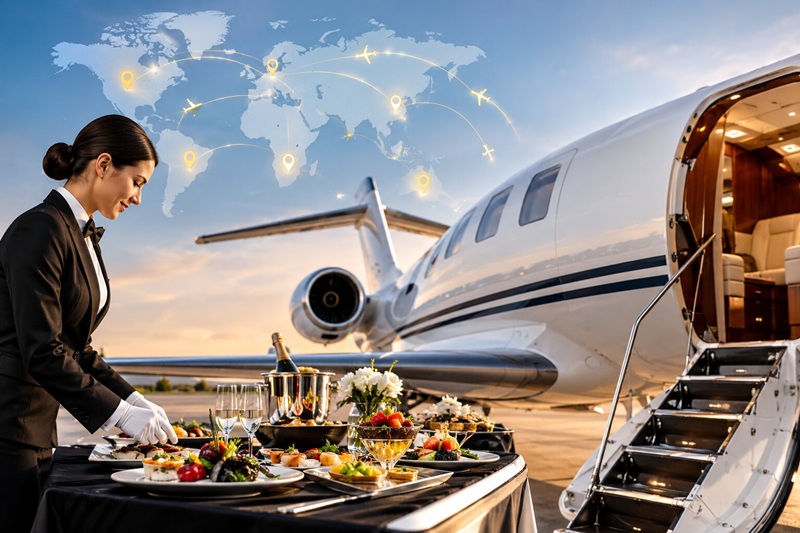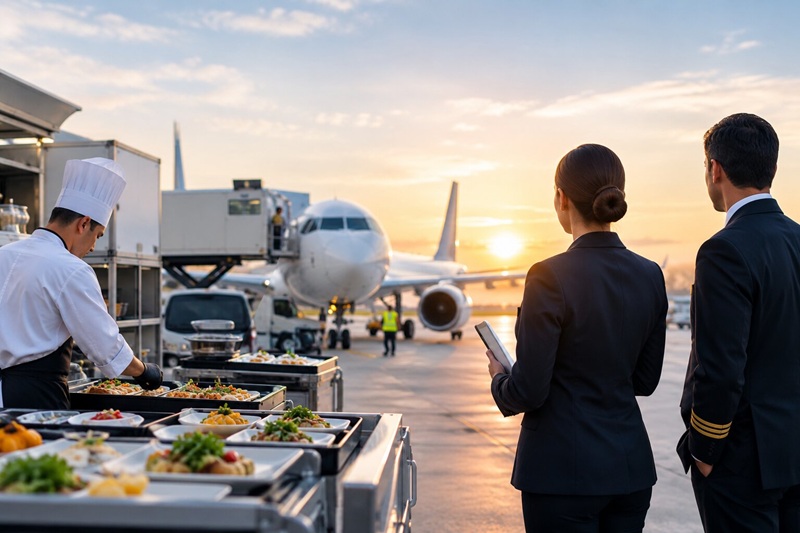
A principal boards in Dubai expecting the tasting menu he enjoyed in Paris last month. The aircraft departs in six hours, the restaurant sits 5,200 kilometers away, and the dish was designed for a dining room, not a galley oven. This is the daily reality behind Michelin-standard private jet catering, and it explains why so few providers operate credibly at this level. According to the WINGX annual activity report, 2025 was the busiest year on record for global business aviation, with flight sectors up 5 percent over 2024. More flights mean more principals who expect restaurant-grade dining at 40,000 feet. Behind every successful delivery sits a structured chef network, built over years and managed hour by hour across time zones.
Why Michelin-Star Partnerships Define VIP Catering Standards
Michelin recognition is the closest thing fine dining has to a global quality benchmark. Statista's 2025 Michelin Guide data counts more than 3,700 starred restaurants worldwide, spread across roughly 50 destinations covered by the guide. That sounds like plenty until you map those kitchens against business aviation traffic. Only a fraction sit within practical reach of major private jet hubs, and fewer still are willing to produce for aviation, where plating, timing, and reheating constraints differ sharply from restaurant service.
For VIP clients, the appeal is simple. They already dine at these restaurants on the ground, so the aircraft cabin becomes an extension of that standard. For caterers, a starred partnership is a quality signal that cannot be faked. It also raises the operational bar, because a Michelin kitchen will only lend its name to premium private jet catering services that protect the integrity of its dishes from pass to tray table.
How a Michelin-Star Chef Network Is Actually Built
A network of this kind is assembled restaurant by restaurant, usually over several years. Three disciplines hold it together.
Selection and Vetting
Reputation alone does not qualify a kitchen for aviation work. Network managers assess each candidate on production capacity outside normal service hours, willingness to adapt recipes for altitude, documented food safety practices, and proximity to the airport. A two-star restaurant 90 minutes from the FBO in heavy traffic may be a weaker partner than a one-star kitchen 15 minutes away with a dedicated production line.
Commercial Agreements and Availability
Starred kitchens run on tight margins and tighter schedules, so agreements must define order cutoffs, minimum lead times, pricing for short-notice requests, and who handles packaging and transport. The best arrangements name a liaison chef inside the restaurant who understands aviation formats, which removes guesswork when a 3 a.m. order lands during prep for a fully booked dinner service.
Mapping Chefs to Airports
Coverage is planned the way airlines plan routes. Each starred partner is mapped to specific airports, with tested transfer times, backup kitchens, and seasonal notes. Paris Le Bourget, London Luton, Teterboro, Dubai Al Maktoum, and Singapore Seletar anchor the dense end of the map. Challenging destinations across Africa, Central Asia, and island regions rely on five-star hotel kitchens vetted to the same standard when no starred restaurant exists nearby.
Recipe Engineering: Turning Restaurant Dishes into Aviation Meals
The hardest part of the job happens before any food leaves the kitchen.
Why Taste Changes at Altitude
Cabin pressure and humidity levels noticeably dull the perception of salt, sweetness, and aroma. A dish seasoned perfectly at sea level can taste flat in cruise. Dairy-based sauces split under reheating, delicate greens wilt in chilled transport, and crisp textures soften inside sealed packaging. None of this is a quality failure. It is physics, and it has to be engineered around.
Where the Onboard Chef Fits In
This is where an experienced inflight chef earns their place in the chain. Working with the restaurant, they adjust seasoning upward, swap fragile components for stable ones, and redesign plating so cabin crew can finish the dish correctly with limited equipment. Clear reheating cards travel with every container, specifying temperatures, timings, and assembly order. The goal is faithful reproduction, not approximation, and the discipline required looks more like aerospace process control than restaurant improvisation.
Food Safety and HACCP Compliance Across 135 Countries
Every handover in the chain is a risk point, which is why serious providers run HACCP-certified processes from kitchen to aircraft. Temperature-controlled vehicles, sealed and labeled containers, time-stamped cold chain logs, and allergen segregation are standard. Cross-border work adds another layer, since customs rules on meat, dairy, and fresh produce vary by country and can ground a delivery as surely as weather. Crews also carry responsibility here, and understanding the rules of catering on private jets helps flight departments brief passengers on what can legally board in each region. Documentation is retained for every order, so any query can be traced back to a specific batch, kitchen, and courier within minutes.
Coordinating the Network 24/7/365
Business aviation does not keep office hours, and neither can the network behind it. An order placed from Los Angeles at midnight may need a kitchen in Tokyo already in morning prep. Operations teams therefore work in follow-the-sun shifts, with multilingual coordinators who can speak to a chef in Osaka, a driver in Riyadh, and a crew in Geneva inside the same hour. At Dark Wing Inflight, this is structured around 2,800+ partner restaurants, five-star hotels, and Michelin-star chefs serving 2,000+ airports in 135 countries, with multilingual support available 24/7/365. Technology carries the rest of the load. Centralized order platforms track every request from confirmation to delivery, which is the smartest way to manage inflight catering when schedules change mid-day and tail numbers swap at short notice.
What Flight Departments Should Verify Before Partnering
Shortlisting global inflight catering companies with Michelin star chef network access is easier when the questions are specific. Ask each provider to demonstrate:
- Named starred partners at your most frequent airports, not vague claims of access
- Documented HACCP certification and cold chain records available on request
- Realistic minimum lead times for starred orders, plus a stated short-notice protocol
- Reheating and plating instructions supplied with every order
- A backup kitchen plan for each primary airport
- Transparent pricing that separates food cost, logistics, and service fees
- References from flight departments operating similar routes
Providers who answer these in writing are running a managed network. Providers who cannot are brokering on demand, and the difference shows up on the tray table.
The Standard Behind the Service
Managing a Michelin-star chef network is quiet, methodical work. It depends on vetted partnerships, recipes engineered for altitude, HACCP discipline at every handover, and an operations team that never goes offline. When those pieces hold, a passenger tastes exactly what the chef intended, several hours and several borders away from the kitchen that made it. If you are comparing providers for an upcoming trip or building a preferred supplier list for your flight department, start by testing the questions above against real routes. The Dark Wing Inflight team can map starred and five-star options against your schedule, advise on lead times for demanding destinations, and arrange a sample menu for review before you commit to a full program. Request a quote through darkwinginflight.catering and see how a managed network performs on your next sector.
Order now or speak with our team anytime: Call +44 204 577 0985 | WhatsApp +33 787 346 458 | Email info@darkwinginflight.catering
Frequently Asked Questions
How do inflight catering companies partner with Michelin-star chefs?
Partnerships are formal agreements, not casual arrangements. Caterers vet starred kitchens for production capacity, food safety documentation, and airport proximity, then contract defined lead times, pricing, and packaging standards. A liaison chef inside the restaurant typically manages aviation orders, and recipes are jointly adapted for altitude before the partnership goes live.
Can Michelin-star meals really be served on a private jet without losing quality?
Yes, when the dish is engineered for the cabin. Seasoning is adjusted for pressurized conditions, fragile components are replaced with stable alternatives, and crews receive step-by-step finishing instructions. Dishes that cannot survive transport and reheating are substituted at the menu stage rather than served below standard.
How far in advance should I order Michelin-standard private jet catering?
For starred kitchens, 24 to 48 hours is the comfortable window, since dishes are often produced outside normal restaurant service. Established providers also run short-notice protocols for same-day requests, usually by switching to a vetted backup kitchen or a five-star hotel partner near the departure airport.
Which airports offer Michelin-star inflight catering?
Coverage is strongest around hubs with dense starred dining, including Paris Le Bourget, London Luton and Farnborough, Teterboro, Geneva, Dubai, Singapore, and Tokyo. At airports without a starred restaurant nearby, quality-matched hotel kitchens and VIP caterers fill the gap under the same safety and presentation standards.
How much does Michelin-star private jet catering cost?
Pricing varies by menu complexity, passenger count, airport, and lead time, so reputable providers quote per order rather than publishing flat rates. Expect the food itself, specialized packaging, temperature-controlled logistics, and handling to be itemized separately. Short-notice starred orders carry premiums because kitchens produce them outside planned service.