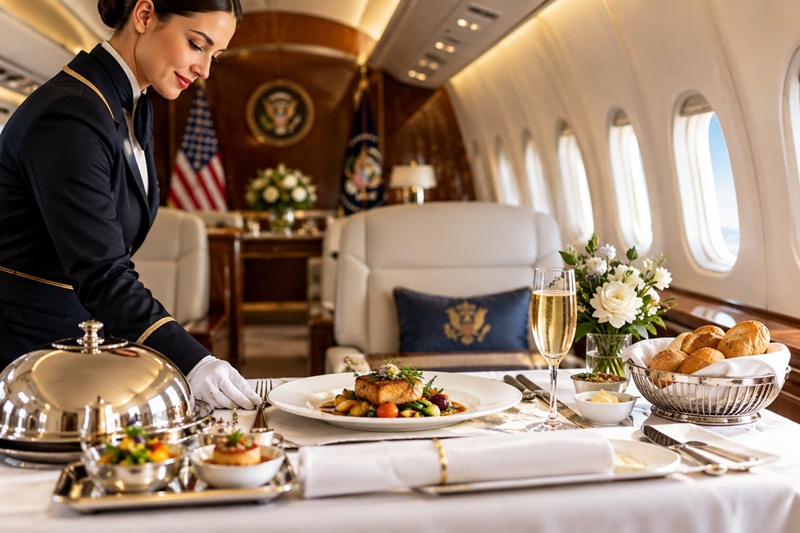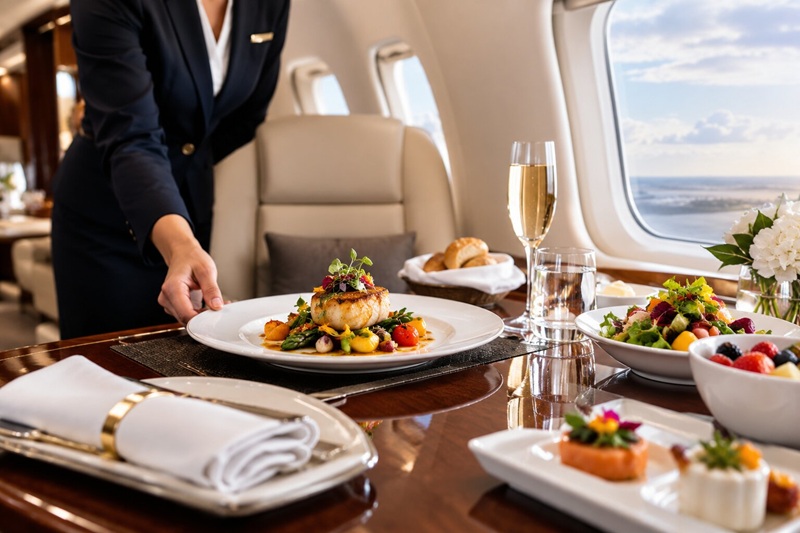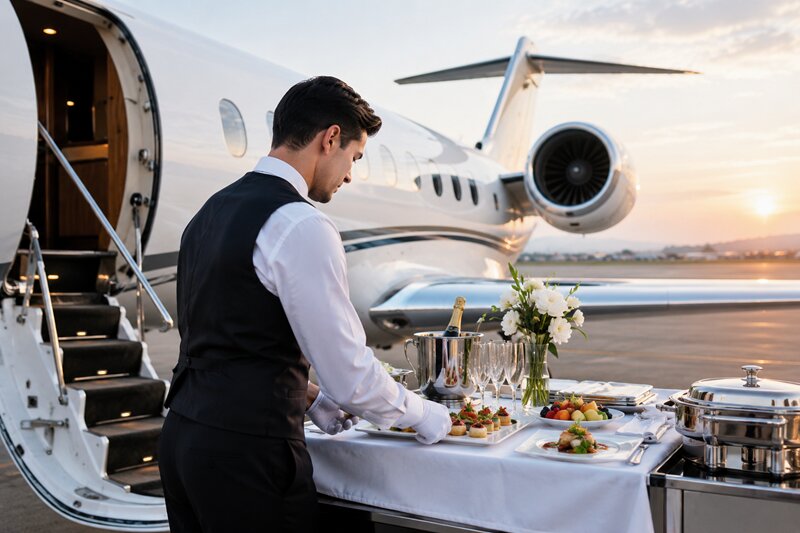
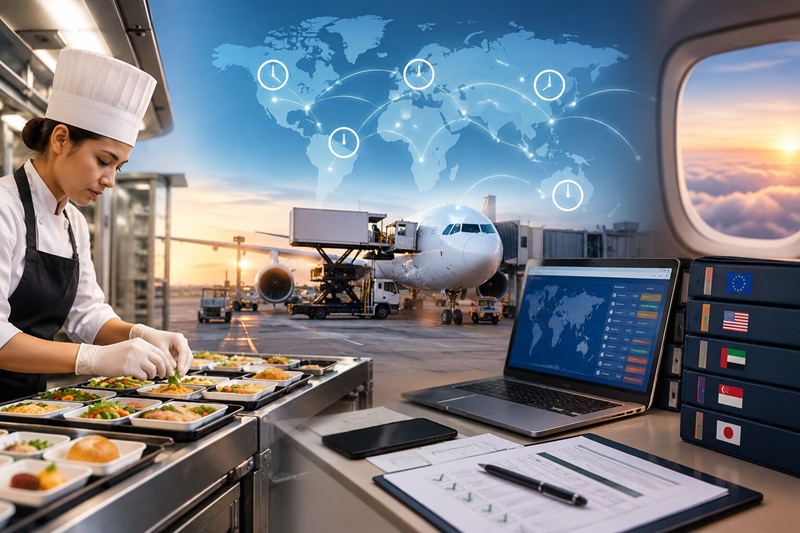
At 0300 in Dubai, a flight department requests full dinner service for a departure from Tokyo Haneda at 1900 local the same day. The kitchen that will cook that meal has not opened yet. The customs office that must clear some of its ingredients keeps different hours again. This is the daily reality of catering across borders, where a single trip can cross ten time zones, three regulatory regimes, and four separate delivery windows. Private aviation is busier than at any point in its history, and galley logistics have become a genuine operational discipline rather than an afterthought. This guide explains how experienced operators coordinate multi leg catering, step by step, and why each step matters.
Why Cross Border Catering Has Become an Operational Priority
Flight activity keeps climbing. WingX Global Market Tracker data shows that 2025 closed as the busiest year on record for business aviation, with global flight sectors up 5 percent year on year. More flights mean more multi leg itineraries, tighter turnarounds, and more meals ordered against unfamiliar local conditions.
Three pressures sit behind most catering failures on cross border routes:
- Clock mismatch. Your 0900 is a partner kitchen's 2300, so cut off times pass while principals sleep.
- Regulatory friction. Food that boards legally in one country can be confiscated or destroyed in the next.
- Perishability. A 14 hour sector tests cold chain integrity in ways a domestic hop never will.
The rest of this article solves them in sequence.
The Time Zone Problem: Ordering While Your Kitchen Sleeps
Most premium kitchens take final orders around 24 hours before delivery. On an eastbound round the world itinerary, that cut off can land in the middle of the client's night. Miss it, and the choice narrows to standard menus or no uplift at all.
Experienced flight departments manage the clock in four ways:
- Order in local kitchen time, not departure time, and write both times on the trip sheet to remove ambiguity.
- Confirm every order in writing, with delivery stated in UTC and in local time.
- Keep a standing preference profile for each principal so a late order needs no lengthy briefing.
- Route all requests through a single coordination desk that is staffed around the clock, so confirmations never wait for an office to open.
A 24/7 multilingual desk converts a chain of one to one calls across continents into a single point of accountability. For a wider view of trip level planning, see this guide on the smartest way to manage inflight catering when itineraries stack up.
A Step by Step Framework for Multi Leg Catering
Step 1: Map every leg against local kitchen hours
Before anyone discusses menus, list each departure airport with its time zone, realistic delivery window, and the caterer's final order deadline. The reason is simple: most failed uplifts trace back to an order placed after a kitchen's cut off, not to poor cooking. Mapping first exposes the tight legs early, while there is time to adjust.
Step 2: Confirm airport access and handling before the menu
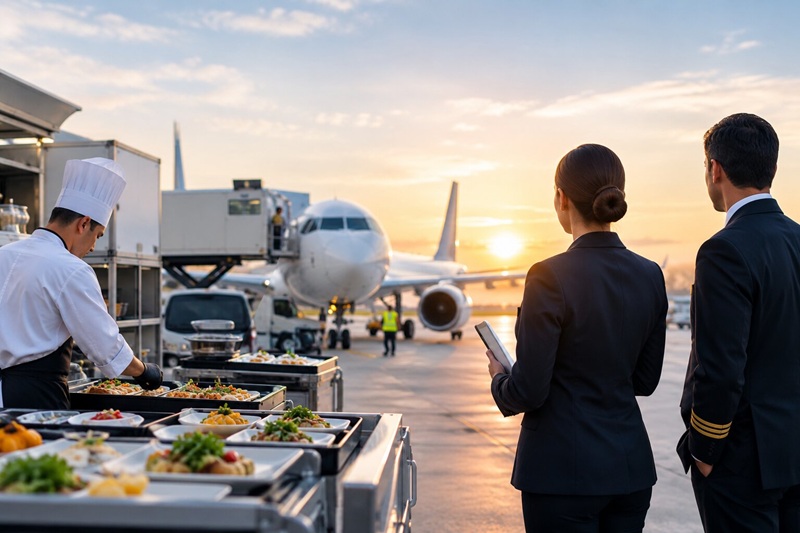
Every airport controls ramp access differently. Some require the caterer to hold an airside security badge. Others route food through the FBO or a ground handler. Confirm who physically carries the meal to the aircraft and how long that handover takes. A perfect menu that waits at a gate for 90 minutes is a spoiled menu.
Step 3: Brief dietary, religious, and cultural needs once, centrally
Collect allergies, halal or kosher requirements, and personal preferences in one document, then issue it to every kitchen on the routing. Rebriefing each supplier separately multiplies the chance of error. A central brief also makes bespoke private jet meal options repeatable across continents instead of a one off success at a single airport.
Step 4: Build contingency meals into long or fragile legs
Add shelf stable backup meals on sectors with weather risk, slot uncertainty, or a technical stop like Anchorage or Shannon. If the primary uplift fails, the flight still feeds its passengers. Contingency catering costs little and removes the single worst outcome in this business: an empty galley over the ocean.
Regulations That Decide What Boards the Aircraft
Food crosses borders under agricultural and customs law, not hospitality law. Three regimes shape most long haul planning:
- United States. Catering waste from foreign origin flights is treated as regulated garbage under USDA APHIS requirements, which mandate sealed handling and approved disposal on arrival. Plan uplift quantities so little surplus remains, and never offload leftovers casually at a US port of entry.
- European Union. Meat and dairy arriving from outside the bloc face strict products of animal origin controls. A cheese course uplifted in New York for service after landing in Paris can become a compliance problem nobody anticipated.
- Gulf states and Asia. Halal certification expectations, alcohol handling rules, and import permissions vary by country and sometimes by individual airport.
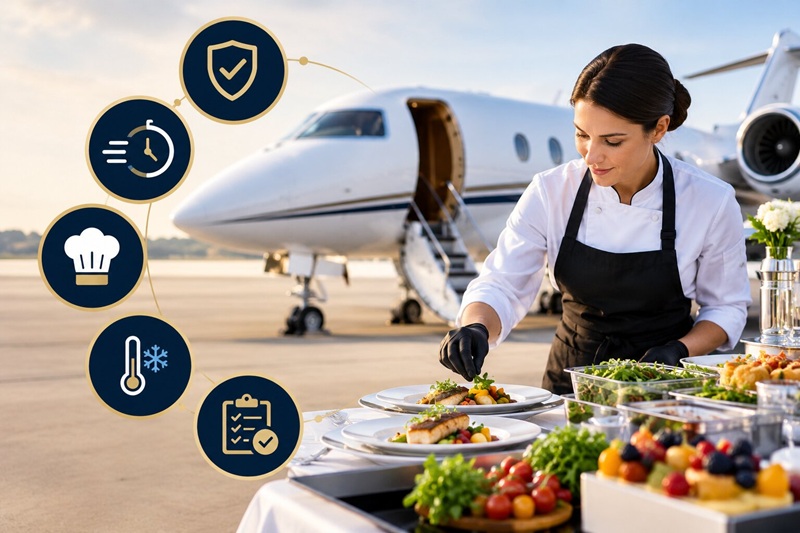
Beyond customs, food safety standards travel with the meal. HACCP compliant preparation, documented cold chain custody, and sealed tamper evident packaging are the baseline for VIP, government, and military work. Crews should also know the practical rules of catering on private jets, from galley storage limits to service timing, because regulation only governs the food until the cabin door closes. After that, preparation decides the outcome.
Coordinating Catering in Challenging Destinations
Capability is not evenly distributed around the world. London Luton, Paris Le Bourget, Dubai Al Maktoum, and Teterboro offer deep catering benches. Ulaanbaatar, Lagos, Male, or a small Caribbean strip may have one viable kitchen and no late night delivery at all. There the sequence reverses: confirm the supplier first, then build the menu around what that supplier executes well. Across Africa, Central Asia, and remote island routes, a global VIP inflight catering network with vetted local partners is the difference between a composed cabin service and improvisation on the ramp.
What a Specialist Global Partner Changes
Demand will keep rising. IATA's Global Outlook for Air Transport projects a record 5.2 billion air passengers in 2026, and private aviation growth is tracking the same curve. As volume grows, coordination capacity becomes the scarce resource, and this is where an international inflight catering company earns its place in the operation. Dark Wing Inflight coordinates uplifts through 2,800 plus partner kitchens, Michelin starred chefs, and five star hotels across more than 2,000 airports in 135 countries, supported by a multilingual desk that answers 24/7/365. The operator briefs once. Local execution, customs awareness, and every time conversion then happen behind the scenes.
Final Approach: Plan Early, Brief Once, Land Ready
Catering across borders rewards sequence and punishes improvisation. Map kitchen hours before menus, confirm ramp access before delivery times, centralise dietary briefs, and treat customs rules as hard constraints. Operators who work in that order land with composed cabins at every stop, from Le Bourget to Lagos.
If you are still researching options, compare providers on network depth, response speed, and compliance record rather than menus alone. Flight departments planning a specific trip can request airport by airport guidance before committing. For departures in the next few days, Dark Wing Inflight's coordination desk responds around the clock in multiple languages and can arrange HACCP compliant uplifts at short notice worldwide.
Call +44 204 577 0985, message us on WhatsApp at +33 787 346 458, or email info@darkwinginflight.catering to brief your next international routing. One conversation covers every leg.
Frequently Asked Questions
How far in advance should I order catering for an international private jet flight?
Order 48 to 72 hours ahead for complex or multi leg trips, and at least 24 hours for standard menus. Remote airports, religious holidays, and peak event weeks such as Davos or the Monaco Grand Prix justify even earlier requests. Early orders secure premium kitchens, allow customs paperwork where needed, and leave room to adjust after passenger numbers change.
What happens to leftover catering when a private jet lands in the United States?
Food waste from a foreign origin flight is classed as regulated garbage in the US. It must stay sealed and be removed by an approved handler for supervised disposal, usually incineration or sterilisation. Crews should never place international food waste in ordinary airport bins. Ordering accurate quantities reduces surplus, cost, and compliance exposure in one move.
Can I get halal, kosher, or allergy safe meals at remote international airports?
Yes, with enough notice. Certified halal and kosher preparation exists near most major hubs, while remote locations may require sourcing from a nearby city or boarding certified meals on an earlier leg. Share certificates, allergen lists, and cross contamination requirements at the time of ordering. A written dietary brief issued to every kitchen keeps standards consistent worldwide.
How do time zone differences affect private jet catering orders?
Kitchen cut off times run on local time, not your departure time. A 24 hour deadline in Singapore can expire during a client's night in Los Angeles. State every delivery time in UTC and local time, confirm orders in writing, and use a coordination desk staffed around the clock so no confirmation waits for a kitchen to open.
How much does private jet catering cost on international routes?
Expect a wide range. Light refreshments may start at a few hundred dollars per leg, while multi course VIP service from a top kitchen can reach several thousand before delivery and handling fees. Remote destinations, overnight preparation, and special certifications add cost. Accurate passenger counts and early ordering remain the most reliable ways to control the total.