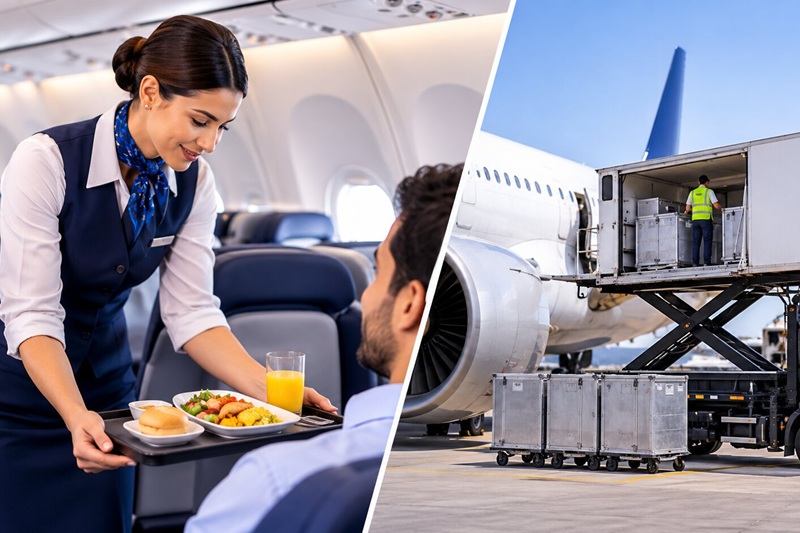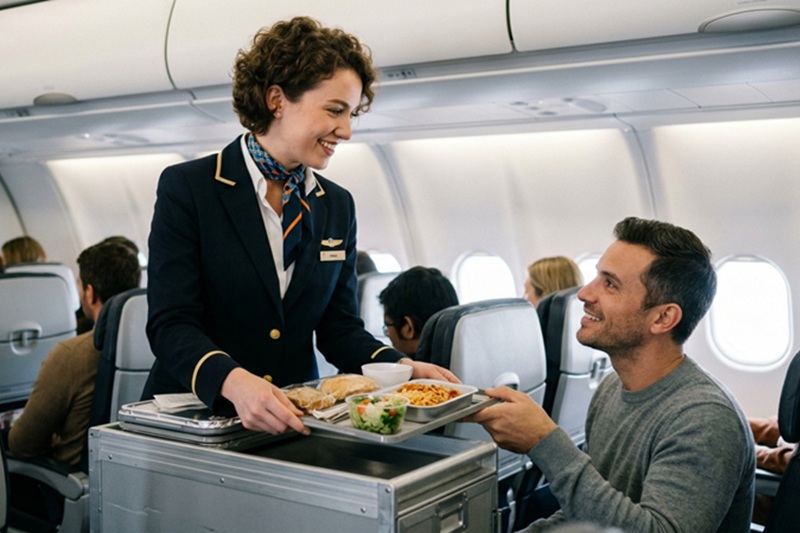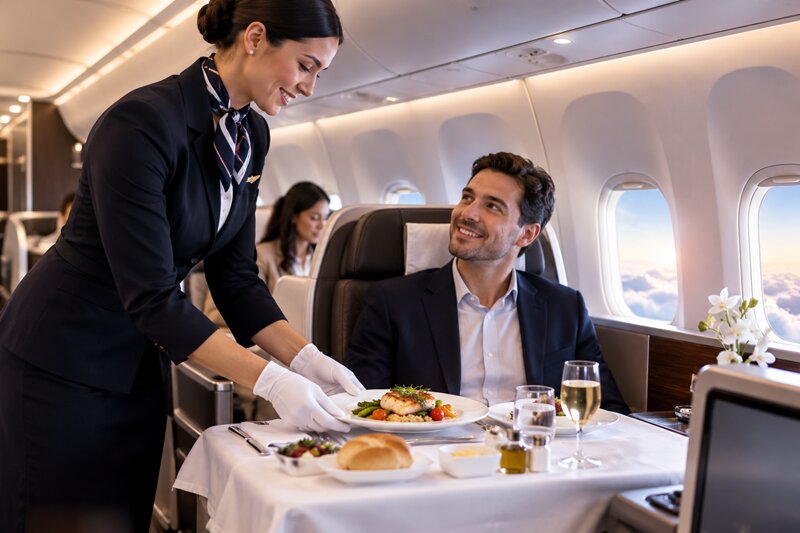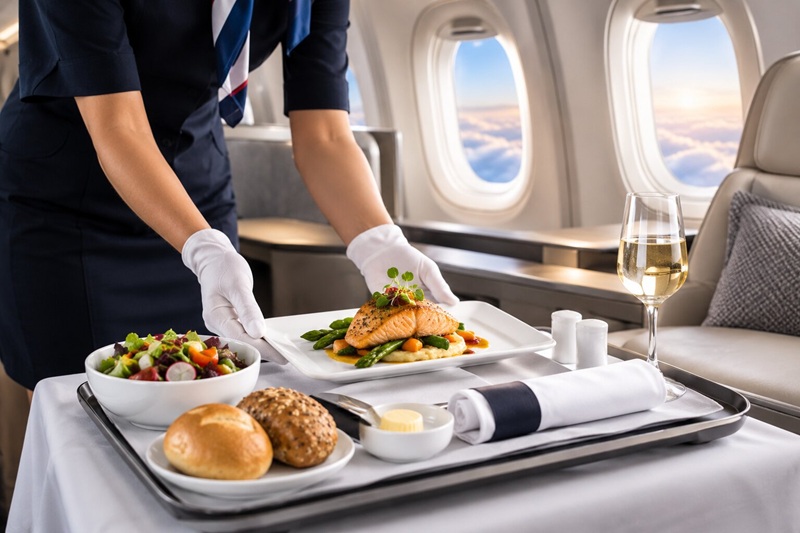
A catering order for a private jet looks simple on paper. A menu, a headcount, a delivery time. In practice, the order passes through a flight department, a kitchen, a ground handler and a cabin crew before the first plate reaches the table. A gap at any point shows up on board.
A search for how to order private jet catering for my next trip usually begins with the menu. Experienced schedulers begin somewhere else: the airport, the departure time and the galley. Get those right and the menu becomes the easy part.
This guide walks through the full ordering process in seven practical steps. Each step explains what to do and why it matters, with examples from real departures across Europe, the Middle East, Asia and Africa. It also covers errors that hold aircraft on the ramp and questions to ask before you confirm a caterer.
Why Private Jet Catering Orders Need a Different Approach
Restaurant takeaway is built for a guest who eats within minutes. Aviation catering is built for a meal that may be served six hours after it leaves the kitchen, reheated in a convection oven at 41,000 feet and plated by one flight attendant in a narrow galley.
Demand is also rising. The FAA Aerospace Forecast for 2026 to 2046 projects the US turbine fleet, which includes business jets, to grow at an average of 2.1 percent a year through 2046. In Europe, the EBAA business aviation traffic tracker for November 2025 recorded flights 2 percent above the same month a year earlier. More flights mean busier kitchens and tighter delivery slots at hubs such as Paris Le Bourget, London Luton and Dubai.
Three factors set private jet orders apart:
Timing: meals are prepared hours before service, so cooking and chilling methods change.
Equipment: each aircraft galley has different ovens, chillers and storage space.
Access: deliveries go airside, through security screening and the handling agent.
How to Order Private Jet Catering in 7 Steps
Step 1: Confirm the Core Flight Details
Every order starts with facts the kitchen cannot guess. Share these before you discuss food:
- Departure airport with its ICAO or IATA code, plus the FBO or handling agent
- Aircraft type and tail number
- Departure time in local time, not UTC or home time
- Number of passengers and crew, listed separately
- Flight duration and number of meal services
Why it matters: a 9:00 departure from Teterboro booked as 9:00 London time sends the order out five hours late. Listing crew separately also stops crew meals from being cut when the passenger headcount changes.
Step 2: Check Airport Coverage and Lead Time
Not every airport has a qualified aviation kitchen nearby. Major hubs offer wide choice. Secondary airfields in Central Asia, East Africa or the Pacific islands may rely on a single hotel kitchen. You can search our airport directory by ICAO code, IATA code or city to confirm coverage before you plan the menu.
Typical lead times look like this:
- Major hubs: 24 hours for standard orders
- Secondary airports: 48 hours
- Remote destinations or specialized menus: 72 hours or more
Short notice is possible at many locations. It limits choice, though, so order as early as the schedule allows.
Step 3: Build a Clear Passenger Brief
The passenger brief is the heart of the order. It should cover:
- Allergies, with severity and cross-contact concerns
- Religious requirements such as halal or kosher, with certification needs
- Dietary choices such as vegan, gluten-free or low-sodium
- Principal preferences, favorite dishes and items to avoid
- Children on board and their meal needs
Food safety is the reason this step deserves care. The World Health Organization 2026 foodborne disease estimates attribute around 866 million illnesses and 1.5 million deaths each year to unsafe food. At altitude, with no quick diversion, a missed allergen becomes a medical event. Our guide to in-flight catering for dietary needs explains how to document each profile in detail.
Practical tip: keep a standing profile for frequent principals. It saves time and stops repeat requests from being lost.
Step 4: Match the Menu to the Galley
A dish designed for a dining room does not always survive a cabin. Before choosing the menu, confirm what the galley can do:
- Convection oven, steam oven or microwave only
- Chiller or ice drawers, and their capacity
- Space for platters, bread baskets and wine
Then choose dishes that hold well. Braised meats, grain salads, cured fish and composed desserts travel well. Crisp fried items, soufflés and steak sliced in advance tend to suffer. Ask for reheating instructions on every hot item, written for the crew rather than for a chef.
Step 5: Confirm Food Safety and Packaging Standards
Ask how the order will be prepared, chilled and packed. A credible caterer should confirm:
- HACCP-based preparation and documented temperature control
- Labels showing contents, allergens and preparation time
- Sealed, aviation-grade packaging that fits galley storage
- Refrigerated transport to the aircraft
Why it matters: packaging built for restaurants leaks, crushes and takes up space a light jet does not have.
Step 6: Agree on the Quote, Delivery Window and Handover
Review the quote line by line. Check portions, delivery fees, airside access charges and any after-hours supplement. Then set the delivery window. Most crews ask for catering 60 to 90 minutes before departure, which leaves time to check and stow every item.
Name the handover point too. Some FBOs allow direct delivery to the aircraft. Others require items to pass through a security screen first. A clear handover removes the most common cause of last-minute delays.
Step 7: Plan for Changes Before They Happen
Private aviation schedules move. Agree on these terms at the time of ordering:
- The cut-off for menu changes without extra cost
- The cancellation window and what is charged after it
- Who to call at 2:00 local time if the flight slips
International legs add customs rules on meat, dairy and fresh produce. Our article on booking private jet catering for international flights covers those checks in more depth.
Common Mistakes That Delay Departures
Most catering problems trace back to the order, not the kitchen. Watch for these:
- Giving the departure time in the wrong time zone
- Forgetting crew meals or counting them as passengers
- Sending allergy details by text message instead of in the written order
- Ordering dishes the galley cannot reheat
- Leaving the FBO or handling agent off the order
- Changing the menu after the cut-off without confirming cost
What to Look for When Comparing Caterers
Price matters, but reliability matters more. When you compare private jet catering companies, ask four direct questions:
- How many airports can you serve, and who prepares the food at each one?
- Who answers the phone at 3:00 on a Sunday?
- What food safety standards do your kitchens follow?
- Can you handle religious, cultural and medical requirements with documentation?
Dark Wing Inflight answers these through a network of 2,800+ restaurants, VIP caterers, five-star hotels and Michelin-star chefs. That network covers more than 2,000 airports in 135 countries, from Geneva and Riyadh to challenging destinations across Africa and Central Asia. Our multilingual team works 24/7/365, and our partners follow HACCP-based food safety and aviation packaging standards. Cultural awareness is part of every brief, so a Gulf delegation and a Tokyo board each receive menus that respect their customs.
Order With Confidence on Your Next Departure
A smooth catering order rests on preparation, not luck. Confirm the flight facts, check the airport, write a clear passenger brief and match every dish to the galley. Agree on safety standards, the delivery window and the change policy before the kitchen starts cooking. Each step removes a point of failure. Together, they turn catering from a source of stress into a dependable part of the trip.
Still comparing options? Review our private jet catering services to see cuisines, service standards and coverage in one place. Once the flight is confirmed, share your brief with Dark Wing Inflight and our team will match it to the right kitchen at your departure airport.
Frequently Asked Questions
How far in advance should I order private jet catering?
For major airports, place standard orders at least 24 hours before departure. Allow 48 hours at secondary airports and 72 hours or more for remote destinations or complex menus. Short-notice orders are often possible, though menu choice narrows.
How much does private jet catering cost?
Cost depends on the airport, menu, headcount, source kitchen and delivery requirements. A simple breakfast tray costs far less than a multi-course dinner from a Michelin-star restaurant. Airside delivery and after-hours fees can also apply. Ask for an itemized quote before you confirm.
Can I order catering from my favorite restaurant for a private flight?
Often, yes. Many restaurants can prepare dishes for a flight, but the food must be packed, labeled and chilled for aviation use. A specialist caterer coordinates this with the restaurant and handles delivery to the aircraft.
What information does a caterer need to place a private jet order?
Share the airport and FBO, aircraft type, local departure time, passenger and crew numbers, flight duration, dietary and allergy details, and the delivery window. A complete brief prevents follow-up calls and errors.
Can inflight caterers provide halal, kosher and allergy-free meals?
Yes. Specialist caterers source certified halal and kosher meals and prepare allergy-free dishes with separate handling. State certification needs and allergy severity in writing when you place the order.