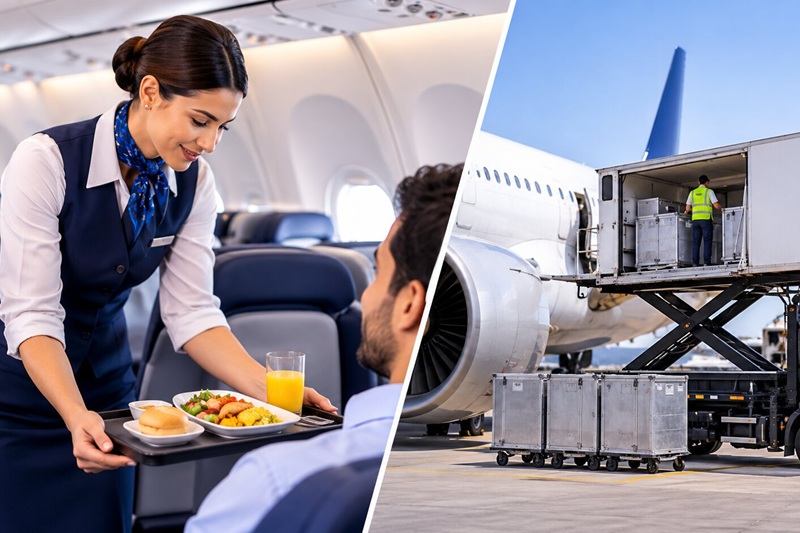
A delegation lands at Paris Le Bourget at noon, holds a two-hour briefing in the hangar, then departs for Riyadh at 16:00. The principal eats twice that day on the same ramp. Lunch in the hangar and dinner at 41,000 feet may even come from the same kitchen. Yet the two meals follow different rules, different packaging and very different timelines.
Many flight departments still treat both orders as one task. That shortcut causes most of the problems we see. A lounge buffet sits out too long during a slot delay. An allergy note reaches one caterer but not the other. This guide explains how aircraft catering and ground catering differ, why each difference matters, and how to brief both correctly.
Quick Answer: How Aircraft Catering and Ground Catering Differ
Aircraft catering is food prepared, chilled or part cooked, sealed and delivered to the aircraft, so cabin crew can finish and serve it from a small galley during the flight. Ground catering is food served before boarding or after landing, in FBO lounges, hangars, VIP terminals and airside events, usually soon after it is cooked.
The core differences fall into five areas:
- Preparation: onboard menus are built to be finished in a galley. Ground menus are plated or served live.
- Safety window: onboard food must stay safe from kitchen to cabin, often for several hours. Ground food is eaten within a short service window.
- Packaging: aviation grade containers, seals and labels versus banquet style presentation.
- Logistics: airside access, security screening and departure slots versus venue access and event timing.
- Taste: dry, pressurised cabin air dulls flavour, so onboard recipes need adjustment.
What Ground Catering Covers in Aviation
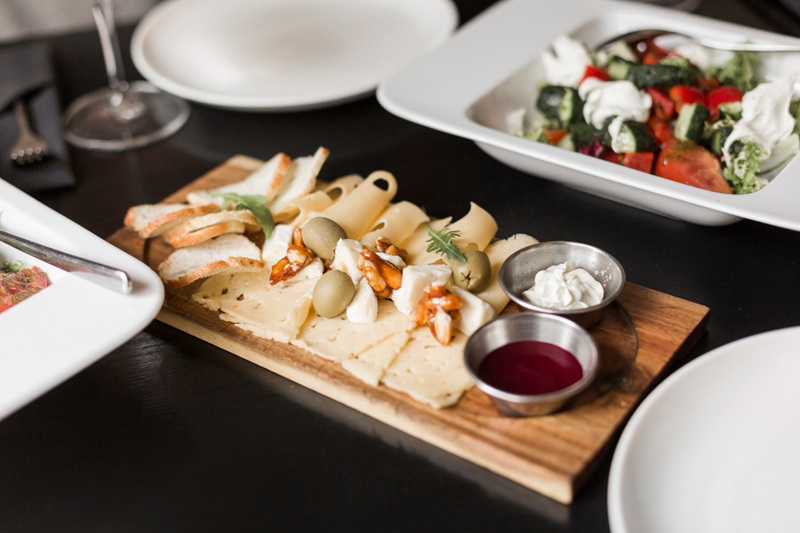
Ground catering covers any food service that happens around the aircraft but not inside it. It shapes the first and last impression of a trip.
Typical ground catering scenarios include:
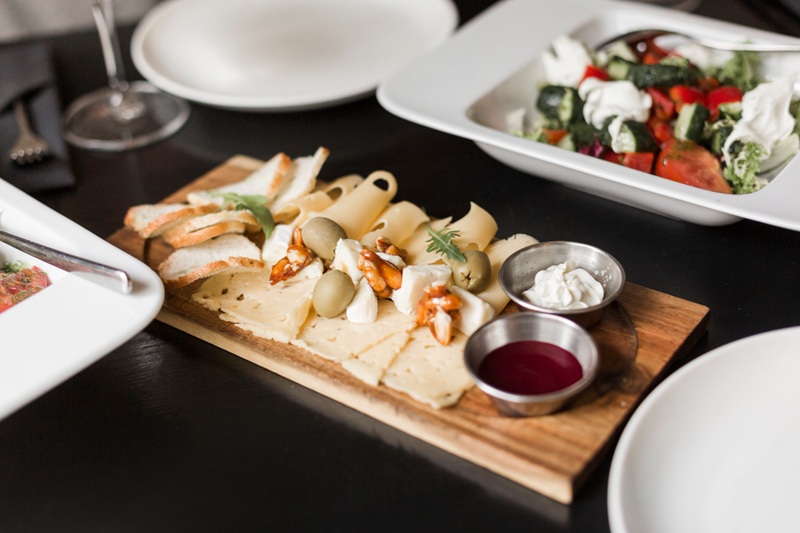
- Lounge spreads at an FBO while passengers wait out a delayed slot
- Hangar receptions, aircraft delivery ceremonies and handovers
- Crew meals during long turnarounds or mandatory rest periods
- Arrival receptions for diplomatic and military delegations
- Chalet hospitality at airshows and static displays
Ground service works differently because guests eat close to the point of preparation. Local food service rules apply. In the United States, those rules are modelled on the FDA Food Code. The FDA 2026 Food Code, released in September 2026, adds a requirement for written employee illness policies and clarifies how allergen cross-contact should be handled.
For FBO managers comparing suppliers, our guide to airport catering for FBOs explains what separates dependable providers from average ones.
What Aircraft Catering Requires That Ground Service Does Not
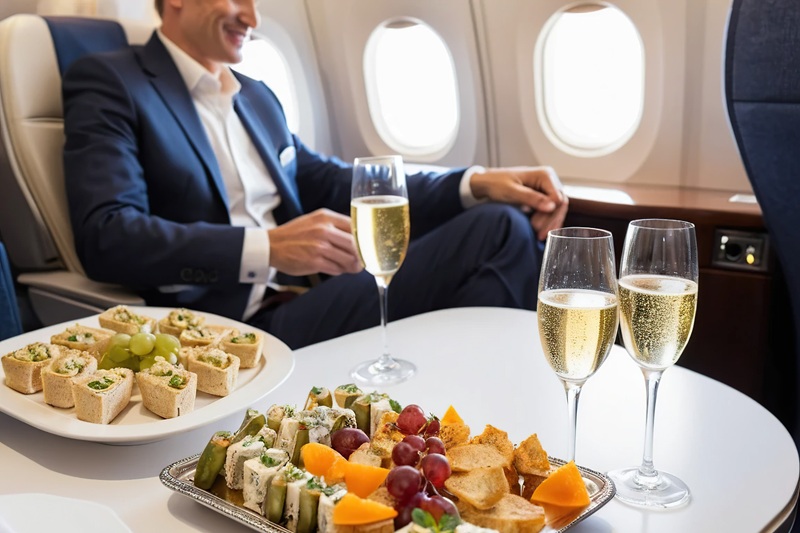
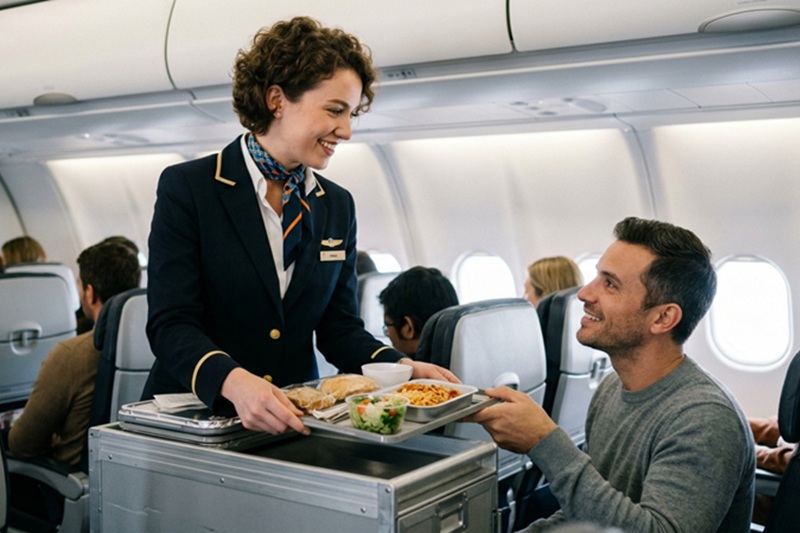
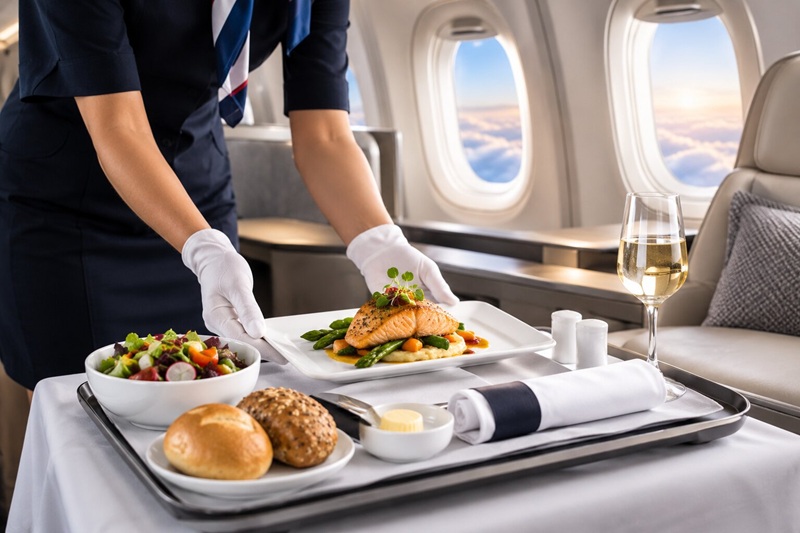
Food for an aircraft is a product built to travel. It leaves the kitchen hours before anyone eats it. It must survive transport, security screening, galley storage and reheating by the crew.
Menus Designed Around the Galley
Most business jet galleys have a convection or steam oven, a microwave and limited chiller space. Chefs therefore choose dishes that keep their texture after reheating. Braised meats, risotto finished with stock and fish cooked just short of done perform well. Fried items, soufflés and thin emulsified sauces usually fail.
A Longer, Controlled Cold Chain
Hot dishes are normally cooked, rapidly chilled, sealed and labelled. The crew then reheats them on board. This cook and chill method protects food across a holding period that ground service never faces. It also explains why HACCP controls matter more for aircraft orders than for most events.
Seasoning Adjusted for Altitude
Low humidity and reduced cabin pressure weaken our perception of salt and sweetness. Onboard recipes lean on umami, acidity, herbs and spice to stay vivid. A dish seasoned perfectly in the hangar can taste flat at cruise.
Packaging, Labelling and Presentation
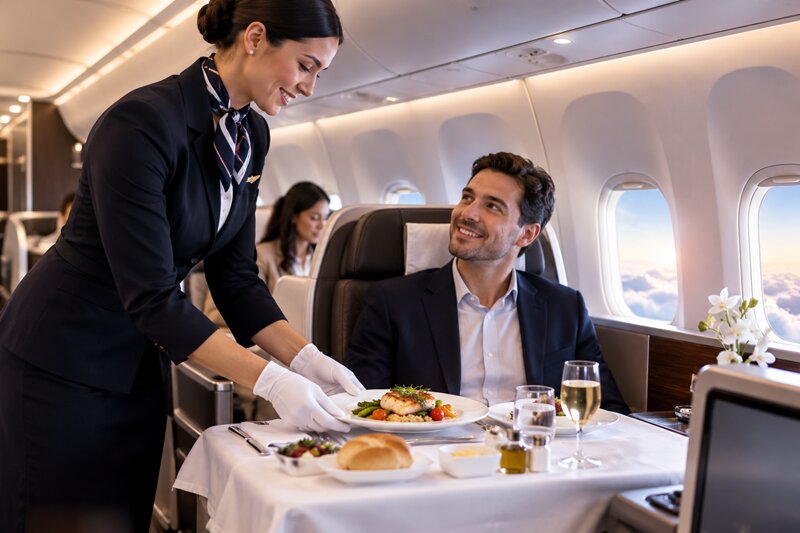
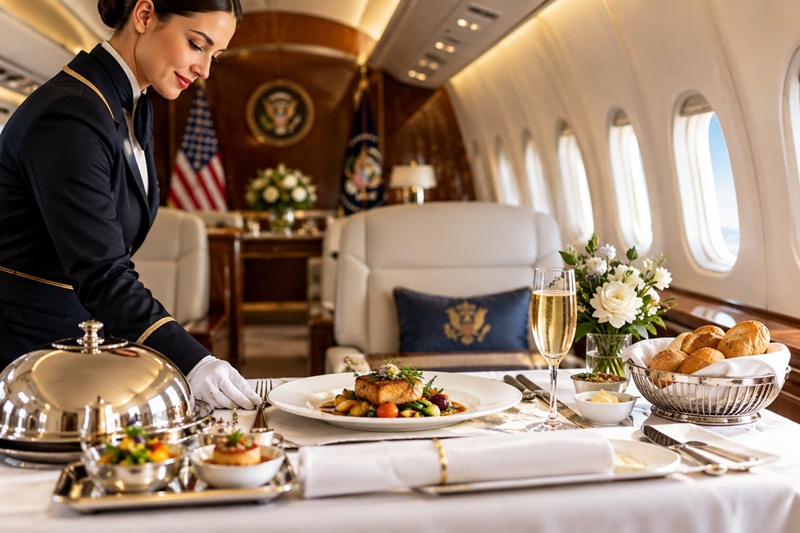
Every container needs a dish name, reheating instructions, allergen markers and a preparation time. Sauces travel separately. Garnishes go in their own sealed pots, so the crew can plate a dish that looks restaurant made.
Side by Side: Key Differences for Flight Departments
Service location: aircraft galley and cabin, versus FBO lounge, hangar, VIP terminal or apron.
Time from kitchen to plate: several hours or several legs onboard, versus minutes to an hour on the ground.
Who finishes the food: cabin crew onboard, versus chefs and banquet staff on site.
Equipment: compact ovens and chillers, versus a full event kitchen or buffet setup.
Compliance focus: HACCP, airside security and customs for international legs, versus local food service and venue rules.
Lead time: usually 12 to 24 hours at major hubs and longer at remote airfields, versus a timeline set by event size.
Why the Distinction Matters More in 2026
Business aviation keeps growing, and both types of order now compete for the same kitchens and delivery slots. The FAA Aerospace Forecast for 2026 to 2046 projects the US turbine fleet, which includes business jets, to grow by an average of 2.1 percent a year through the forecast period. In Europe, EBAA traffic data for November 2025 shows Paris Le Bourget logged more than 51,000 business aviation movements between January and November 2025, the highest of any airport in the region.
Busier hubs leave less room for error.
How to Brief Both Orders Correctly: Step by Step
- List the two orders separately on the trip sheet. They may use different kitchens, delivery points and timings.
- Confirm passenger numbers and dietary needs once, then share them with both teams. Allergy data is most often lost when it is retyped.
- Describe the galley for the aircraft order. Oven type and chiller space decide how the chef cooks and packs each dish.
- Set delivery times by function. Ground food arrives just before the event starts. Aircraft food arrives in time for crew loading, before passengers board.
- State cultural and protocol requirements. Halal, kosher, vegan or state protocol menus need sourcing time.
- Plan for delays. Ask how long the lounge spread can be safely held, and how the aircraft order will be kept chilled if departure slips.
Once the meal is on board, the rules of catering on private jets guide the crew on storage, service and cleanup.
Real-World Scenario: A Ministerial Stop in Riyadh
A ministerial delegation of 14 lands at King Khalid International Airport for a three hour stop before an overnight leg to Singapore Changi.
- Ground order: Arabic coffee, dates and a light halal lunch in the VIP terminal, served hot by on-site staff.
- Aircraft order: a four course halal dinner and breakfast, chilled, sealed and labelled for galley reheating.
- Crew order: separate meals for each pilot, packed so the two pilots eat different dishes, a standard safety practice.
One coordinator holds both briefs. One allergy list feeds both kitchens.
Choosing a Partner Who Handles Both
Many in flight catering companies handle only the aircraft order. Ask these questions before booking:
- Do your partner kitchens follow HACCP based food safety controls?
- Can you deliver airside with the right security clearance at my airport?
- Will one coordinator manage both the ground and aircraft orders?
- Is your operations desk available around the clock, in my language?
- How do you cover challenging destinations in Africa, Central Asia or the Pacific?
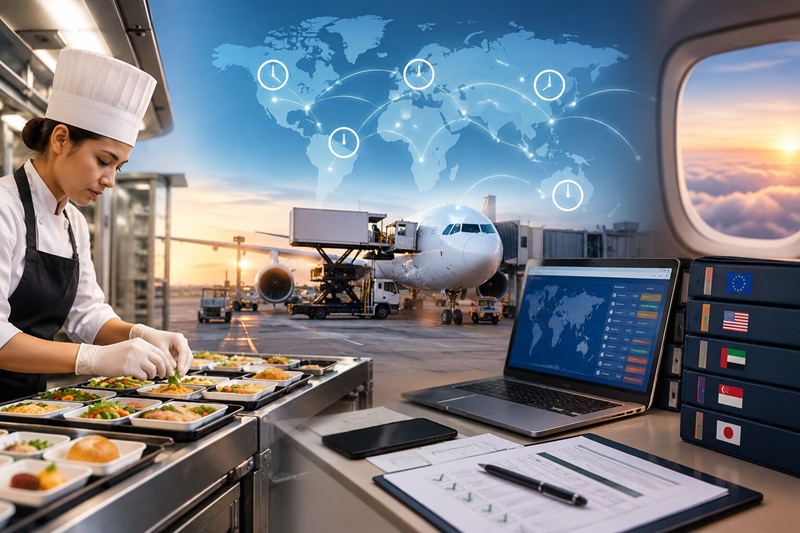
Dark Wing Inflight answers yes to each of these. We coordinate both services through 2,800+ partners, including Michelin-star chefs, five-star hotels and specialist VIP caterers, across 2,000+ airports in 135 countries. Our multilingual team works 24/7/365. You can search our airport coverage to confirm service at your next departure.
Conclusion: Brief Two Services, Not One
Ground catering and aircraft catering share a ramp, but they are separate disciplines. One serves guests within minutes of cooking. The other must hold quality and safety for hours, then come to life in a small galley at altitude. Treating them as two linked services, with one shared passenger brief, removes most of the risk.
If you are comparing options, start by mapping your next trip into ground and aircraft orders. Then talk to a provider that can manage both from one desk. Explore our aircraft catering services to see how Dark Wing Inflight supports private, government and military flights worldwide, with HACCP compliant partners and culturally aware menus.
Ready to order? Call +44 204 577 0985, message us on WhatsApp at +33 787 346 458, or email info@darkwinginflight.catering. Our operations team is available 24/7/365.
Frequently Asked Questions
What is the main difference between aircraft catering and ground catering?
Aircraft catering is prepared to be stored, reheated and served by cabin crew during the flight. Ground catering is served by on-site staff in lounges, hangars or terminals soon after cooking. The gap in time, equipment and handling drives every other difference.
Can one caterer handle my FBO lounge order and my jet meals?
Yes, and it reduces risk. A single coordinator keeps passenger counts, allergies and timings consistent across both orders. Ask your provider to confirm both delivery points in writing.
How far in advance should I order private jet catering?
At major hubs such as London Luton, Teterboro or Dubai, 12 to 24 hours is usually enough. Remote airports and complex menus may need 48 hours or more.
Why does food taste different at cruising altitude?
Dry air and lower cabin pressure reduce sensitivity to salt and sweetness. Good aircraft menus compensate with acidity, herbs, spice and umami rich ingredients.
Is ground catering available for crew during long turnarounds?
Yes. Crew meals can be delivered to the FBO, a crew rest area or the aircraft during extended ground time.