Why the Onboard Experience Now Defines Private Aviation
Private jet travel hit an all-time record in 2025, according to data compiled by WINGX and reported by Paramount Business Jets. Early indicators suggest that 2026 will build on that momentum, with continued year-over-year growth in charter activity, strong demand for light and midsize jets, and increased competition among booking platforms. The private jet charter market alone is valued at USD 17.67 billion in 2026, according to Outlook Traveller, and is projected to reach USD 25.79 billion by 2031.
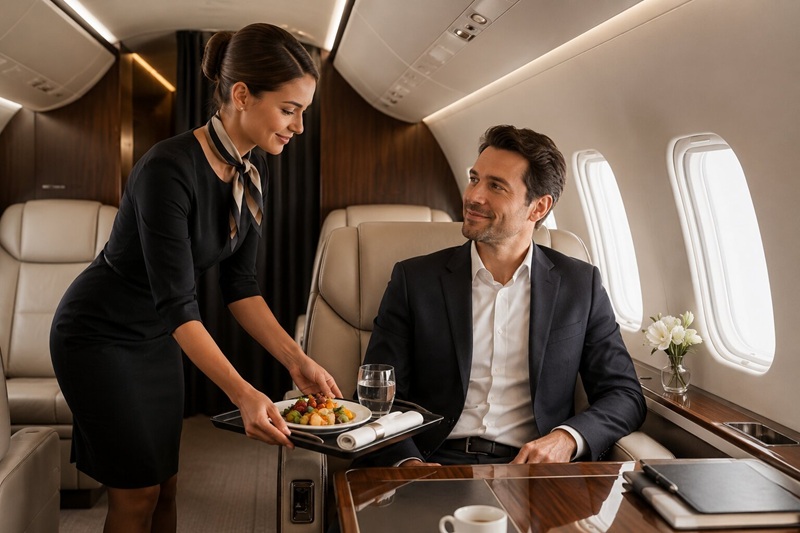
What is driving this growth is not simply more wealthy individuals flying more often. It is a shift in expectations. Passengers judge the quality of their flight not by speed or range alone, but by the total experience from the moment they arrive at the FBO to the moment they step off the aircraft. Catering, cabin environment, service responsiveness, and personalization have become the factors that distinguish a good flight from a remarkable one.
For flight departments, charter operators, and VIP service providers, this shift demands a more deliberate approach to every touchpoint of the passenger experience.
Premium Catering as the Cornerstone of the Travel Experience
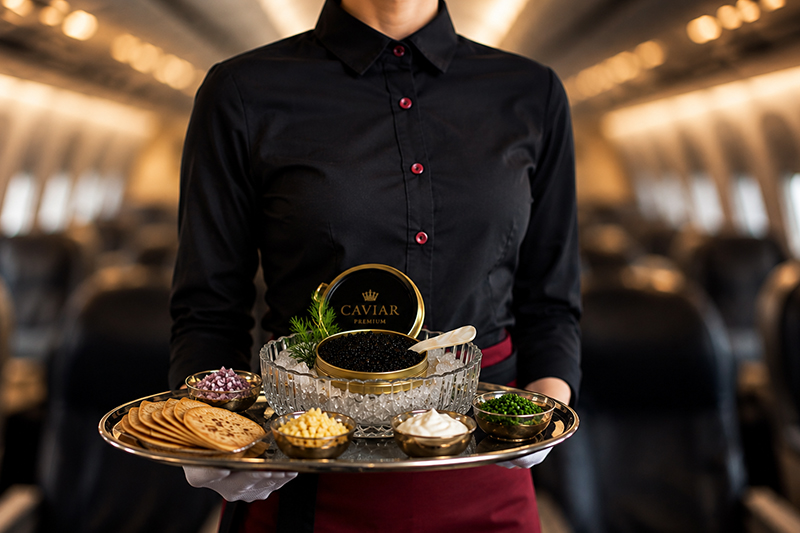
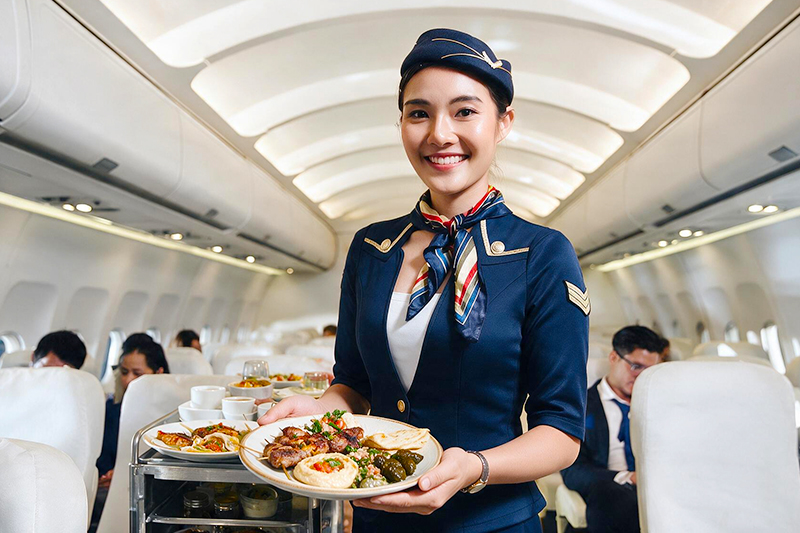
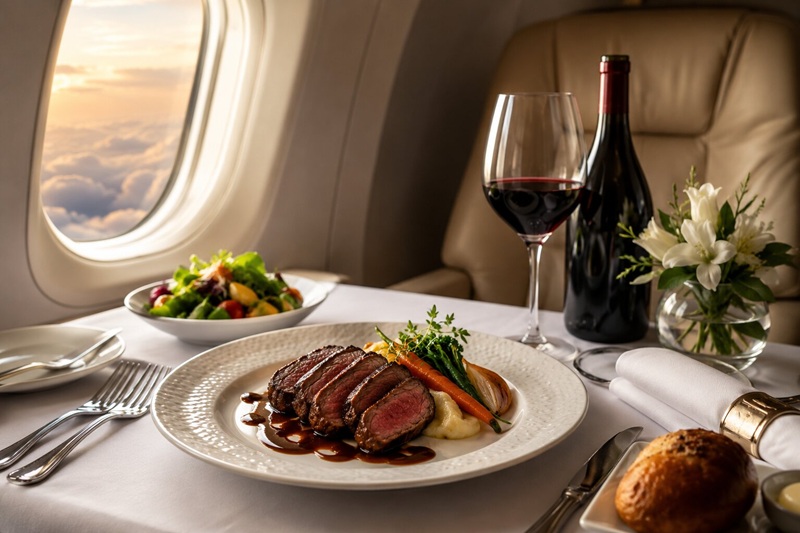
Food has always been part of private aviation, but the standards have changed considerably. Passengers in 2026 expect inflight dining that reflects the same quality they would find at a top restaurant on the ground. This means fresh, locally sourced ingredients, menus tailored to individual dietary preferences, and presentation that is thoughtful rather than generic.
The most impactful catering decisions are not about extravagance. They are about precision. A breakfast service on a 7:00 AM departure from Teterboro should feel different from a dinner service on an evening leg from Dubai to London. Menus should reflect the time of day, the duration of the flight, and the cultural context of the passengers onboard. A government delegation from the Gulf states requires a different culinary approach than a tech executive flying with colleagues from San Francisco to Tokyo.
Dark Wing Inflight supports this level of precision through a network of 2,800+ world-renowned restaurants, VIP caterers, 5-star luxury hotels, and Michelin-star chefs across 2,000+ airports in 135 countries. This global reach ensures that the catering matches the occasion, the route, and the passengers, regardless of where the aircraft departs or arrives.
Getting private jet catering right is not about spending more. It is about planning with greater intention and treating the meal service as a core component of the travel experience rather than an afterthought.
Cabin Comfort and Wellness at Altitude
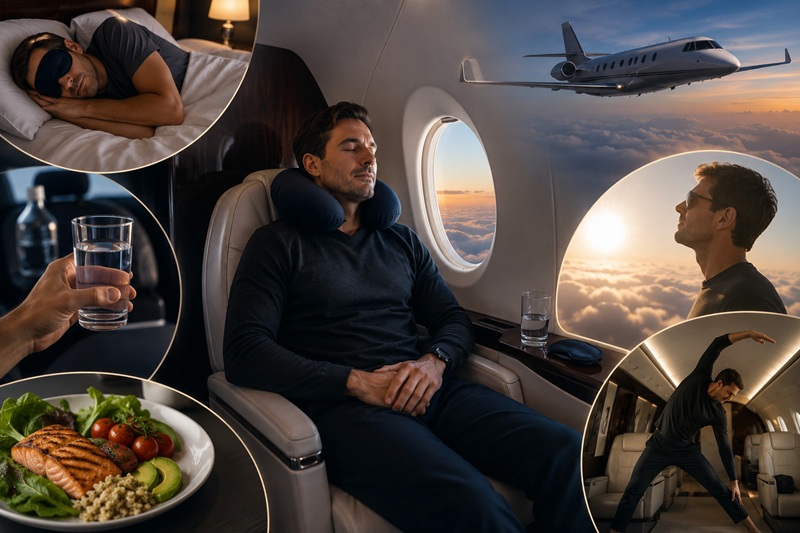
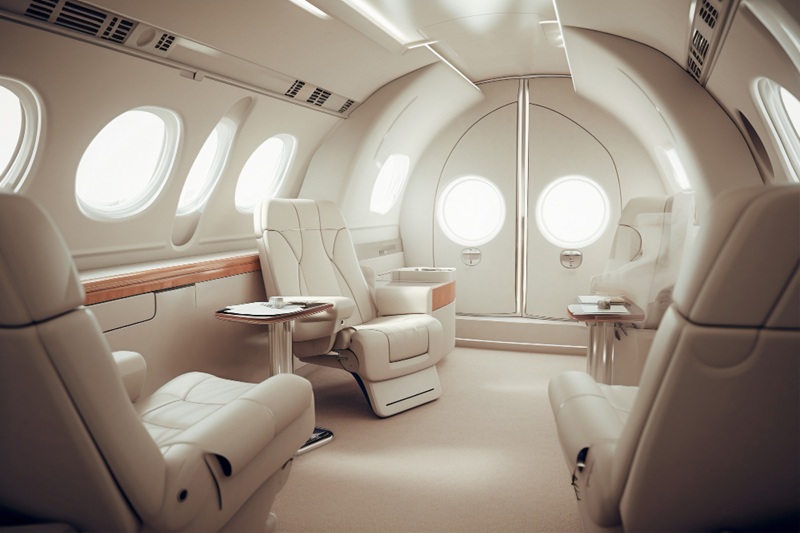
The cabin environment plays a direct role in how passengers feel during and after a flight. In 2026, wellness-oriented design is no longer a niche feature. It is becoming a baseline expectation among frequent private aviation travelers. Aircraft interiors now prioritize quieter cabins, improved air filtration systems, and lighting designed to support natural circadian rhythms during long-haul flights.
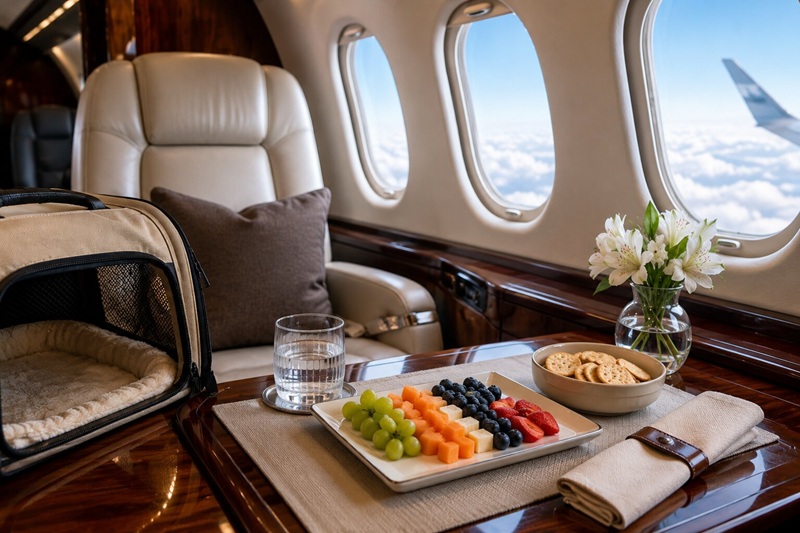
From a catering perspective, wellness trends are reshaping menu design. Lighter proteins, hydration-focused items such as cucumber and citrus-infused water, antioxidant-rich snacks, and meals calibrated for altitude are increasingly standard requests. The low-humidity cabin environment accelerates dehydration, and passengers spending five or more hours at altitude benefit from a beverage strategy that actively addresses this.
Operators who integrate catering with broader cabin wellness, from meal timing aligned with sleep cycles to offering herbal teas and nutrient-dense snacks between services, create a more cohesive and physically comfortable experience for passengers. This attention to detail separates a functional flight from one that leaves passengers feeling refreshed on arrival.
Personalization Beyond the Menu
The World Luxury Chamber of Commerce's 2026 Travel Trends Report highlights a clear pattern: high-net-worth travelers are prioritizing hyper-personalized experiences over standardized luxury. In private aviation, this extends well beyond food. Passengers expect the entire flight environment to reflect their individual preferences, from cabin temperature and lighting to beverage selection and entertainment options.
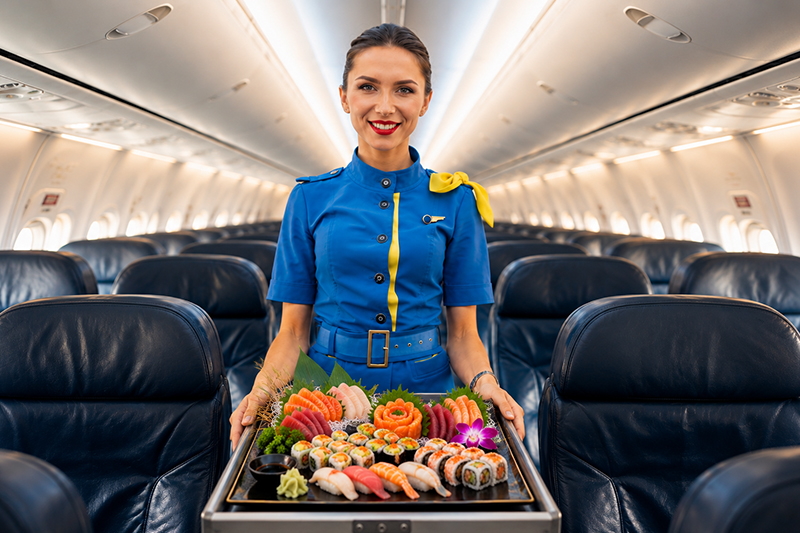
For VIP inflight catering, personalization means storing passenger profiles that capture dietary restrictions, preferred cuisines, and favorite beverages. Repeat clients should never need to re-explain their preferences. A principal who prefers Japanese cuisine, avoids dairy, and drinks only a specific sparkling water brand should receive exactly that on every flight without being asked.
Dark Wing Inflight provides 24/7/365 multilingual service that allows flight departments and cabin crew to communicate passenger preferences in advance, ensuring that every detail is captured and executed accurately. This kind of proactive coordination is what transforms a catering order into a genuinely personal experience.
Cultural Intelligence in Global Operations
Private aviation is inherently global. A single aircraft may operate across four continents in a week, carrying passengers from different cultural, religious, and dietary backgrounds. The travel experience suffers when the catering and service do not reflect this reality.
Cultural intelligence in inflight service means understanding that a Saudi delegation requires certified halal meals prepared in accordance with Islamic dietary law, not a generic label on a standard menu. It means knowing that Japanese business travelers may expect specific etiquette around food presentation. It means recognizing that a kosher meal sourced from an uncertified kitchen fails to meet the standard, no matter how the packaging is labeled.
Operators flying internationally, particularly those serving government, diplomatic, and military missions, need catering partners with verified supplier networks in each region. A provider who can deliver consistently in London, Riyadh, Lagos, Singapore, and Sao Paulo brings operational reliability that single-market caterers cannot match.
Service Responsiveness and 24/7 Availability
The best catering and cabin services mean little if they cannot be delivered on time, every time. Private aviation operates on compressed timelines. Departures shift. Passengers arrive early or late. Manifests change hours before wheels-up. A luxury travel experience is built on the assumption that every service provider involved can keep pace with these realities.
For inflight catering services, this means round-the-clock availability, the ability to process order changes at any hour, and logistics networks that can deliver to FBOs across multiple time zones without gaps.
Flight departments that invest in service partners with genuine 24/7 capability build a more resilient operation. The passenger never sees the complexity behind the scenes. They simply experience a flight where everything works, the food is excellent, and no detail has been overlooked.
Frequently Asked Questions (FAQs)
What makes private jet catering different from commercial first-class dining?
Private jet catering is fully customizable to individual passenger preferences, dietary requirements, and cultural needs. Unlike commercial first-class, where passengers select from a fixed menu, private aviation allows complete control over every element of the meal. Menus can be tailored to specific cuisines, ingredients can be locally sourced at the departure airport, and service timing can be adjusted to match the flight schedule.
How does flight duration affect the quality of the travel experience?
Flight duration determines how many meal services are needed, what food formats work best, and how important hydration becomes. Short flights under two hours are best served with premium cold items and beverages. Longer flights require multi-course meals, snack intervals, and active hydration strategies. On ultra-long-range flights over 10 hours, the entire cabin experience should be coordinated to help passengers arrive feeling rested.
How do VIP catering providers handle last-minute changes to passenger count or preferences?
The best providers operate 24/7 and maintain relationships with local suppliers at thousands of airports globally. This allows them to process order modifications quickly, even for same-day departures. At Dark Wing Inflight, our team can adjust catering orders at any hour across 135 countries, accommodating changes to headcount, dietary needs, or menu preferences with minimal lead time. Building a buffer of two extra portions into every order also helps absorb last-minute additions.
Why is cultural sensitivity important in private aviation catering?
Private aviation frequently serves passengers from diverse cultural and religious backgrounds, particularly on government, diplomatic, and corporate flights. Catering that respects halal, kosher, Hindu vegetarian, and other dietary traditions is a matter of both hospitality and professional protocol. Using certified suppliers ensures that meals are compliant and authentic. A catering partner with a global network of verified specialists makes this possible at any departure point.
What trends are shaping the private jet travel experience in 2026?
The most significant trends include wellness-oriented cabin design with better air filtration and circadian lighting, hyper-personalized service based on stored passenger profiles, sustainability initiatives such as SAF adoption, and the integration of gourmet catering as a standard rather than a premium add-on. Passengers expect the flight to be a seamless extension of their lifestyle on the ground.
Final Thought
The private jet travel experience is defined by details: the quality of the catering, the responsiveness of the service team, the cultural awareness embedded in every menu, and the consistency of the cabin environment across every leg. These are the elements that separate a flight from a genuine VIP experience. Operators who invest in getting these details right build lasting relationships with passengers who value precision and personal attention above all else.