Private aviation runs on tight timelines, tighter margins, and passenger expectations that leave little room for a missed detail. When a Gulfstream repositions from Farnborough to Dubai on a four hour notice, the catering brief travels with it: allergens, cultural preferences, principal likes, crew meals, ice, china, and a delivery window that must land inside the slot. Operators do not shop for menus. They shop for a supplier who can absorb pressure and still deliver a plate the principal recognises as their standard.
That is why the search for a trusted inflight catering partner for private aviation has become a procurement discipline in its own right. Flight departments now evaluate suppliers against food safety records, airside credentials, network depth, response times, and the quiet ability to fix problems before the crew notices them. The 2026 landscape rewards providers who treat catering as a safety critical function, not a hospitality add on.
Why Catering Selection Has Become a Board Level Decision in 2026
Global business jet activity has held firmly above pre pandemic baselines through 2025, with WingX reporting sustained flight volumes across North America, Europe, and the Middle East. According to a
Two forces are reshaping supplier selection:
- Passenger scrutiny: principals compare their jet meal to what they eat at Le Bristol or Aman Tokyo. The bar is Michelin adjacent, not airline plus.
- Regulatory pressure: EASA and FAA inspections increasingly examine cold chain handling, allergen labelling, and third party supplier records held by the operator.
The result is a shortlist mentality. Flight departments prefer one accountable partner across many airports over a patchwork of local vendors managed by dispatch. Consolidation reduces coordination time, gives procurement a single audit trail, and lets cabin crew brief the supplier once rather than reintroducing the principal on every rotation. Post pandemic hiring pressure on schedulers has accelerated this shift, and the operators moving fastest to consolidate are the ones flying the largest fleets and the longest legs.
Ten Criteria Operators Use to Vet Airport Catering Services
Chief pilots, schedulers, and cabin crew leads tend to converge on the same evaluation set. Below is the shortlist most flight departments run through before signing a preferred supplier agreement.
1. HACCP Certification and Documented Food Safety Systems
Operators ask for HACCP plans, temperature logs, and traceability records. The
2. Genuine Global Coverage, Not a Directory
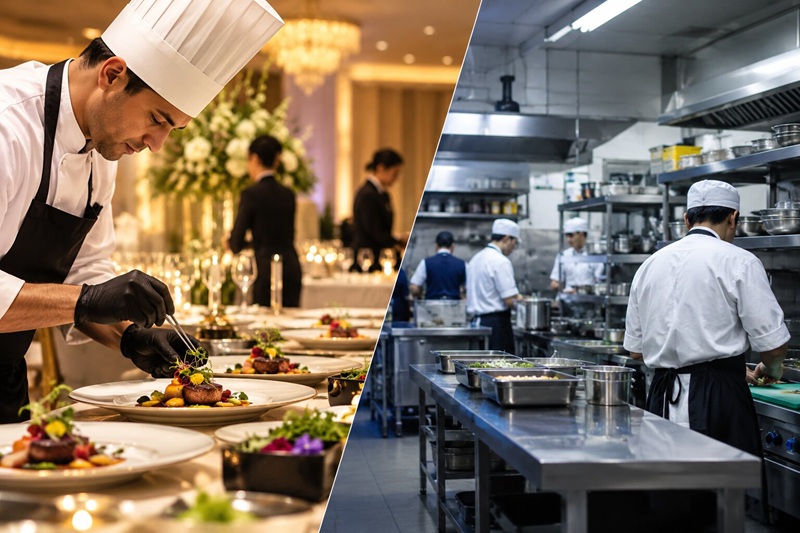
Coverage on paper differs from coverage in practice. Operators verify whether a supplier actually delivers into Teterboro, Le Bourget, Farnborough, Dubai World Central, Seletar, and the harder fields like Ulaanbaatar or Male. A network built from vetted local kitchens, five star hotels, and Michelin partners performs where a call centre with a spreadsheet does not.
3. Dispatch Reliability Under Short Notice
The industry standard for private aviation catering requests is now 6 to 8 hours before wheels up, with tech stops requested as tight as 90 minutes. Suppliers who cannot confirm inside 15 minutes lose the order.
4. Multilingual, 24/7/365 Coordination
A single point of contact who speaks the crew language, understands ICAO codes, and can escalate to a kitchen in Sao Paulo at 03:00 GMT is worth more than any glossy menu deck.
5. Cultural and Dietary Fluency
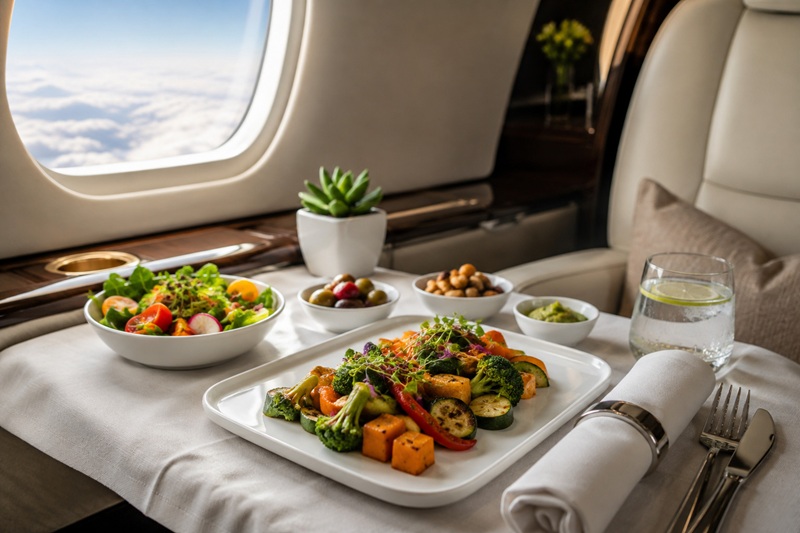
Halal, kosher, Jain, low FODMAP, plant based, and allergen segregated meals must be prepared to standard, not adapted from a set menu. Cultural fluency also means knowing that a Saudi principal expects Arabic coffee and dates within minutes of boarding.
6. Transparent Sourcing and Provenance
Ultra high net worth passengers ask where the sea bass was landed and whether the caviar is farmed or wild. Suppliers who can answer without hesitation win repeat business.
7. Cold Chain Integrity Airside
Refrigerated vehicles, sealed transport containers, and airside handover protocols separate a catering company from a caterer. Temperature excursions during ramp delivery are a leading cause of quality complaints.
8. Financial Stability and Consolidated Billing
Operators managing 40 aircraft do not want 400 invoices a month. Consolidated billing, transparent pricing, and multi currency settlement are procurement essentials.
9. Crew Experience
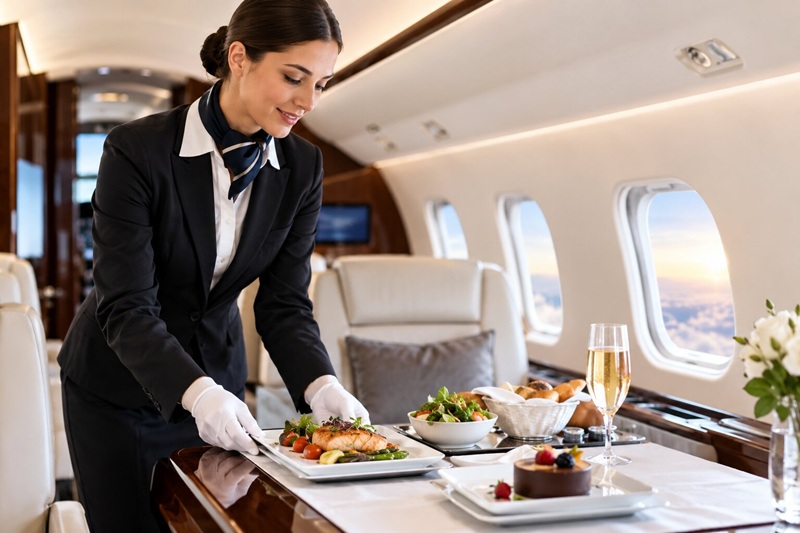
Corporate flight attendants judge suppliers on labelling, plating readiness, tray fit, ice quality, and how easy the delivery is to stow. A partner who thinks like a cabin crew member reduces workload on turn.
10. Sustainability Credentials
Reduced single use plastics, recyclable trays, and locally sourced produce increasingly appear in tenders from corporate flight departments with published ESG commitments.
How Dark Wing Inflight Meets the Operator Checklist
Dark Wing Inflight was built around this checklist rather than adapted to it. Our network spans 2,800 plus vetted partners across 2,000 plus airports in 135 countries, with 24/7/365 multilingual coordination handled by aviation trained schedulers. Every kitchen we onboard is audited against HACCP protocols and documented so the operator can produce records on request. The rules of catering on private jets guide we publish for flight departments explains how these audits translate into the paperwork inspectors actually ask for.
For principals who order the same tuna tartare at Nobu and expect the same on approach into Nice, our premium private jet catering services desk assigns a chef partner whose kitchen already handles that dish. The menu is not standardised, the reliability is. Coordinators log principal preferences the first time a passenger flies, and every subsequent order references that profile, whether the flight is landing in Farnborough, repositioning to Riyadh, or crossing the Pacific with a fuel stop at Anchorage. That continuity is what flight departments buy when they consolidate.
Signals That Separate a Vendor from a Partner
The distinction matters at 02:00 when a diversion into a secondary field turns a routine order into a logistics puzzle. Operators tell us the same signals show up every time a partner earns the label.
- Anticipation: the supplier flags a slot risk before dispatch does.
- Ownership: one coordinator, one phone number, one accountable name from order to handover.
- Documentation: allergen sheets, temperature logs, and delivery receipts arrive without a chase email.
- Recovery: when a kitchen misses, the partner reroutes rather than explains.
- Discretion: principal preferences are protected, never marketed.
The 2026 Cost of Getting It Wrong
A single missed catering delivery on a head of state charter or a UHNW rotation carries downstream cost far beyond the invoice. According to the IATA World Air Transport Statistics 2025, on time performance remains one of the most measured operational metrics across aviation. In business aviation, a 20 minute delay for catering on a repositioning leg can cascade into a missed airport slot at destination, over crew duty limits, and a costly overnight. Selecting a supplier with proven dispatch discipline is a risk management decision, not a hospitality one.
The reputational cost is harder to price but easier to feel. A UHNW principal who receives a cold breakfast at cruise, or a foreign minister whose halal meal is mislabelled, rarely complains to the operator directly. The complaint travels through the assistant, the family office, or the protocol chief, and the operator loses the next tender without ever knowing which meal caused it. Suppliers who understand this dynamic invest in quiet checks: a second phone call to confirm allergen segregation, a photo of the sealed tray before ramp release, a courtesy note to the cabin crew lead once the aircraft is airborne. None of this appears on the invoice, all of it protects the account.
Practical Steps for Building a Preferred Supplier List
- Run a documented tender: request HACCP certificates, sample menus, airport coverage lists, and reference operators.
- Test with a live trial: place three orders across different regions and time zones. Measure confirmation time, delivery accuracy, and crew feedback.
- Consolidate reporting: insist on a single billing entity and one operations manager for the account.
- Review quarterly: service scores, complaint resolution, and menu innovation should be on the agenda every 90 days.
For flight departments still juggling multiple local vendors, our note on the smartest way to manage inflight catering outlines a workflow used by several large corporate operators to cut coordination time by more than half.
Conclusion
The private aviation catering market in 2026 rewards suppliers who behave like operators. Flight departments no longer separate the plate from the process, they judge both at the same time. A trusted inflight catering partner for private aviation must clear the audit desk, hit the slot, deliver the dish the principal recognises, and stay quiet about it afterwards. Getting the shortlist right protects the principal, the crew, and the schedule.
The operator checklist is the operating system behind our desk. Global reach across 2,000 plus airports, curated partnerships with Michelin chefs and five star hotels, aviation trained coordinators on the phone at every hour, and food safety records ready for any audit. Selecting a catering partner is a long term relationship. The right one becomes invisible in the best sense, present at every meal, absent from every problem log. Operators building preferred supplier lists for the next fleet cycle would do well to weight process, paperwork, and airside discipline as heavily as they weight the menu, because that is where the missed slot and the audit finding actually live.
Frequently Asked Questions
What makes a trusted inflight catering partner for private aviation?
A trusted partner combines documented food safety, genuine global reach, dispatch reliability, and cultural fluency. Operators look for HACCP audited kitchens, airside delivery discipline, multilingual coordinators available 24/7/365, and a single accountable point of contact across every airport on the itinerary. The best partners treat catering as a safety critical function, keep records ready for inspection, and recover quietly when a kitchen misses. They do not depend on a directory of unvetted suppliers, they operate a curated network of Michelin chefs, five star hotels, and specialist VIP caterers whose standards have been verified in advance.
How do private jet operators choose airport catering services?
Selection typically follows a documented tender covering food safety certifications, airport coverage, response time, sample menus, and reference operators. Flight departments then run a live trial across two or three regions to measure confirmation speed, delivery accuracy, and crew feedback before signing a preferred supplier agreement. Airport catering services are judged on cold chain integrity, ramp handover protocols, and the ability to hit narrow slot windows at fields ranging from Teterboro and Farnborough to secondary and remote airports. Consolidated billing and a single operations manager per account are common procurement requirements.
How far in advance should catering be ordered for a private jet?
The industry standard is 6 to 8 hours before wheels up for a standard order, though established partners routinely accept requests inside 2 to 3 hours when the aircraft is already inbound. Tech stop requests can be honoured with 90 minutes notice at major hubs where the partner keeps a kitchen on rotation. Complex orders involving fresh sushi, live seafood, or bespoke dietary preparation are best placed 24 hours in advance to allow sourcing. A trusted partner will confirm the order inside 15 minutes and flag any risk to the slot before dispatch asks.
Is HACCP certification mandatory for private jet catering?
HACCP is the global reference standard for food safety in aviation catering and is expected in every credible tender, even where it is not a strict legal requirement for a specific kitchen. Regulators including EASA and the FAA increasingly review the food safety records that operators hold on their third party suppliers, and a HACCP plan with temperature logs and traceability is the practical evidence. Kitchens serving private aviation must document allergen segregation, cold chain handling, and staff training. A supplier who cannot produce HACCP paperwork on request should not be on a preferred list.
How does Dark Wing Inflight handle short notice requests at remote airports?
Our coordination desk operates across every time zone with aviation trained schedulers who route the request to the nearest audited kitchen the moment it lands. Because we work with 2,800 plus vetted partners across 2,000 plus airports in 135 countries, we can usually confirm a hot meal service into secondary and remote fields within the same window a major hub would offer. Where a full menu is not feasible, we advise the crew on a realistic option, arrange a reposition from a nearby city kitchen, or stage a delivery at the tech stop. Every step is documented and communicated back to the operator in real time.