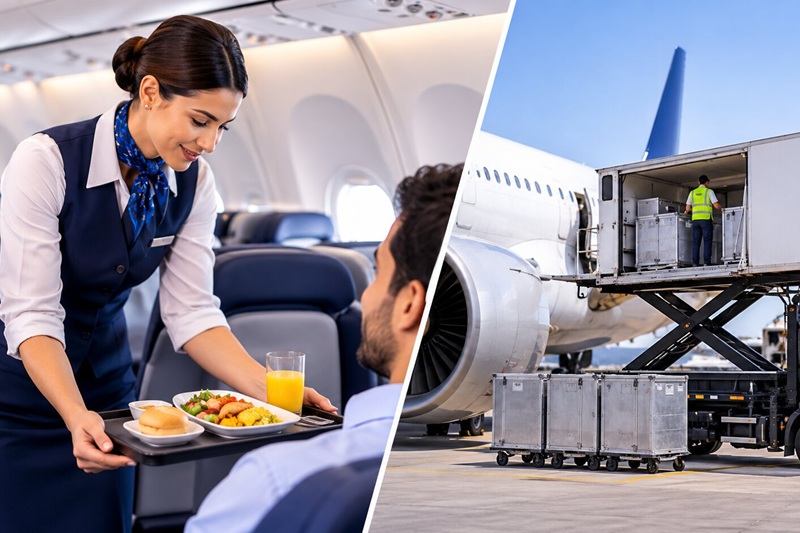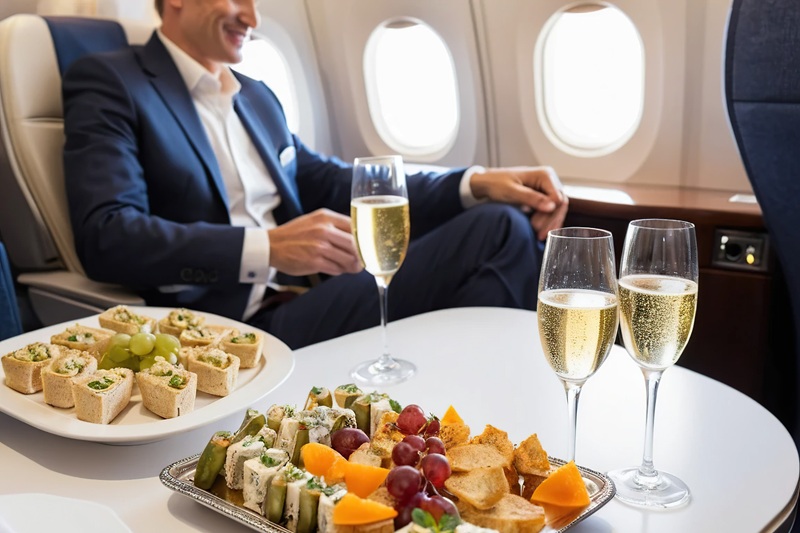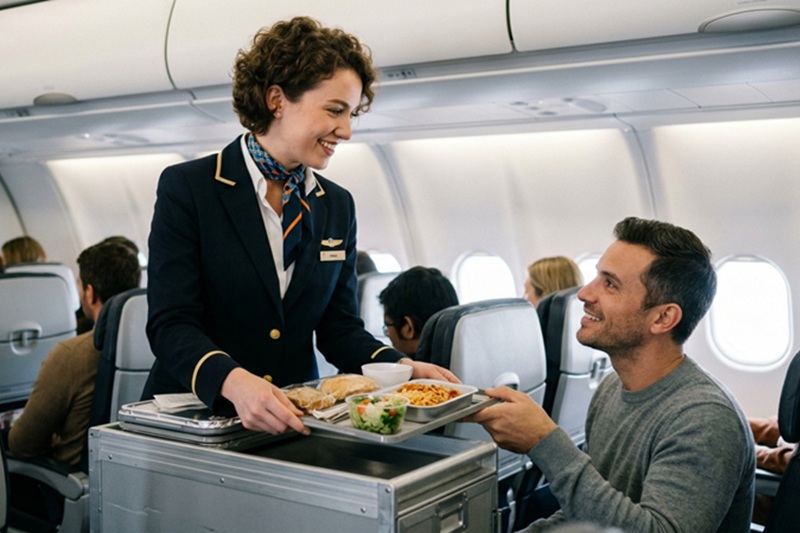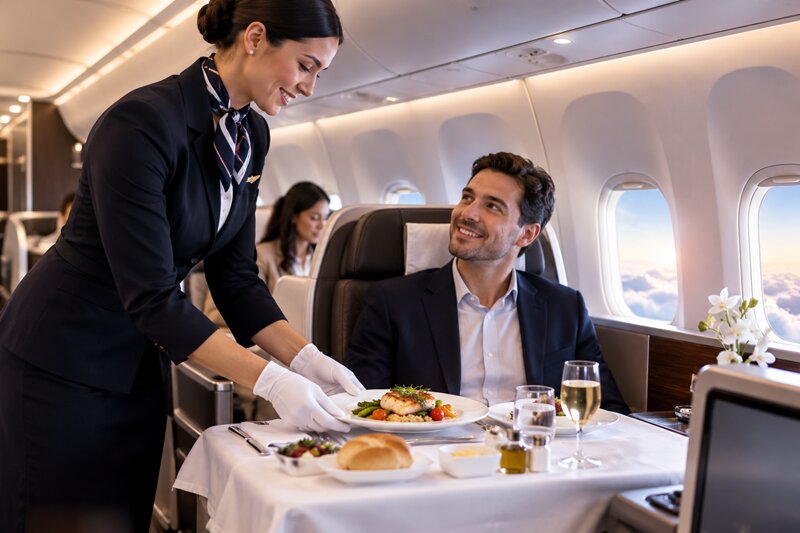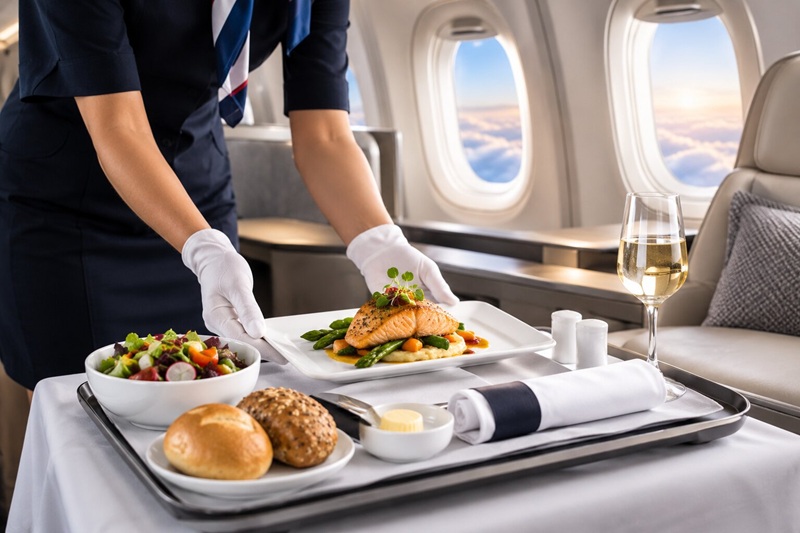
A Gulfstream G700 leaves Teterboro at 06:40 with a principal, two advisers and a sea bass course plated in Manhattan four hours earlier. Between that kitchen and the galley chiller, the meal changes hands at least five times. Each handoff is now held to a tighter benchmark than it was twelve months ago.
2026 has been an unusually active year for aviation food safety. Regulators, industry bodies and waste auditors have all raised expectations within a few months. For corporate flight departments, government protocol offices and charter operators, the real question is how quickly a catering partner is adapting.
This guide explains what changed, why it matters on private, government and military flights, and how to check that your provider is keeping pace.
What Changed in 2026: The Regulatory Picture
Two releases in September 2026 now frame most conversations about aviation meal safety.
- FDA Food Code 2026: The U.S. Food and Drug Administration published the 2026 edition of its Food Code on 17 September. It adds a requirement for written employee illness policies, an alternative cooling process and clearer rules on allergen cross-contact.
- IFSA World Food Safety Guidelines 2026: A week earlier in Dallas, the International Flight Services Association launched its 2026 World Food Safety Guidelines. The edition merges the former guidelines and implementation guide into one framework aligned with ISO 22000:2018 and FSSC 22000 Version 7.
Why These Documents Matter for Business Aviation
Neither document was written only for private jets. The FDA code is a model for retail and food service kitchens. The IFSA guidelines target airline caterers. Yet both now shape what auditors, insurers and corporate risk teams expect from any kitchen that feeds an aircraft.
This matters because VIP meals often come from restaurants and hotel kitchens that were never designed for aviation. The new benchmarks give flight departments a clear reference point when they ask a caterer to prove its controls.
Six Standards Reshaping VIP Aviation Catering
Here is where expectations have moved most, and why each shift matters at 45,000 feet.
1. Written Illness Policies and Staff Accountability
Verbal rules about unwell staff no longer satisfy an audit. Kitchens are expected to keep a written policy and produce it on request.
Why it matters: one unwell food handler can affect an entire delegation, with no clinic on board and hours before landing.
2. Allergen Control Beyond the Label
Marking a dish as nut free is no longer enough. The focus has shifted to cross-contact through shared boards, fryers, gloves and galley storage. Strong caterers now offer:
- Separate preparation zones and utensils for allergen-free meals
- Sealed, individually labeled packaging for each passenger
- Written handover notes for cabin crew
3. Verified Cold Chain From Kitchen to Galley
Clients increasingly ask for temperature records rather than verbal assurances. Data loggers and time-temperature labels are becoming routine on high-value flights.
Why it matters: a two-hour ramp delay in Dubai summer heat can push a dish out of its safe range. A record shows exactly when that happened, so the crew can act.
4. Cultural and Religious Precision
Halal, kosher, Jain and plant-based requests now call for an unbroken chain of proof. Government and royal flights expect certification at sourcing, preparation and sealing, not just a note on the menu card.
5. Waste Accountability and Smarter Loading
Sustainability has reached the galley. According to cabin waste figures presented at the 2025 IFSA Global EXPO, the Aviation Sustainability Forum estimated that cabin waste reached about 4 million tonnes in 2025, with food and beverage making up roughly 63 per cent.
Private aviation is a small share of that total. Even so, VIP clients and ESG-focused corporate fleets are asking similar questions. Expect more requests for right-sized portions, reusable serviceware and less single-use plastic.
6. Data-Led Planning and Digital Ordering
AI forecasting and digital ordering are moving from pilot projects into daily kitchen operations. For private flights, the benefit is precision. Passenger preferences, dietary flags and past orders sit in one profile, ready for the next trip.
How the New Standards Look on Real Flights
Government Delegation: Riyadh to Geneva
A ministerial team needs certified halal meals, a kosher option for one guest and a strict shellfish exclusion. Certification is documented at every stage. Each meal is packed and labeled separately, and the crew receives a written brief. Security screening adds time, so the delivery window is agreed before the menu.
Ultra Long Range: Dubai to Los Angeles
Sixteen hours in the air means two or three services. Dishes are chosen for safe chilling and reheating, not only for plating. The return leg depends on local sourcing, and our Los Angeles International Airport catering page helps planners review options before departure.
Short Notice Mission: Remote and Restricted Airfields
A government or military movement into Djibouti, Ulaanbaatar or a remote Pacific airstrip may come with six hours of notice. Nearby five-star hotel kitchens often become the safest source. Sealed, logged and labeled packaging matters even more when the galley has limited equipment.
Step by Step: How to Check Your Caterer Meets 2026 Standards
Use this checklist before your next booking. Each step covers what to do and why it counts.
Request the food safety plan. Ask for the HACCP plan and the written illness policy. This shows controls exist on paper before they are tested in the air.
Test allergen handling. Ask how the kitchen separates allergen-free preparation, not only how it labels meals. Cross-contact is where label-only systems fail.
Ask for temperature records. Request logs from the kitchen to the aircraft door. They prove safety if a delay occurs on the ramp.
Confirm dietary and cultural details early. Share passenger requirements at booking and reconfirm before delivery. Certified supply chains take time to arrange.
Agree on packaging and waste. Specify galley-ready, clearly labeled and low-waste packaging. This reduces crew workload and supports client ESG goals.
Secure one contact for every time zone. A single team should answer day and night, because late changes rarely follow office hours.
Our guide to the rules of catering on private jets covers the operational basics behind several of these steps. For ordering workflows, see the smartest way to manage inflight catering.
How We Apply These Standards Worldwide
At Dark Wing Inflight, we treat the 2026 benchmarks as the starting point for every order. Here is what supports that commitment:
- 2,800+ vetted partners, including Michelin-star chefs, 5-star hotels and specialist VIP caterers
- 2,000+ airports in 135 countries, from London Luton and Paris Le Bourget to Nairobi, Male and Singapore Seletar
- HACCP-compliant preparation with sealed packaging and documented temperature control
- Certified halal, kosher and allergen-specific menus with traceable sourcing
- A 24/7/365 multilingual team that coordinates across time zones
Partners are selected for consistency, not volume. Menus can be built from our bespoke private jet catering options and refined as plans change.
Conclusion: Standards Are Now a Buying Decision
The 2026 changes are practical, not cosmetic. Written illness policies, allergen cross-contact controls, temperature records and certified cultural menus are fast becoming the first questions flight departments ask. A caterer that cannot answer them clearly will be harder to justify to principals, protocol teams and risk managers.
Dark Wing Inflight builds these checks into every order, supported by 2,800+ partners, 2,000+ airports and a multilingual team that is available around the clock.
Planning an upcoming trip? Share your route, passenger count and dietary needs. Our team will propose a compliant menu and delivery plan within your timeline.
Frequently Asked Questions
What are the new inflight catering standards in 2026?
The biggest changes are written illness policies, stronger allergen cross-contact controls, verified cold chains and unified food safety frameworks. The FDA 2026 Food Code and the IFSA 2026 guidelines set the reference points. Private and government flights now expect documented proof from caterers, not verbal promises.
How does the 2026 FDA Food Code affect private jet catering?
It is a model code that US state and local regulators adopt for restaurants and food service kitchens, including many that prepare aircraft meals. Its focus on illness policies and allergen cross-contact also influences what international flight departments ask of caterers in Europe, Asia and the Middle East.
How far in advance should I order VIP catering for a private jet?
We recommend 24 to 48 hours for standard orders and more time for certified halal, kosher or multi-course menus. Short notice requests are possible at most major airports, such as Teterboro, Farnborough and Dubai World Central, though menu choice narrows as time shortens.
Can one caterer handle halal, kosher and allergy-free meals on the same flight?
Yes, provided each meal is prepared and sealed separately with documented certification. We coordinate separate partner kitchens where needed and label every meal by passenger name and requirement, so the cabin crew can serve without guesswork.
Can I get in flight catering at remote airports on short notice?
Yes, in most cases. Our network covers 2,000+ airports, including remote and restricted locations across Africa, Central Asia and the Pacific. For urgent missions, we source from the nearest approved hotel or partner kitchen and confirm delivery timing with your ground handler.