At Altitude, an Allergic Reaction Is a Medical Emergency with Limited Options
Food allergies affect a significant and growing portion of the global population. A 2025 peer-reviewed study published in Current Opinion in Allergy and Clinical Immunology reported that in-flight allergic reactions occur at a rate of approximately 0.7 events per million passengers, with food being a primary trigger. While the absolute incidence may appear low, the consequences at altitude are disproportionately severe. A passenger experiencing anaphylaxis at 40,000 feet is hours from a hospital, with limited medical equipment onboard and no guaranteed access to a physician.
The 2024 FAA Reauthorization Act in the United States mandated a review of airline emergency medical kits to ensure they can handle anaphylaxis, with a final rule expected by May 2026, as reported by Allergic Living. This regulatory shift underscores the seriousness with which aviation authorities now treat airborne allergic emergencies. In private aviation, where operators have full control over what comes onboard, the standard should be higher. Managing food allergies is not a courtesy. It is a safety obligation.
The Most Common Food Allergens in Aviation Catering
The major food allergens that flight departments and cabin crew must manage include tree nuts (almonds, cashews, walnuts, pecans, pistachios), peanuts, shellfish (shrimp, crab, lobster), fish, milk and dairy products, eggs, wheat and gluten, soy, and sesame. These nine categories account for the vast majority of serious allergic reactions in food service environments globally.
In private aviation, the allergen risk shifts depending on the cuisine being served. Mediterranean menus may contain hidden sesame in tahini-based dips. Japanese preparations include soy and fish in sauces that appear plant-based. French pastry relies on eggs, dairy, and tree nuts. The challenge is not avoiding an obvious allergen but identifying where it appears in forms that are not immediately recognizable.
Cross-Contamination: The Hidden Risk in Every Galley
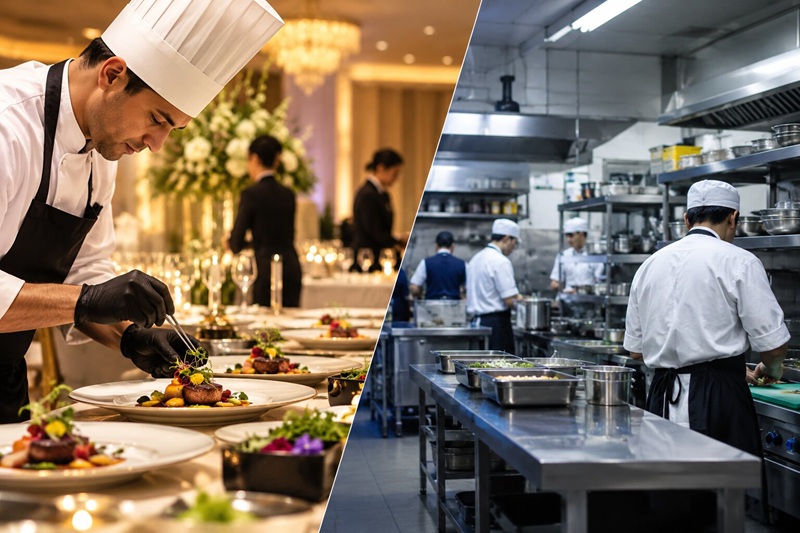
Cross-contamination is the most dangerous and most underestimated risk in allergen management. Even if a passenger's meal is technically free of their allergen, contact with contaminated surfaces, utensils, or packaging during preparation or service can trigger a reaction. In a shared commercial kitchen where the catering is prepared, the same cutting boards, mixing bowls, and work surfaces may be used for dishes containing different allergens throughout the day.
For inflight catering services that handle allergen-sensitive orders, cross-contamination prevention requires dedicated preparation protocols. This means separate preparation areas, cleaned and sanitized equipment, and clear physical separation between allergen-containing and allergen-free items during packaging and transport. Dark Wing Inflight's network of 2,800+ restaurants, VIP caterers, and Michelin-star chefs includes partners who maintain these protocols as part of their HACCP-compliant food safety systems across 135 countries.
Pre-Flight Communication: The Most Important Step
The most effective allergen management happens before the catering order is placed. Flight departments should confirm passenger allergies as part of the standard manifest review process, treating allergen information with the same priority as passport details or dietary preferences. This information should be communicated directly to the catering provider with enough lead time for proper sourcing and preparation.
Effective allergen communication includes specifying the exact allergen (not just nuts, but the specific nut), confirming severity (intolerance versus anaphylaxis), and clarifying whether the passenger can tolerate trace amounts. Vague instructions like no nuts please are insufficient for a life-threatening allergy. The catering provider needs precise, documented information to build a safe menu.
Labeling and Documentation: What Should Arrive with Every Order
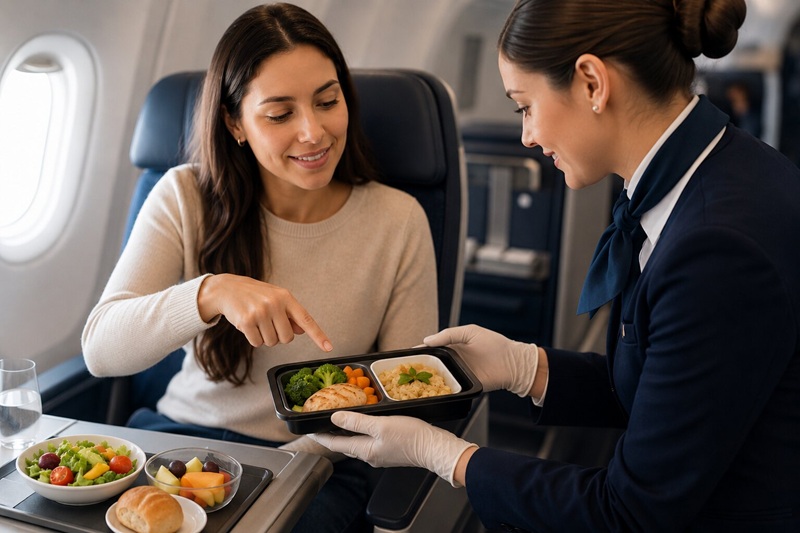
Every catering item delivered to a private jet should include clear allergen labeling. This means listing all major allergens present in each dish, identifying items prepared in environments where specific allergens are also handled, and providing ingredient lists for any component where allergen status is not immediately obvious. For practical guidance on managing these details onboard, our article on the rules of catering on private jets covers labeling and inspection protocols for cabin crew.
In practice, not all catering providers deliver this level of documentation consistently. This is where the quality of your catering partner matters most. A provider who includes detailed allergen cards with every delivery gives the CFA confidence to serve each item safely. A provider who delivers unlabeled containers forces the cabin crew into guesswork, which is an unacceptable position when a passenger has a serious allergy.
Building Allergen-Safe Default Menus
One of the most proactive approaches to allergen management is designing default menus that avoid the most common triggers. Rather than trying to adapt a standard menu for each allergy, experienced flight departments work with their catering inflight provider to create baseline menus that are inherently safe for the broadest range of passengers. A default menu that excludes nuts, shellfish, and sesame while offering dairy-free and gluten-free alternatives covers the majority of common allergen scenarios without requiring a completely custom order for each flight.
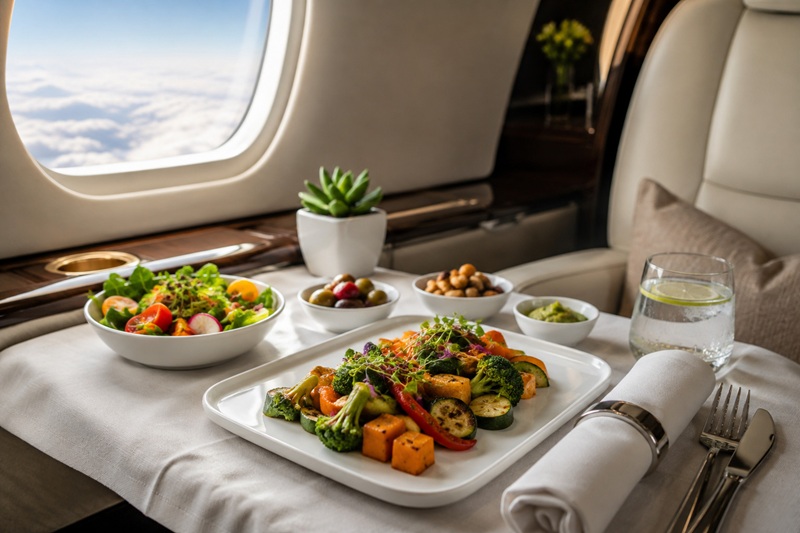
This does not mean serving bland or restricted food. A grilled chicken breast with roasted vegetables and herb vinaigrette, a composed salad with citrus dressing, or a slow-braised lamb with root vegetables can all be prepared free of the major allergens while delivering a premium dining experience. Dark Wing Inflight works with flight departments to design bespoke meal options that balance allergen safety with the quality and creativity passengers expect.
Emergency Preparedness: What Cabin Crew Must Have Onboard
Even with rigorous prevention, allergic reactions can still occur. Every private jet carrying passengers with known allergies should have an epinephrine auto-injector onboard. Crew should know its location, understand how to assist with administration, and recognize anaphylaxis symptoms: facial or throat swelling, difficulty breathing, rapid pulse, and dizziness.
Beyond epinephrine, antihistamines should be available for milder reactions. The flight plan should account for diversion airports along the route where medical care is accessible, particularly on long-haul flights over oceans or remote terrain. Documenting the passenger's allergy in the flight briefing ensures that both pilots and cabin crew are aware of the risk and the response protocol before departure.
Why Your Catering Partner Is Your First Line of Defense
Allergen management in private aviation starts with the catering provider. A provider who understands the severity of food allergies, maintains documented cross-contamination prevention protocols, delivers labeled and traceable meals, and communicates proactively about ingredient sourcing is the single most important safeguard a flight department can put in place. Dark Wing Inflight provides 24/7/365 multilingual service across 2,000+ airports in 135 countries, with each partner vetted for allergen management capabilities as part of our HACCP-compliant quality standards.
The cost of getting allergen management wrong is not a disappointed passenger. It is a medical emergency at altitude with limited resources. Flight departments that treat this as a core safety function, not a catering preference, protect their passengers and their operations.
Final Thought
Food allergies in private aviation are a safety issue, not a menu preference. The confined cabin, the altitude, the distance from medical facilities, and the limited emergency equipment onboard all amplify the consequences of an allergic reaction. Flight departments that build allergen awareness into their catering process, from manifest review through delivery inspection to onboard emergency preparedness, protect their passengers at the most fundamental level.
Frequently Asked Questions (FAQs)
What are the most common food allergens that affect inflight catering?
The nine major allergens are tree nuts, peanuts, shellfish, fish, milk, eggs, wheat, soy, and sesame. These account for the vast majority of serious allergic reactions. In private aviation catering, hidden allergens in sauces, pastries, and ethnic cuisines present the greatest risk, as they may not be immediately obvious from the dish description alone.
How can flight departments prevent allergic reactions onboard?
Prevention starts with pre-flight communication. Confirm allergies during manifest review and relay precise details to the catering provider with sufficient lead time. Request allergen-labeled deliveries, inspect items before service, and build default menus that avoid common triggers. Carrying epinephrine onboard is essential for anaphylactic risks.
What should cabin crew do if a passenger has an allergic reaction mid-flight?
Administer or assist with epinephrine immediately if anaphylaxis symptoms appear: facial swelling, throat tightening, difficulty breathing, rapid pulse. Give antihistamines for milder reactions. Notify the flight deck for diversion assessment. Document the reaction, food consumed, and time of onset for medical personnel.
How should allergen-free meals be packaged and labeled for private jets?
Each item should include an allergen card listing all major allergens present and any that may be present due to shared preparation environments. Allergen-free items should be packaged separately from standard catering and clearly marked. Ingredient lists should accompany any dish where allergen status is ambiguous. This documentation allows cabin crew to serve confidently.
Can a catering provider guarantee a completely allergen-free meal?
No responsible provider will guarantee a completely allergen-free environment, as trace contamination is always a theoretical possibility in any commercial kitchen. However, providers with documented cross-contamination prevention protocols, dedicated preparation areas, and verified ingredient sourcing can reduce the risk to the lowest practical level. The key is working with a partner who takes allergen management seriously and communicates transparently about their processes.