Why French Ingredients Have Earned a Permanent Place in the Private Jet Galley
French gastronomy holds a singular position in global culinary culture, and that reputation extends naturally into private aviation. In 2026, Air France underscored this connection by partnering with Michelin-starred chefs Régis Marcon and Frédéric Simonin alongside World's Best Pastry Chef Nina Métayer to design altitude-specific menus built around seasonal French ingredients, as reported by Business Traveller. If commercial airlines are investing at this level, the expectations in private aviation are even higher.
Corporate flight attendants in private aviation have long recognized that certain French ingredients perform exceptionally well in the cabin environment. They hold flavor at altitude, present beautifully with minimal galley preparation, and carry an immediate quality signal that passengers recognize. This is not about serving French food exclusively. It is about using specific French products that solve real inflight service challenges.
Herbes de Provence: The Altitude-Proof Seasoning
Herbes de Provence is one of the most practical seasoning blends a CFA can keep in their service kit. The combination of thyme, rosemary, savory, oregano, and sometimes lavender produces an intensely aromatic profile that holds up under the sensory suppression caused by cabin pressure and low humidity. At altitude, where passengers lose roughly 30% of their sensitivity to salt and sweet flavors, these volatile essential oils provide the aromatic punch that makes food taste vibrant rather than flat.
CFAs use herbes de Provence to season warm bread, add depth to reheated proteins, and finish simple dishes like roasted vegetables that might otherwise taste muted at 40,000 feet. A small container of high-quality herbes de Provence takes up almost no galley space and transforms the aromatic profile of an entire meal service.
Dijon Mustard: Versatile, Bold, and Built for the Air
Dijon mustard is a staple that appears in some form on nearly every well-equipped private jet. Its sharp, clean heat cuts through the dulling effect of altitude on the palate, making it a natural enhancer for cold proteins, charcuterie boards, and composed salads. Unlike many condiments that fade at cruising altitude, Dijon delivers a sinus-clearing aroma that activates the olfactory system precisely when it is most suppressed.
Beyond its use as a condiment, Dijon mustard works as a glaze for reheated meats, a base for vinaigrettes served at altitude, and a component in sauces that need to hold intensity during galley warming. Maille and Edmond Fallot are two heritage producers whose products experienced CFAs prefer.
French Cheeses: The Galley's Most Reliable Course
A French cheese course is one of the most versatile and forgiving elements a CFA can include in an inflight menu. Cheeses require no heating, no plating beyond a clean board, and no last-minute preparation. More importantly, the flavor profiles of many French cheeses actually benefit from being served at the slightly cooler cabin temperatures that result from altitude. According to France Bucket List's guide to Provencal cuisine, cheeses like Banon, a Provencal goat cheese wrapped in chestnut leaves, represent the kind of regional specificity that elevates an onboard cheese selection from generic to memorable.
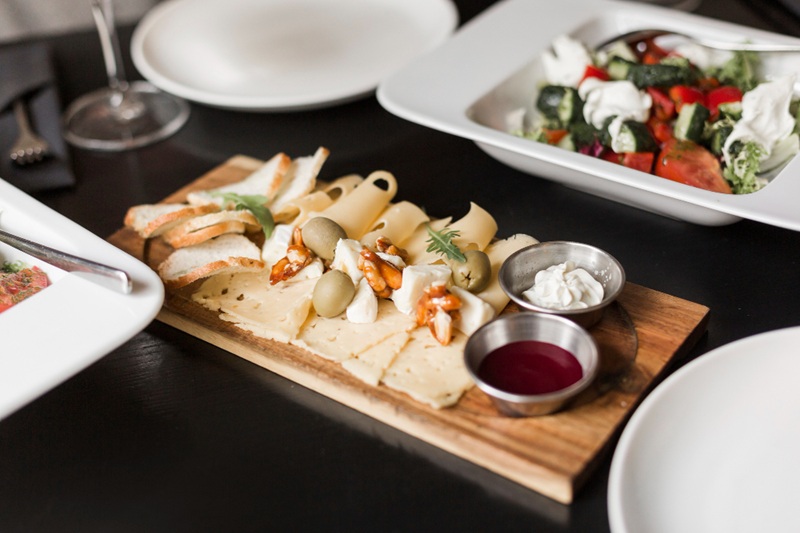
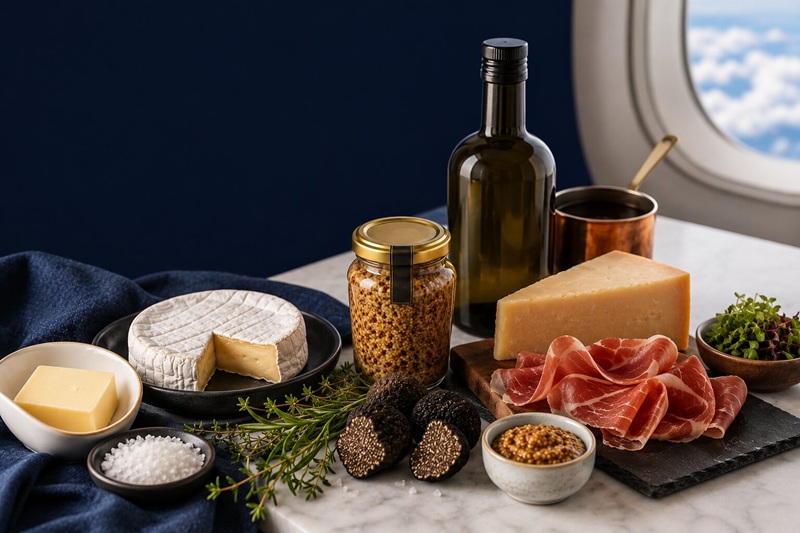
Comté, Roquefort, Brie de Meaux, and Reblochon are four French cheeses CFAs consistently recommend for inflight service. Comté offers nutty complexity that holds at altitude. Roquefort provides a bold blue that cuts through sensory suppression. Brie de Meaux softens naturally during the flight without losing structure. Reblochon brings a creamy option for passengers less familiar with strong cheeses. Paired with fig compote, honeycomb, and walnuts, a French cheese board takes five minutes to assemble and consistently ranks among the most appreciated courses onboard.
Fleur de Sel and French Butter: Small Details with Outsized Impact
Fleur de sel from Guérande or the Camargue is the finishing salt of choice for many CFAs. At altitude, where salt perception drops, a few flakes applied just before serving adds a bright, mineral crunch that standard table salt cannot replicate. It is particularly effective on proteins, chocolate desserts, and fresh bread.
French butter, especially the cultured varieties from Normandy and Brittany such as Bordier and Beurre d'Isigny (the latter holding AOP protected status), brings a richness to everything from a simple bread service to a warm galley-reheated pastry. For private jet catering orders that include French breakfast service, proper butter is a non-negotiable detail. Dark Wing Inflight sources these specialty products through our network of 2,800+ restaurants, VIP caterers, and Michelin-star chefs across 135 countries, ensuring that even specific regional French products are available at departure airports worldwide.
Duck Confit and Foie Gras: Proteins That Improve with Reheating
Duck confit is one of the few proteins that genuinely improves when reheated, making it ideal for galley service. The slow-cooked, preserved leg releases its fat gradually during warming, resulting in tender meat with a crispy skin achievable even in a compact galley oven. Paired with a green salad or lentils dressed in Dijon vinaigrette, duck confit delivers a complete main course with minimal crew effort.
Foie gras, served as a cold terrine or mi-cuit preparation, is another French ingredient that CFAs keep in regular rotation for VIP flights. It requires no heating, holds its texture perfectly in chilled galley storage, and carries an unmistakable quality signal. Served with a light Sauternes jelly and toasted brioche, it is the kind of catering inflight course that turns a flight into an occasion. For practical tips on managing these premium ingredients onboard, our guide on the rules of catering on private jets covers storage, timing, and presentation.
Valrhona Chocolate and French Pastry: Finishing Strong at Altitude
Valrhona, produced in the Rhône Valley, is the chocolate brand most private aviation pastry chefs and caterers work with. Its high cocoa butter content and balanced flavor profiles translate well to altitude, where subtler chocolates lose complexity. A simple Valrhona fondant with crème anglaise is one of the most reliable dessert options, and it reheats cleanly in a standard galley.
French pastry more broadly tends to perform well inflight because its flavors are concentrated and textures robust. Financiers, madeleines, canelés, and tarte Tatin all travel well, hold their shape during turbulence, and deliver aromatic sweetness that registers at altitude. CFAs frequently stock a selection of petits fours as a closing gesture after meal service.
How to Source French Ingredients Across Global Departures
The challenge with French ingredients is not identifying the right products. It is sourcing them consistently at departure airports around the world. A CFA departing from Le Bourget can access any Parisian supplier. But sourcing the same quality from Dubai, Sao Paulo, or Tokyo requires a catering partner with verified relationships in each region. Dark Wing Inflight operates across 2,000+ airports in 135 countries, with local partners who can source French specialty products at any departure point.
Final Thought
French ingredients have earned their place in the private jet galley not because of prestige alone, but because they solve real problems. They hold flavor when altitude suppresses the senses. They present well with minimal effort. They signal quality without explanation. For corporate flight attendants who want every service to feel polished, these are the ingredients that consistently deliver.
Frequently Asked Questions (FAQs)
Which French ingredients hold up best at cruising altitude?
Ingredients with strong aromatic profiles and concentrated flavors perform best. Herbes de Provence, Dijon mustard, aged cheeses like Comté and Roquefort, duck confit, fleur de sel, and Valrhona chocolate all retain their characteristics at altitude. These products engage the olfactory system effectively, compensating for sensory suppression caused by reduced cabin humidity and air pressure.
Why do corporate flight attendants prefer French cheeses for inflight service?
French cheeses require no heating, minimal preparation, and present beautifully on a simple board. Many varieties like Brie de Meaux and Reblochon actually improve at the slightly cooler cabin temperatures common at altitude. A curated cheese course with three to four varieties paired with compote and nuts takes minutes to assemble and consistently receives strong passenger feedback.
Can French specialty ingredients be sourced at non-European airports?
Yes, but only through a catering provider with a verified global network. Sourcing Comté in Nice is straightforward. Sourcing equivalent quality in Dubai or Los Angeles requires established supplier relationships. Dark Wing Inflight's 2,800+ partners across 135 countries can source French products or authentic equivalents at virtually any departure point.
What French desserts travel best on private jets?
Financiers, madeleines, canelés, and tarte Tatin all travel well because their textures are robust and their flavors are concentrated. Valrhona chocolate fondant is another reliable option that reheats cleanly in a galley oven. Cold preparations like crème brûlée and mousse au chocolat also perform well when held in chilled storage and served at the right moment.
How does Dijon mustard improve inflight food at altitude?
Dijon mustard provides a sharp, aromatic heat that activates the olfactory system even when cabin conditions suppress smell and taste. It works as a condiment, a glaze, a vinaigrette base, and a sauce component. Its versatility and bold flavor profile make it one of the most practical ingredients a CFA can carry.