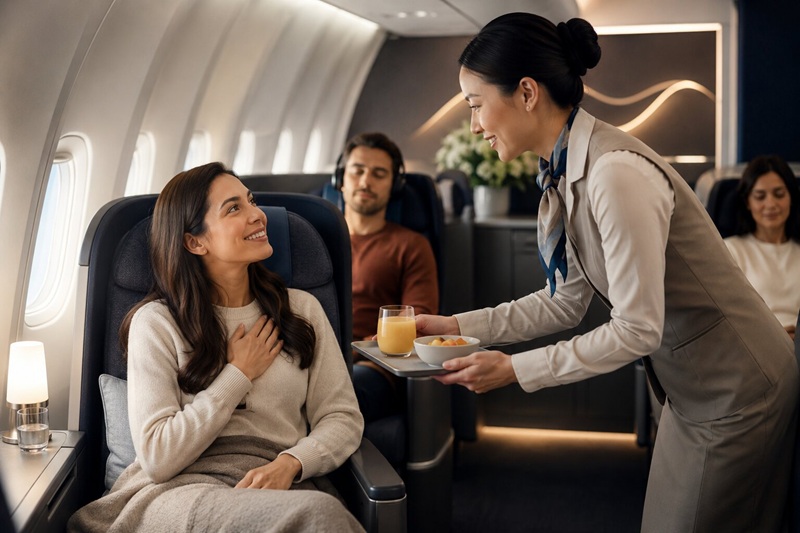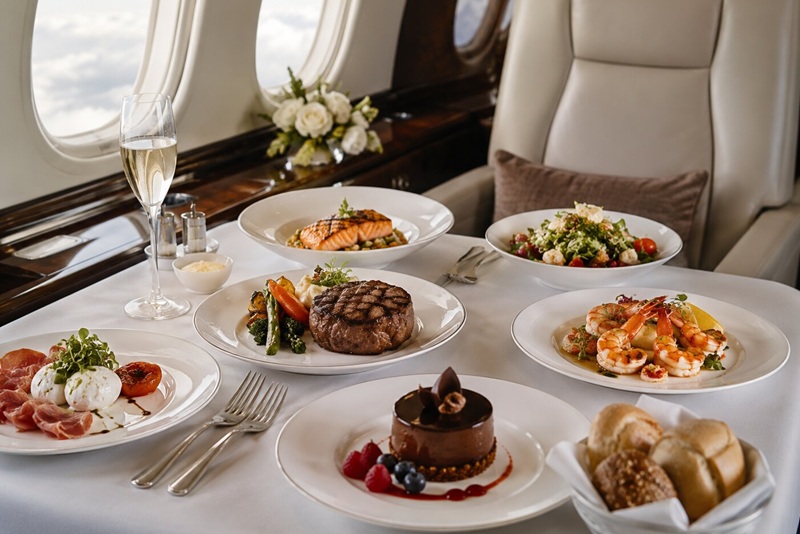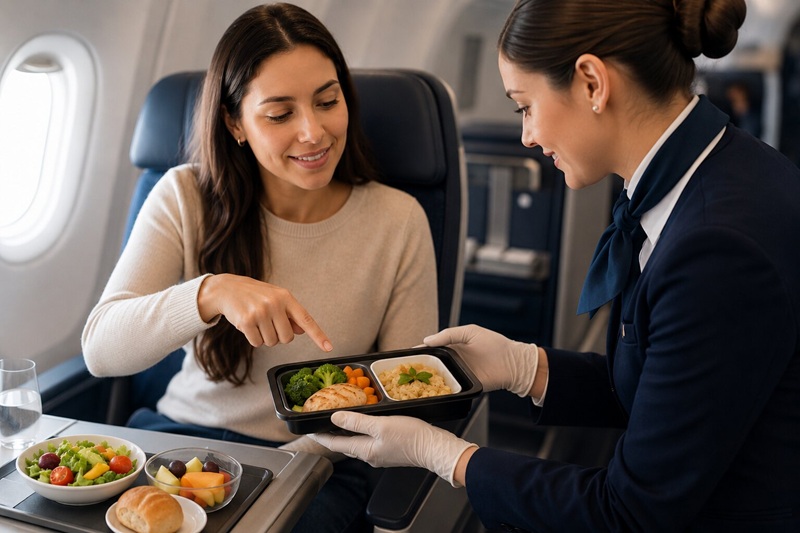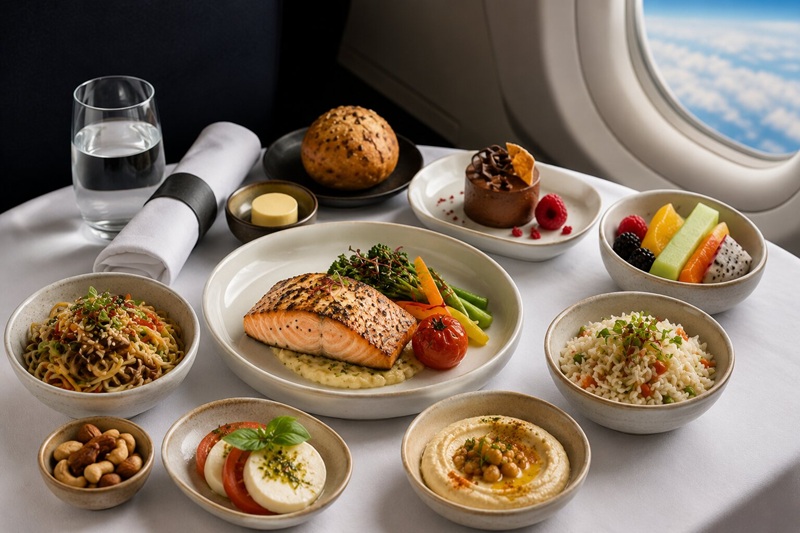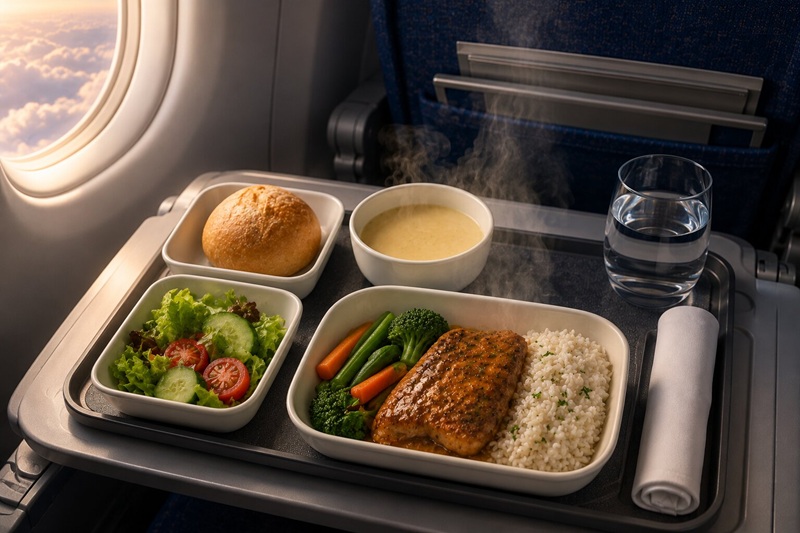
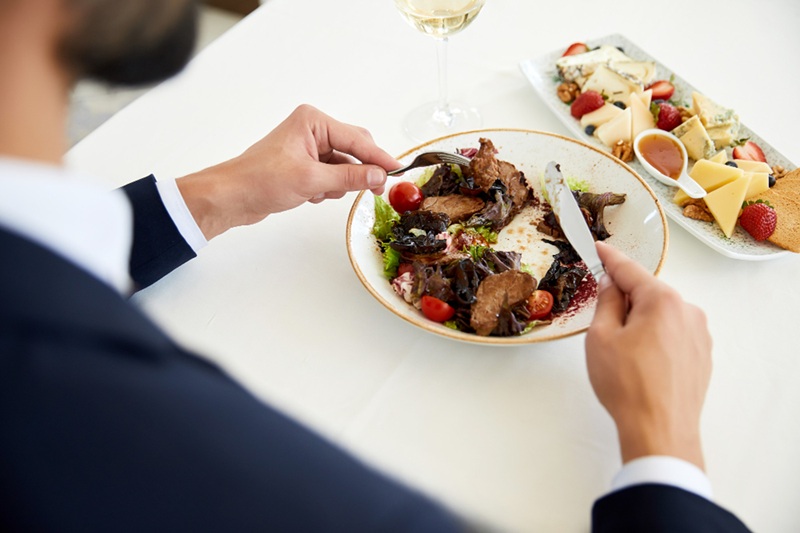
Every Aircraft Type Has a Different Relationship with Catering
Not every aircraft that flies privately is equipped the same way. A light jet hopping between European capitals for a two-hour business meeting has entirely different catering needs than an ultra-long-range aircraft crossing the Atlantic with a full delegation onboard. The aircraft type determines the galley configuration, the storage capacity, the number of passengers, and the service complexity that catering providers must plan around.
According to the General Aviation Manufacturers Association, business jet deliveries reached 764 units in 2025, with Honeywell projecting 8,500 new deliveries over the next decade. As the global fleet grows, the range of aircraft types requesting on-board catering continues to expand. Understanding which aircraft use catering services, and how their requirements differ, is essential for flight departments, cabin crew, and catering providers alike.
Turboprops: Catering in Compact Spaces
Turboprop aircraft like the Pilatus PC-12 and Beechcraft King Air are frequently used for short regional flights, typically under three hours. These aircraft seat four to nine passengers and have minimal galley infrastructure. Most turboprops have no dedicated galley at all, which means catering must be fully prepared, individually packaged, and ready to serve without any onboard heating or plating.
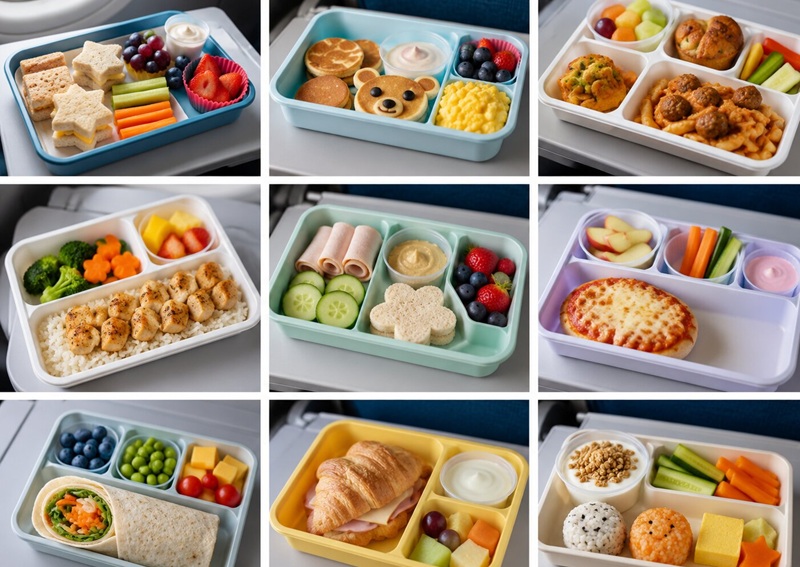
Catering for turboprops focuses on grab-and-go formats: premium snack boxes, chilled sandwiches, fresh fruit, and bottled beverages. The packaging must be compact enough to fit in limited cabin storage while maintaining presentation quality. Despite the simpler service format, the food still needs to reflect VIP standards when the passengers are executives or private clients.
Light Jets and Very Light Jets: Quality Over Complexity
Light jets such as the Embraer Phenom 300, Cessna Citation CJ3, and HondaJet carry four to eight passengers on flights ranging from one to four hours. These aircraft typically have a small refreshment center rather than a full galley, with limited capacity for heating and no room for complex meal service.
Catering for light jets should prioritize quality ingredients in simple formats. Think artisanal charcuterie, composed salads, gourmet wraps, and fresh pastries rather than multi-course hot meals. The key is ensuring that every item looks and tastes premium despite minimal onboard preparation. For flight attendants and operators ordering for light jets, working with a catering partner experienced in private jet catering ensures that even compact orders meet VIP expectations.
Midsize Jets: The Transition to Full Meal Service
Midsize jets represent a significant step up in catering capability. Aircraft like the Hawker 800XP, Citation Latitude, and Learjet 60 carry six to nine passengers and typically include a small service galley with basic warming capabilities. Flight times on midsize jets often fall between two and five hours, which creates a natural demand for at least one proper meal service.
The catering approach for midsize jets should include warm entrees packaged for simple reheating, alongside cold starters, desserts, and a curated beverage selection. Portion sizes and packaging must account for the galley's limited counter space. Caterers experienced with midsize operations design menus that deliver a full dining experience within these constraints, using galley-compatible containers that maintain quality during transit.
Super-Midsize Jets: The Most Requested Category
In 2026, super-midsize jets are the most requested aircraft category in private charter, according to multiple industry reports. Aircraft like the Bombardier Challenger 350, Embraer Praetor 500, and Gulfstream G280 seat eight to ten passengers with ranges exceeding 3,500 nautical miles, making them ideal for coast-to-coast and medium-haul international flights.
These aircraft feature larger galleys with proper warming equipment, enclosed lavatories, and enough cabin space for a structured meal service. Catering for super-midsize jets often includes multi-course meals with hot entrees, fresh sides, and plated desserts. Dark Wing Inflight supports catering for super-midsize operations through our network of 2,800+ partners across 2,000+ airports in 135 countries, ensuring that orders are tailored to both the aircraft's galley specifications and the passengers' preferences.
Heavy and Large Cabin Jets: Full-Service Dining at Altitude
Heavy jets are where on-board catering becomes a full hospitality operation. Aircraft like the Gulfstream G450, Bombardier Challenger 650, and Dassault Falcon 900 seat 10 to 16 passengers and include full-service galleys, multiple cabin zones, and dedicated flight attendant positions. Ranges of 4,000 to 5,000 nautical miles cover transatlantic routes comfortably.
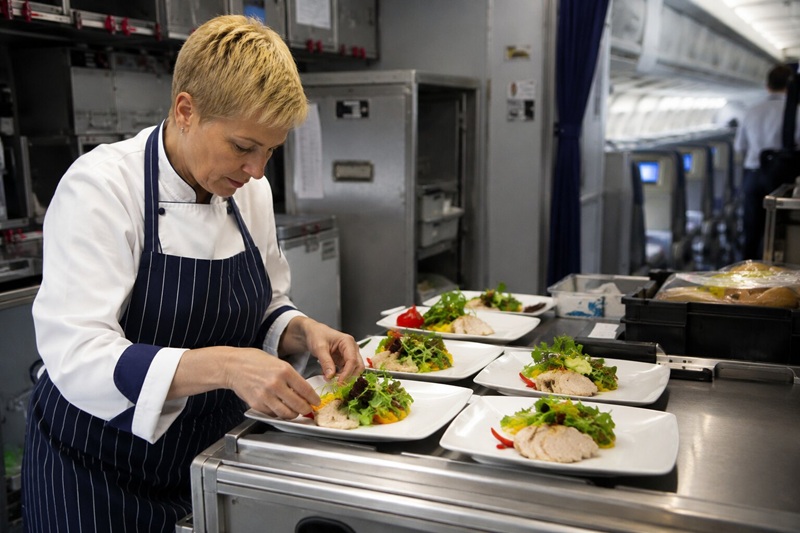
Catering for heavy jets typically includes two or more meal services, grazing platters between courses, and a comprehensive wine and spirits selection with attention to formal presentation. The galley on a heavy jet can accommodate multi-compartment trays, warming ovens, and chilled beverage storage, giving cabin crew the tools to deliver restaurant-grade service at altitude.
Ultra-Long-Range Jets: Catering as a Mission-Critical Function
Ultra-long-range aircraft like the Gulfstream G650ER, Bombardier Global 7500, and Dassault Falcon 8X represent the pinnacle of private aviation. With ranges exceeding 7,000 nautical miles and flight times of 12 to 16 hours, these jets connect cities like New York to Tokyo, London to Singapore, and Dubai to Los Angeles nonstop.
At this level, catering is not a hospitality add-on. It is a mission-critical logistical operation. Two to three full meal services, continuous snack availability, comprehensive hydration planning, and separate crew meals are standard requirements. Every item must maintain food safety and quality over an extended period, requiring HACCP-compliant cold chain management from kitchen to aircraft. For specific guidance on managing catering at this level, our private jet catering tips provide practical advice for cabin crew and flight departments.
VIP Airliners, Government, and Military Aircraft
At the top end of the scale, VIP airliners based on commercial platforms like the Boeing Business Jet (BBJ) and Airbus Corporate Jet (ACJ) are configured for heads of state, royal families, and ultra-high-net-worth individuals. These aircraft feature full kitchens, private bedrooms, conference rooms, and dining areas that can seat 20 or more guests.
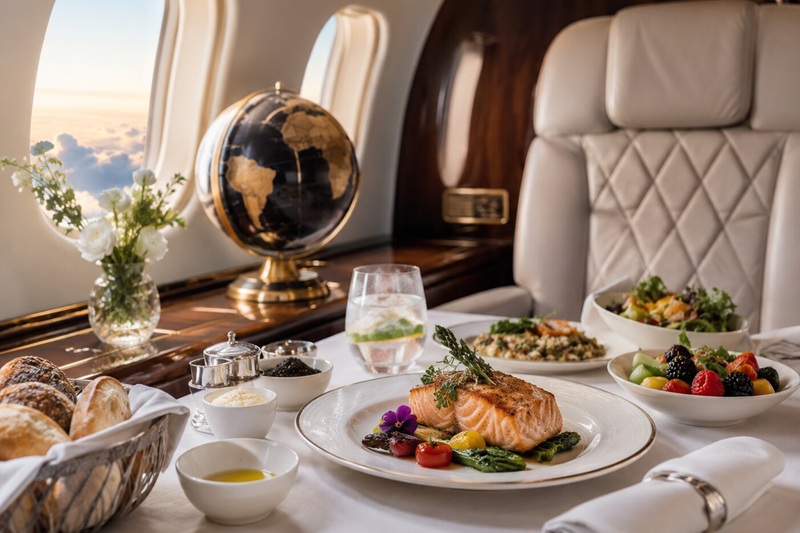
Catering for VIP airliners resembles a private event more than a standard flight catering order. Multiple courses, wine pairings, and elaborate dessert presentations are common. Dietary requirements often span multiple cultural traditions, as these flights frequently carry international delegations. Government and military aircraft also require catering that meets strict security and dietary protocols, including vetted supply chains and culturally appropriate menus. Dark Wing Inflight's bespoke meal options are designed to support exactly this level of complexity, with 24/7/365 multilingual coordination across 135 countries.
Helicopters and Rotary-Wing Aircraft
Helicopters are often overlooked in discussions about on-board catering, but VIP rotary-wing services increasingly include food and beverage provisions. Executive helicopter transfers, helipad-to-helipad luxury services, and longer scenic tours all benefit from curated catering. The format is necessarily compact: individually packaged items, secure beverage containers, and snack selections suited for a moving cabin with limited flat surfaces.
Frequently Asked Questions (FAQs)
Can light jets use on-board catering services?
Yes. Light jets regularly use catering services, though the format differs from larger aircraft. Because light jets have limited or no galley equipment, catering is provided in ready-to-eat formats such as premium snack boxes, chilled sandwiches, charcuterie, and individually packaged beverages. The food is prepared entirely on the ground and delivered to the aircraft for direct service without onboard heating or plating.
What type of aircraft requires multi-course meal service?
Heavy jets, ultra-long-range jets, and VIP airliners typically require multi-course meal service. These aircraft have full galleys with warming capabilities, dedicated flight attendant positions, and flight durations long enough to justify two or three meal services. Super-midsize jets on longer routes may also call for multi-course service, depending on the passenger profile and departure time.
Do helicopters use catering services?
VIP helicopter services increasingly include catering provisions, particularly for executive transfers, luxury scenic tours, and multi-stop itineraries. The format is compact and individually packaged, but the quality standard remains consistent with fixed-wing VIP service. Catering for helicopters typically includes premium snacks, chilled beverages, and light refreshments.
How does the aircraft type affect catering packaging?
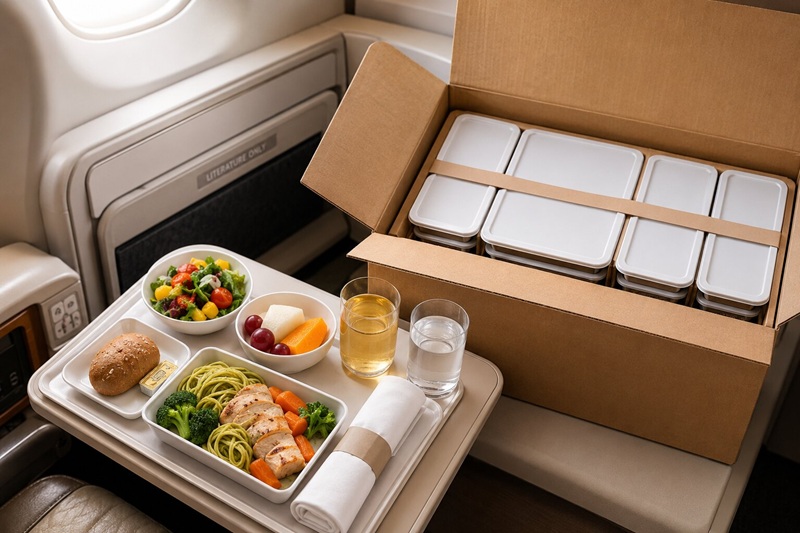
Smaller aircraft with limited galley space require compact, individually packaged items. Larger aircraft with full galleys accommodate multi-compartment trays, warming containers, and formal plating equipment. Ultra-long-range aircraft need packaging designed for extended cold chain integrity, as meals may need to remain safe for 12 or more hours from preparation to final service.
Can one catering provider handle all aircraft types?
Yes, but only if the provider has experience across the full range of private aviation. A provider who specializes in heavy jet catering may not understand the space constraints of a light jet galley. Dark Wing Inflight works across all aircraft categories, from turboprops to VIP airliners, tailoring each order to the specific aircraft's galley configuration, passenger count, and flight duration through our global network of 2,800+ partners.
Final Thought
Every aircraft type that flies privately can benefit from on-board catering services, but the approach must match the aircraft. A catering order designed for a Global 7500 will not work on a Phenom 300, and a snack box built for a turboprop will not satisfy passengers on a 12-hour transatlantic leg. The best catering providers understand these distinctions and build every order around the specific aircraft, its galley, its passengers, and its mission.