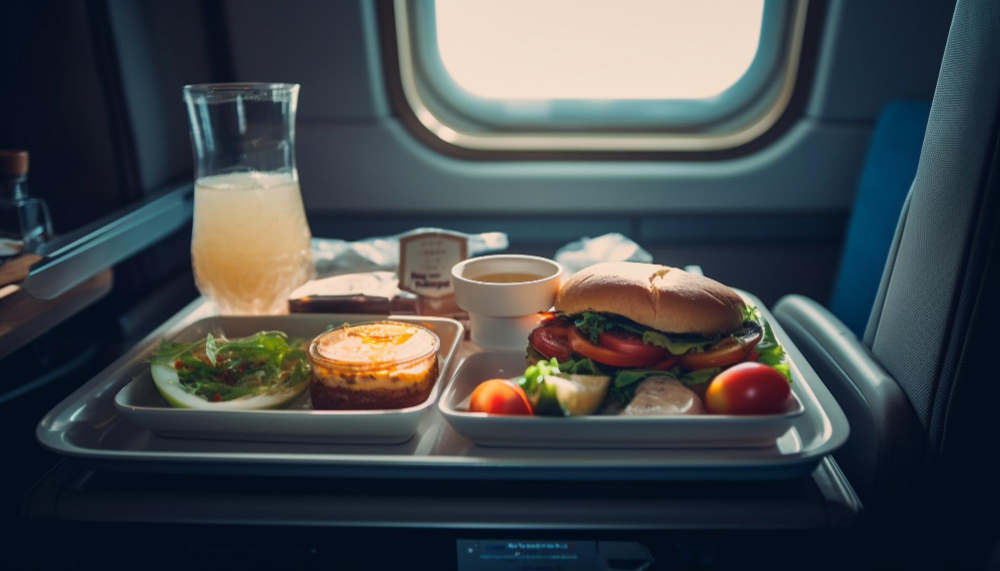
When the Passenger Count Changes at the Last Minute
A principal adds two business associates to the manifest 90 minutes before departure. A government delegation grows by three members overnight. A family trip suddenly includes in-laws who were not part of the original plan. In private aviation, unexpected guests are not the exception. They are a regular operational reality.
The challenge is not just adding more food. It is maintaining the same standard of quality, presentation, and dietary sensitivity that was planned for the original passenger list, often with minimal notice. According to Mordor Intelligence, the global inflight catering market is projected to reach USD 18.77 billion in 2026, driven in part by growing demand for flexible, personalized meal service in both private and commercial aviation. That flexibility starts with how well a catering plan absorbs last-minute changes.
This guide covers practical catering ideas and planning strategies that help flight departments, cabin crew, and charter operators handle unexpected guests without compromising the onboard experience.
Scalable Menu Formats That Adapt to Changing Headcounts
The most reliable way to prepare for unexpected guests is to build your default catering orders around formats that scale naturally. Some menu structures are inherently flexible, while others fall apart the moment you add one more person.
Menu formats that scale well for last-minute additions:
Grazing platters and sharing boards: Charcuterie, cheese selections, mezze spreads, and antipasti boards can be portioned generously from the start, making it easy to accommodate one or two extra guests without a separate order.
Build-your-own options: Wrap stations, salad bowls with separate components, and poke-style bowls allow passengers to assemble their own meals. These formats stretch naturally across varying headcounts.
Tapas and small-plate service: Instead of one large entree per person, ordering a variety of smaller dishes creates a communal dining experience that absorbs additional guests gracefully.
Buffet-style trays: For larger cabin aircraft, tray-based service with multiple options gives passengers choice and provides built-in surplus.
The common thread is volume flexibility. These formats do not require exact per-person portioning, so adding one or two passengers does not require a completely new catering request.
Must-Have Backup Items to Keep On Every Flight
Experienced flight departments maintain a standing list of backup provisions that travel on every departure, regardless of the planned manifest. These items serve as a safety net for unexpected guests and as a fallback if primary catering is delayed or a passenger's preferences change mid-flight.
Essential backup items to stock on every private flight:
Premium snack boxes: Individually packaged selections of nuts, dried fruit, dark chocolate, and gourmet crackers
Fresh fruit: Whole fruit like apples, bananas, and clementines travel well, require no preparation, and suit virtually every dietary need
Artisan bread and premium spreads: Sourdough rolls with butter, hummus, or olive tapenade
High-quality beverages: Sparkling water, fresh juice, specialty coffee pods, and a selection of teas
Protein options: Smoked salmon packs, quality deli meats, or pre-portioned cheese selections that hold well under cold storage
These items are not substitutes for a full catering order. They are a professional contingency layer that ensures no passenger goes without, even if the headcount shifts at the last moment. Dark Wing Inflight can coordinate these standing backup provisions as part of a recurring order template for flight departments managing frequent operations.
Handling Dietary Requirements You Did Not Know About
When an unexpected guest boards, their dietary needs may be completely unknown. The guest could be vegetarian, allergic to shellfish, observing halal or kosher dietary laws, or following a strict medical protocol. Without prior notice, the cabin crew must work with whatever is onboard.
Strategies for managing unknown dietary requirements:
Default to inclusive options: When ordering for any flight, include at least one fully plant-based and one allergen-conscious option. These serve as universal fallbacks that most dietary profiles can safely consume.
Label everything clearly: Ensure all catering items are labeled with ingredients and allergen information. This allows guests to self-select safely without putting cabin crew in a position of guessing.
Maintain allergen-free snack reserves: Stock gluten-free crackers, dairy-free options, and nut-free items as part of your standard backup provisions.
Dark Wing Inflight operates through a network of 2,800+ partners across 2,000+ airports in 135 countries, including certified halal, kosher, and allergen-specialist providers. For operators who frequently add last-minute guests, our 24/7/365 multilingual team can adjust orders rapidly to accommodate new dietary needs, even at short notice.
How to Brief Your Catering Partner for Guest Flexibility
The best time to prepare for unexpected guests is before they arrive. Flight departments that build flexibility into their standing catering arrangements handle headcount changes with far less friction.
Practical steps to build guest flexibility into your catering process:
Order for N+2: As a standard practice, order catering for two additional passengers beyond the confirmed manifest. The marginal cost is small compared to the reputational cost of running short.
Establish a backup item template: Work with your catering partner to define a standing list of items that ship on every flight, regardless of headcount.
Communicate dietary defaults: Specify that every order must include at least one plant-based and one allergen-safe option as standard.
Choose a partner with 24/7 responsiveness: Last-minute changes require a catering team that operates around the clock. If your provider cannot process an order modification at 2:00 AM, they are not built for private aviation.
These protocols turn unexpected guest situations into routine adjustments rather than emergencies.
Frequently Asked Questions (FAQs)
What is the best catering strategy for handling unexpected guests on a private jet?
The most effective strategy combines two elements: scalable menu formats and standing backup provisions. Order communal-style food such as grazing platters, tapas, and sharing boards that naturally accommodate extra guests. Additionally, maintain a standard backup inventory of premium snacks, fresh fruit, and beverages on every flight. This dual approach ensures that added passengers receive the same quality experience without requiring a last-minute emergency order.
How quickly can a catering order be modified if the passenger count changes?
This depends entirely on your catering partner. Top-tier providers with 24/7 operations can process modifications within minutes, even for same-day departures. At Dark Wing Inflight, our multilingual team operates around the clock across 135 countries, allowing flight departments to adjust orders at any hour. For best results, provide as much notice as possible, but a capable partner should accommodate changes with as little as two to four hours of lead time at most major airports.
What types of food hold up best when extra guests are added on short notice?
Cold items and ambient-stable foods perform best. Charcuterie, cheese boards, fresh fruit, artisanal sandwiches, smoked salmon, and premium snack selections maintain quality without reheating. Warm items like wraps, quiches, and empanadas also hold well and can be reheated quickly in standard galley equipment. Avoid dishes that require precise timing or complex plating.
Should I always order extra food for private flights as a precaution?
Yes, within reason. The recommended practice is to order for the confirmed passenger count plus two additional guests. This provides a comfortable buffer without creating excessive waste. The marginal cost of two extra portions is minimal compared to the cost of running short when a principal adds guests at the last minute. Pair this with a standing backup snack inventory, and you will have reliable coverage for nearly any scenario.
Can in-flight catering partners accommodate unknown dietary requirements on short notice?
Experienced partners maintain relationships with specialist suppliers for halal, kosher, gluten-free, vegan, and allergen-specific meals. The key is working with a provider who has pre-vetted suppliers at your departure airports. When an unknown dietary requirement surfaces last minute, a well-connected partner can source appropriate food quickly. Building inclusive defaults into every order, such as one plant-based and one allergen-safe option, provides immediate coverage.
Final Thought
Unexpected guests should never compromise the quality of your onboard service. With the right menu formats, a reliable backup inventory, and a catering partner built for aviation's unpredictable pace, every passenger receives the same exceptional experience regardless of when they were added to the manifest.