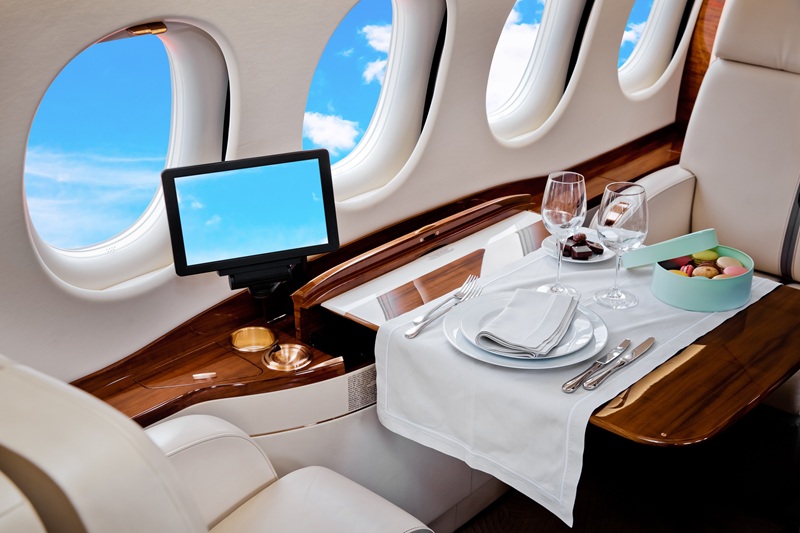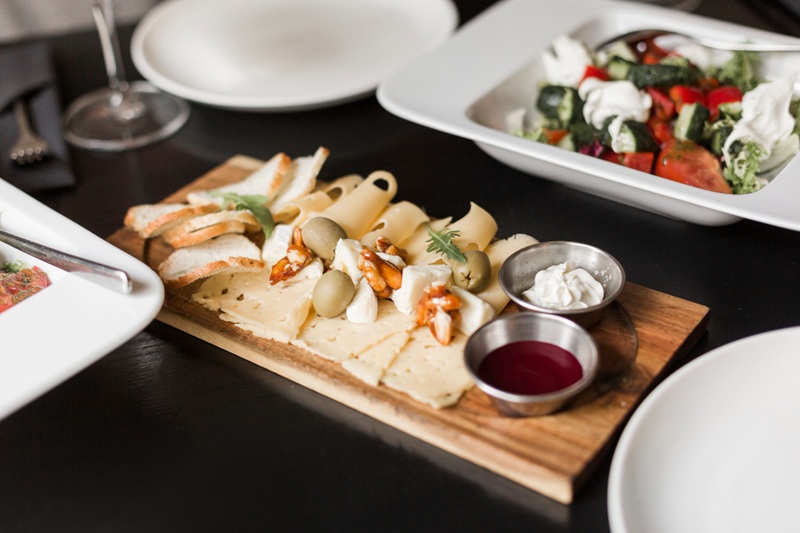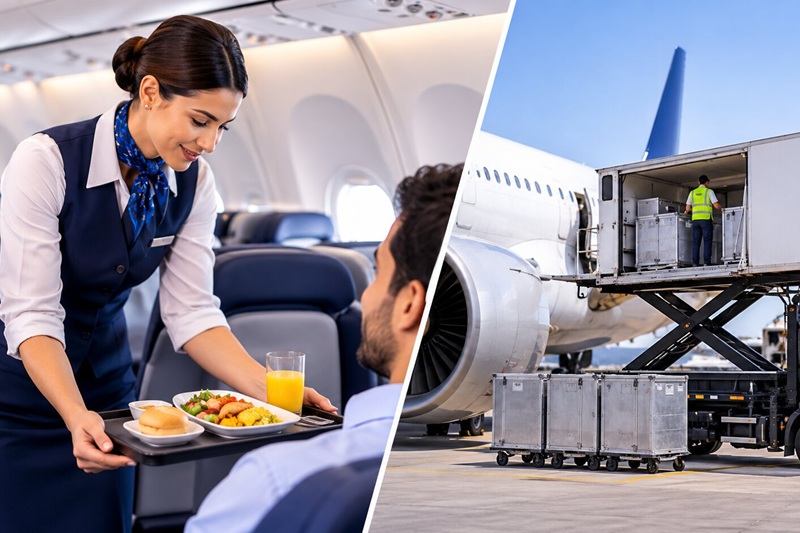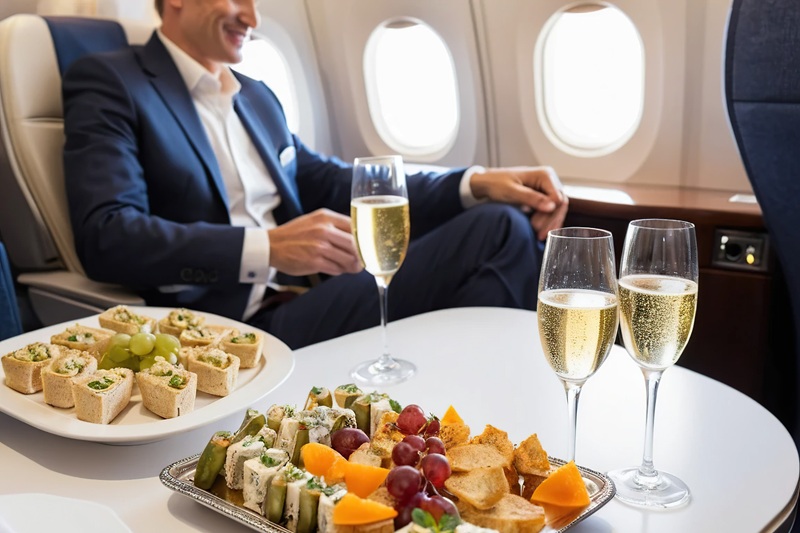
A three-star tasting menu is built around timing. Plates leave the pass seconds after they are finished, sauces are mounted to order, and the dining room stays at a steady temperature. A business jet cabin offers none of that. Galley space is tight, ovens are basic, and a course may be served six hours after it left the kitchen.
That gap is why private jet catering services with Michelin star menu options demand more than a famous name on the menu card. Each dish has to be rebuilt for altitude, chilled transport, and reheating by a cabin attendant, without losing what made it worth ordering.
This guide explains how the process works step by step, what it means for food safety, where it is available, and how flight departments can brief it correctly the first time.
What Does a Michelin Star Menu Option Mean in Private Aviation?
In inflight catering, a Michelin star menu option is a menu designed or prepared by a chef or restaurant recognised by the MICHELIN Guide, then adapted for service on board. It does not mean the restaurant's dining room is recreated in the cabin.
The pool of talent is small. The MICHELIN Guide France and Monaco 2026 selection recommends 668 starred restaurants, and only 31 of them hold three stars. Access to these kitchens usually depends on long-standing relationships, not a single phone call made the night before departure.
Why a restaurant dish cannot fly unchanged
Three physical factors change how food behaves on board:
Dry, pressurised air dulls the perception of salt and sweetness, so seasoning must be recalibrated.
Delicate textures such as soufflés, crisp tuiles, and foams collapse during transport and reheating.
Limited galley equipment, usually convection ovens and chillers, means every component must finish well in that setting.
A chef who understands these limits rebuilds a signature plate around them rather than simply packing it into containers.
How Michelin Star Inflight Menus Are Planned, Step by Step
Step 1: Share the brief early
Send the principal's preferences, dietary needs, allergies, and the flight schedule. The reason is practical. A starred kitchen plans its own service days ahead, and an aviation order has to be fitted around it. For most cities, 48 to 72 hours gives the chef room to source properly. Our guide to bespoke private jet meal options explains how to structure that brief in more detail.
Step 2: Match the menu to the flight profile
A 90-minute hop from London to Geneva suits a refined cold service. A 13-hour sector from Dubai to Los Angeles needs a full meal sequence, a rest period, and a lighter course before landing. Cabin size, galley equipment, and crew numbers decide how many hot components are realistic.
Step 3: Adapt each course for altitude
The chef reworks seasoning, sauces, and garnishes. Proteins are often cooked slightly under so they finish in the galley oven. Sauces travel separately. Crisp elements are packed apart so the attendant can assemble them at the moment of service.
Step 4: Pack, label, and document
Each component is portioned in aviation-grade packaging and labelled with contents and allergens. Plating notes, ideally with a reference photo, go with every course. The cabin attendant is the final cook, and clear instructions protect the chef's work.
Step 5: Deliver under temperature control
Orders travel in refrigerated vans to the aircraft or handling agent at an agreed time. Late delivery risks a delayed departure. Early delivery adds time out of refrigeration. Precise handover windows solve both problems.
Food Safety and HACCP Standards Behind Fine Dining at Altitude
Fine dining on a private jet carries a safety burden that a restaurant does not face. Food is cooked, chilled, transported, stored, and reheated, often across several time zones. Every stage is a control point.
The risk is real worldwide. A Saudi Ministry of Health briefing for World Food Safety Day 2025 cites WHO estimates that around 600 million people fall ill from contaminated food each year. Over the Atlantic, a single case of food poisoning becomes an operational problem as well as a medical one.
Reliable providers manage this through:
- HACCP-based controls at every partner kitchen
- Documented allergen management and segregated packaging
- Temperature records from kitchen to aircraft door
- Separate crew meals prepared from different ingredients than passenger meals
That last point is standard aviation practice and worth confirming with any caterer. Our overview of the rules of catering on private jets sets out these essentials for crews and schedulers.
Where Can You Order Michelin Star Catering for a Private Flight?
Availability follows the world's fine dining clusters, and those clusters overlap with busy business aviation airports. In Europe, the EBAA Traffic Tracker for November 2025 recorded business aviation flights 2% above November 2024, which keeps demand steady at hubs such as Paris Le Bourget, Geneva, Farnborough, and Nice.
Typical strongholds for starred inflight menus include:
Europe: Paris, Lyon, Geneva, Milan, London, and San Sebastián
Asia: Tokyo Haneda, Hong Kong, Singapore, and Seoul
Middle East: Dubai, Abu Dhabi, Riyadh, and Doha
North America: Teterboro for New York, Van Nuys for Los Angeles, and Miami Opa-locka
The harder question is what happens away from these cities. A starred restaurant may not exist near Lagos, Ulaanbaatar, or Malé. There, the realistic answer is a five-star hotel kitchen led by a strong executive chef. You can search our airport network to check coverage before finalising a route.
Three Real-World Scenarios
Board lunch from Paris Le Bourget to Teterboro. Eight executives want a tasting-style meal. The chef supplies five small courses, sauces in separate vessels, and plating cards. The attendant serves them over two hours without rushing the cabin.
Diplomatic sector from Geneva to Riyadh. The delegation requires halal preparation and no alcohol in any recipe. The kitchen replaces wine reductions with stock and verjus-based sauces and documents every ingredient.
Family flight from Nice to the Maldives. A child has a severe nut allergy. The menu is built nut-free from the first ingredient, packed separately, and labelled in two languages for a multinational crew.
How to Choose a Provider for Michelin Star Inflight Catering
Reputation alone is not a selection method. Ask these questions before the first order:
- Which starred chefs and luxury hotels does the provider work with at your key airports?
- Can it share HACCP documentation and allergen procedures?
- Who answers at 3 a.m. local time when the schedule changes?
- Are prices quoted upfront and pre-negotiated with partners?
- Can the team communicate in the principal's language and respect cultural requirements?
This is where Dark Wing Inflight fits. We work with more than 2,800 restaurants, VIP caterers, five-star hotels, and Michelin-star chefs, covering over 2,000 airports in 135 countries. Our multilingual team operates 24/7/365, so VIP catering for private jets stays consistent across time zones. Flight departments can review our full private jet catering services to see how standing orders and consolidated billing are handled.
Planning Your Next Michelin Star Inflight Menu
A starred menu on board succeeds or fails on preparation. The chef's talent matters, but so do the brief, the adaptation for altitude, the packaging, and the handover at the aircraft. When each step is handled with care, passengers receive food that reflects the restaurant it came from, served safely at 41,000 feet.
If you are still comparing options, share an upcoming route and we will outline the chefs and kitchens available at each stop. Flight department managers can request a standing menu programme for regular sectors. If your flight is already scheduled, send the details now and our team will confirm options, timing, and a quote.
Dark Wing Inflight answers every request around the clock, with HACCP-compliant partners and culturally aware menu planning on every order.
Frequently Asked Questions
How far in advance should I order Michelin star catering for a private jet?
We recommend 48 to 72 hours for menus from starred restaurants. This lets the chef plan production around restaurant service and source premium ingredients. Shorter notice can often be handled at major hubs such as Paris, London, and Dubai, but choices narrow as lead time drops.
Can a Michelin star dish be reheated on a private jet without losing quality?
Yes, when the chef adapts it for the galley. Proteins are cooked slightly under, sauces travel separately, and crisp elements are packed apart. Our partners supply plating notes so the cabin attendant can finish each course correctly in a convection oven.
How much does Michelin star private jet catering cost?
Cost depends on the chef, the number of courses, the ingredients, and the airport. A starred tasting menu costs considerably more than standard hotel catering. We provide a clear quote before confirmation and apply pre-negotiated partner pricing wherever possible.
Is Michelin star inflight catering available for government and diplomatic flights?
Yes. Government and diplomatic sectors often add halal or kosher preparation, protocol service, and discreet handling. We brief partner kitchens on these needs and keep full ingredient documentation for every order.
What happens if there is no Michelin star restaurant near my departure airport?
We source from the strongest kitchen available, usually a five-star hotel with an experienced executive chef. For remote destinations, we can also prepare a menu with a starred kitchen at the outbound airport, where flight times and safe storage allow.