Private jet flight attendants work in a setting that is vastly different from the commercial world of aviation. Working solo in cramped galley spaces, managing high net worth passengers with exacting standards and coordinating everything from gourmet meals to emergency protocols, these professionals wear multiple hats every single flight.
The global inflight catering services market is expected to reach USD 34 billion by 2030, indicating the growing demand for high-end private flying experiences. Flight attendants that can master both safety and service excellence position themselves as invaluable assets in this competitive industry.
Pre-Flight Planning Sets the Foundation
The work starts long before passengers board. Your flight manifest serves as the operational blueprint, study it to gather passenger names, dietary restrictions, allergies, cultural backgrounds and any VIP protocols which need special attention.
Coordinating Private Jet Catering
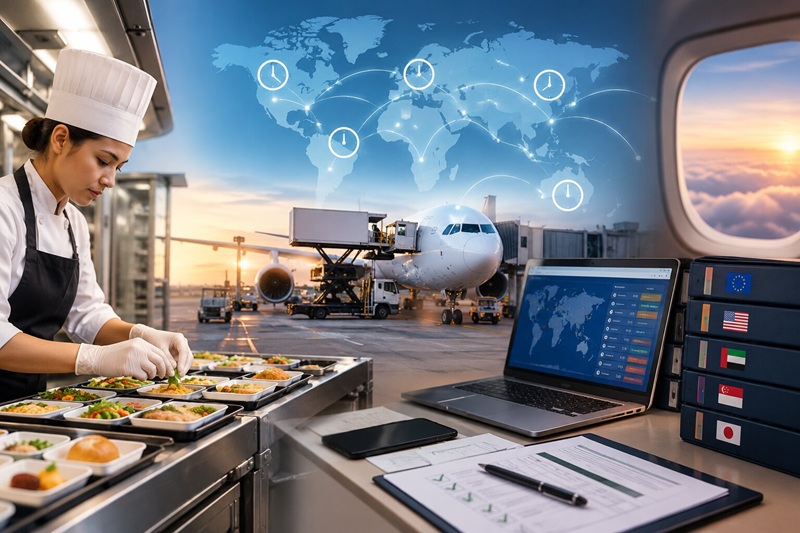
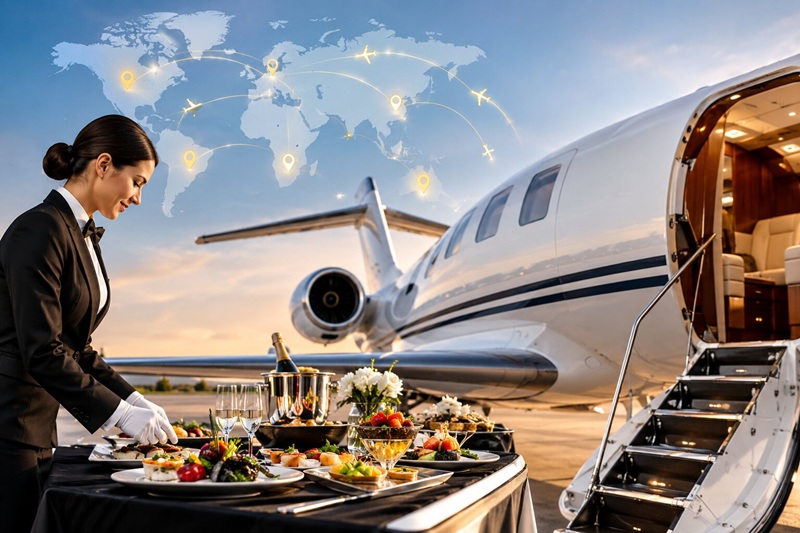
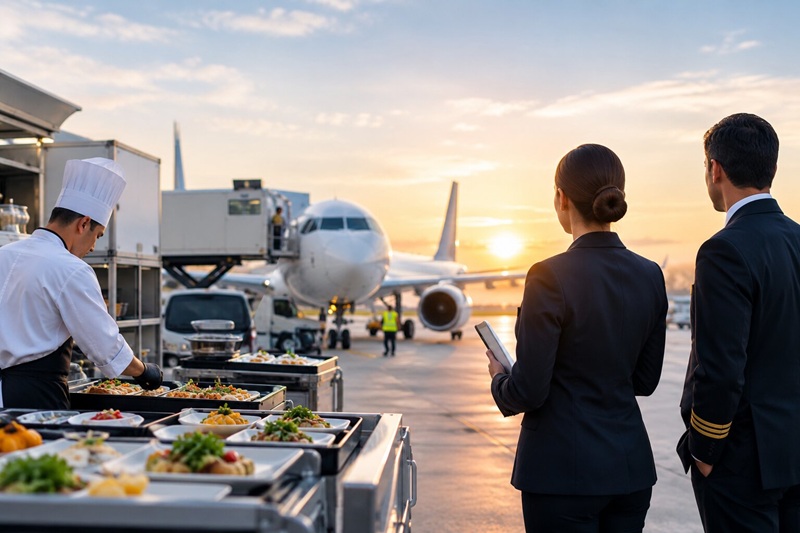
Catering coordination is one of the most important tasks prior to a flight. When using specialized providers, be clear about the number of passengers, specific dietary needs such as religious dietary laws, presentation standards and packaging that is appropriate for your particular galley equipment.
For flights leaving from high demand locations, advance planning becomes key. Private jet catering Los Angeles operations serve multiple airports which includes Van Nuys, Burbank, John Wayne and LAX, all having different FBO protocols and delivery logistics. Understanding these regional nuances ensures your catering arrives correctly and on time.
Dark Wing Inflight, with collaborations that range from 2,800+ restaurants, hotels and VIP caterers at 2,000+ airports worldwide, represents the specialized networks flight attendants can tap into to bring in exceptional cuisine no matter where they might depart from.
Mastering Galley Operations in Limited Space
Private jet galleys bear no resemblance to commercial aircraft kitchens. Heavy jets can offer convection ovens, while light jets often lack heating capability. Adapting your service approach to the equipment of your aircraft is a necessity.
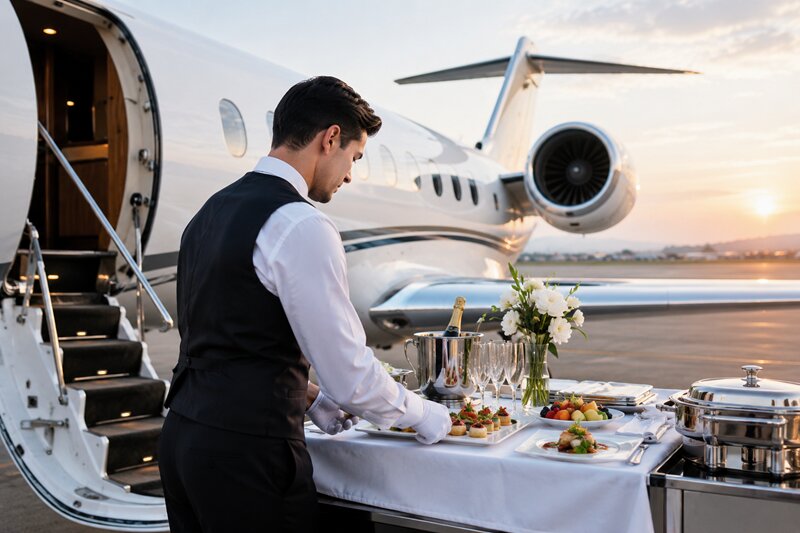
For aircraft that lack sufficient heating, make arrangements with your FBO to have meals heated and transferred within a tight time window before departure. Space constraints require each item on board to provide its worth, carry only amounts that match actual passenger loads and arrange storage in a way that promotes good flow of service.
Delivering Five-Star Service at Altitude
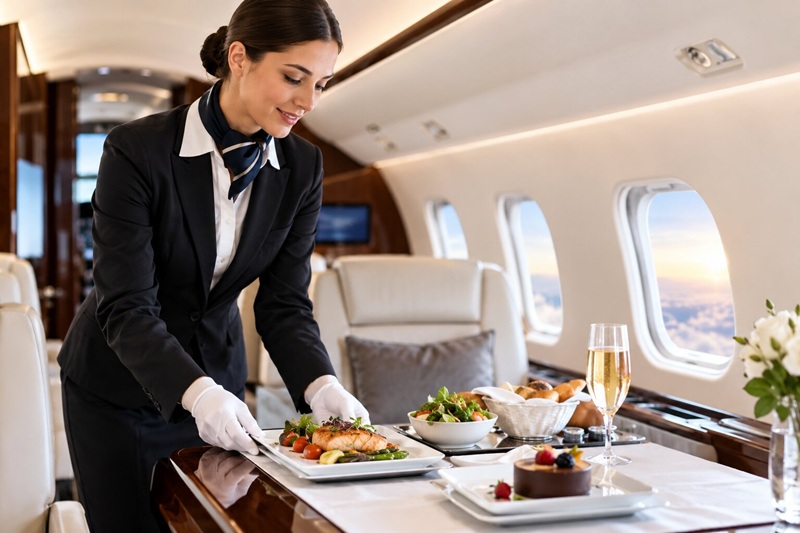
Private jet passengers anticipate quality of service as good as the finest hotels and restaurants. The private nature of a cabin creates an amplified impact with each interaction.
Exceptional flight attendants read the passenger cues and take action before they are asked. This includes the refreshing beverage service with no interruption, proactive adjustment of cabin lighting and understanding when passengers need to converse or have privacy. Hot towel service on board, drinks in minutes and conditions tailored to preference, these touches add up to an experience that seems effortless.
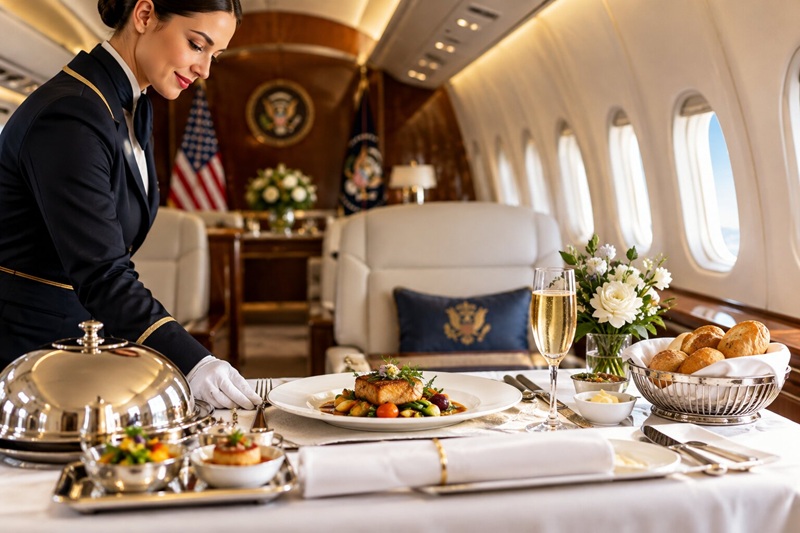
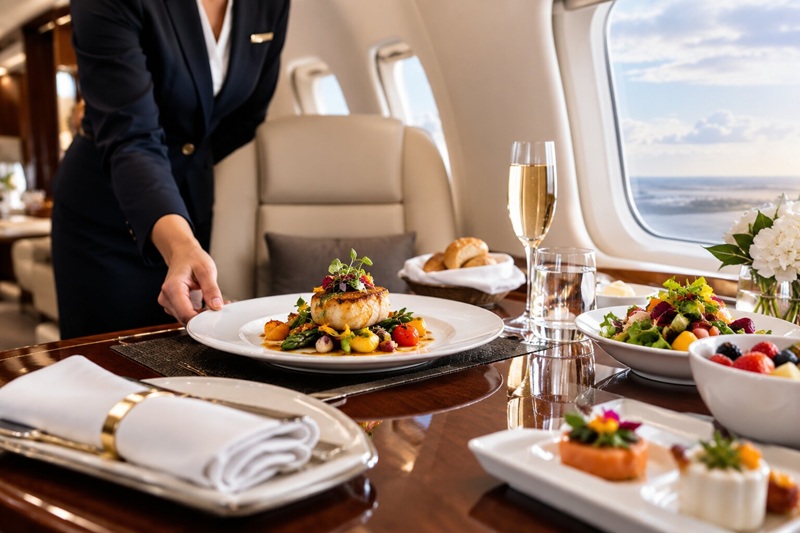
Meals should be as good as fine dining in presentation. Even working alone, thoughtfully plate dishes with appropriate chinaware and visual appeal. Remember that some passengers like it simple, comfort food or favorite takeout over fancy multi-course meals. Adapting a presentation to match expectations shows attention more than defaulting to formality.
Cultural Sensitivity and Dietary Awareness
Private aviation caters to a truly international clientele with unique demands in hospitality and food.
The provision for halal, kosher and other religiously mandated diets has grown enormously among the premium caterers. Source from certified suppliers instead of attempting substitutions, know the scope of the restrictions and maintain separation protocols where necessary.
Many travelers appreciate menus that represent their cultural identity. Private jet catering Los Angeles providers, serving one of the most diverse areas of the world, often have a knack for finding authentic international cuisine, a great asset for flight attendants organizing Southern California departures.
Safety Remains Your Primary Responsibility
While service excellence is the defining truth of the passenger experience, safety is every flight attendant's number one duty. The event of February 2024 near Naples, Florida, in which a trained flight attendant was able to successfully evacuate passengers after a crash, shows why safety training is important even on regular flights.
Maintain emergency readiness by annual recurrent training, adequate familiarity with each type and mental rehearsals of the emergency procedures prior to each flight. Keep current on CPR and AED certifications, be aware of medical conditions passengers may have in advance and remain alert of any changes in the behavior of the aircraft or any passengers.
Communication and Discretion
Private jet passengers include executives discussing confidential matters, celebrities seeking privacy and government officials on sensitive missions. Absolute discretion in the provision of attentive service characterizes professional private aviation crew.
Never take pictures of passengers/aircraft interiors/documents. Avoid talking about the identities of passengers outside of professional settings and use overheard conversations as privileged information. Clear communication with flight crew, FBO staff and catering partners can ensure smooth operations.
Dark Wing Inflight's 24/7/365 multilingual support is one of the examples of the communication standards that flight attendants should expect from catering partners; immediate responsiveness regardless of time zone or language barriers.
Conclusion
Private jet flight attendants operate at the intersection of precision, discretion, safety and luxury. From meticulous pre-flight planning and seamless catering coordination to mastering compact galley operations and delivering refined, personalized service, every detail contributes to an elevated passenger experience. Yet, beyond the polished presentation and five-star hospitality, their foremost responsibility remains safety, requiring constant training, preparedness and vigilance.
In an industry defined by exclusivity and high expectations, excellence is not optional; it is standard. Those who consistently anticipate needs, respect cultural nuances, maintain absolute confidentiality and adapt to ever-changing circumstances become indispensable professionals. Ultimately, success in private aviation lies in balancing impeccable service with unwavering safety; creating flights that feel effortless to passengers, even when they demand extraordinary effort behind the scenes.
Frequently Asked Questions
What qualifications do private jet flight attendants need?
Private jet flight attendants need approved safety training by the FAA in the following areas: emergency procedures, fire suppression, water evacuation, CPR and AED certification. While commercial airline experience is a great foundation, many successful private aviation crew have a background in luxury hospitality. Additional culinary training and wine certification enhance VIP service capabilities significantly.
How do flight attendants coordinate private jet catering for complex dietary requirements?
Coordination starts with detailed pre-flight profiling of passengers. Flight attendants relay specific needs to specialized aviation caterers that have certified suppliers and preparation protocols in place. Working with established networks such as Dark Wing Inflight ensures access to vetted partners with 2,000+ airports who understand dietary requirements as well as aviation-ready food preparation.
What makes private jet catering different from commercial airline meals?
Private jet catering operates on a completely different paradigm. Meals are made fresh by specialized caterers, often comprising Michelin-starred chefs and then delivered straight to the aircraft. Flight attendants handle the last stages of heating, plating and onboard presentation. The focus centers on individual passenger preferences where menus are tailored for each flight.
How should flight attendants handle VIP passengers who prefer privacy?
Observe passenger cues carefully; some clients enjoy attentive interaction while others prefer minimal conversation. Be efficient in providing service, don't hover, don't ask unnecessary questions and respect privacy signals. All passenger information and overheard conversations must be kept absolutely confidential.
What challenges do flight attendants face in busy markets like Los Angeles?
Multiple airports accommodate private flights; Van Nuys, Burbank, John Wayne, Santa Monica, and LAX, each with different FBO operations. Private jet catering Los Angeles orders need to be clearly specified with regard to delivery location and timing. Building relationships with dependable local caterers who are familiar with these dynamics is invaluable.