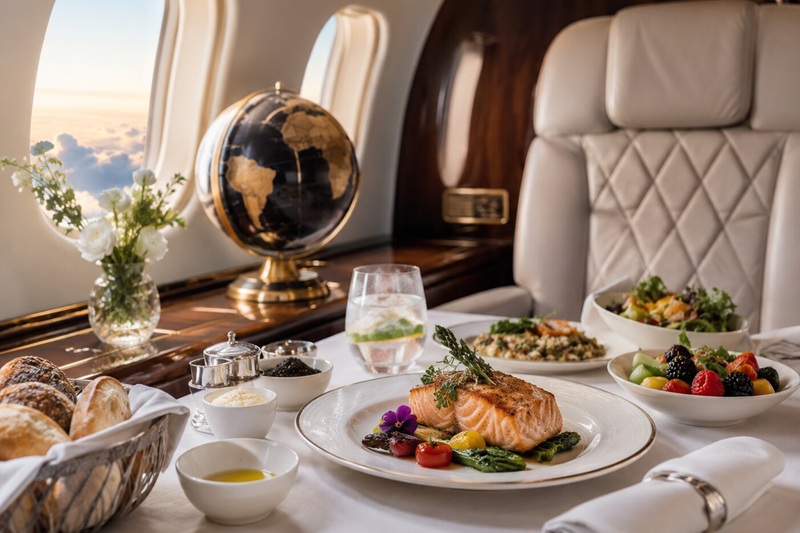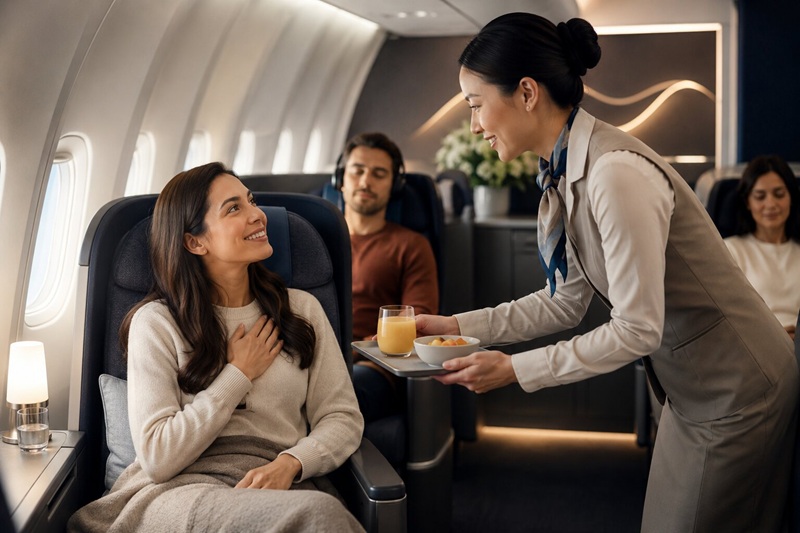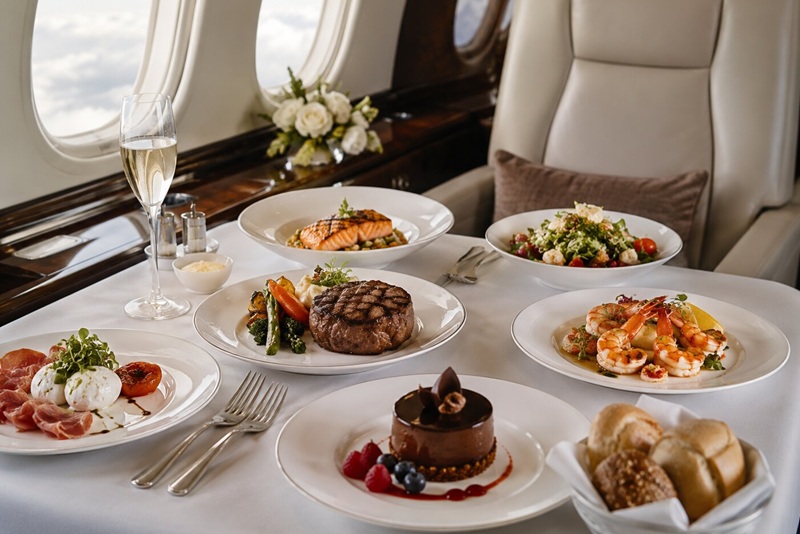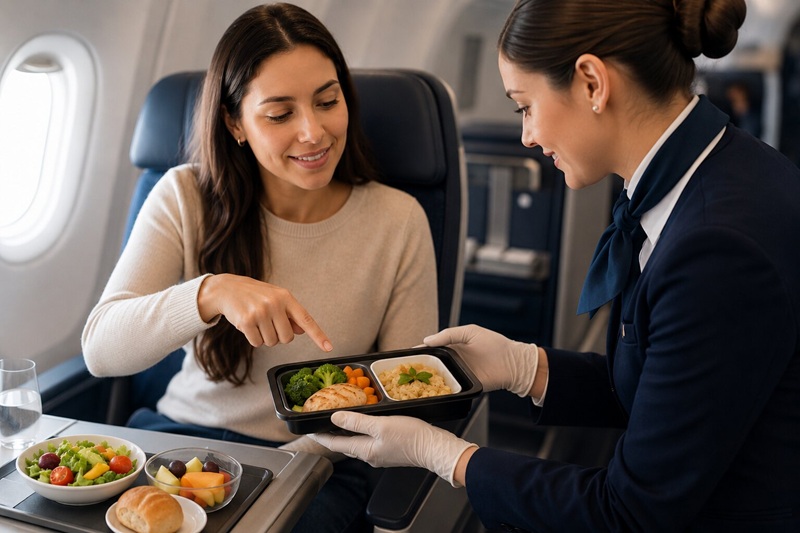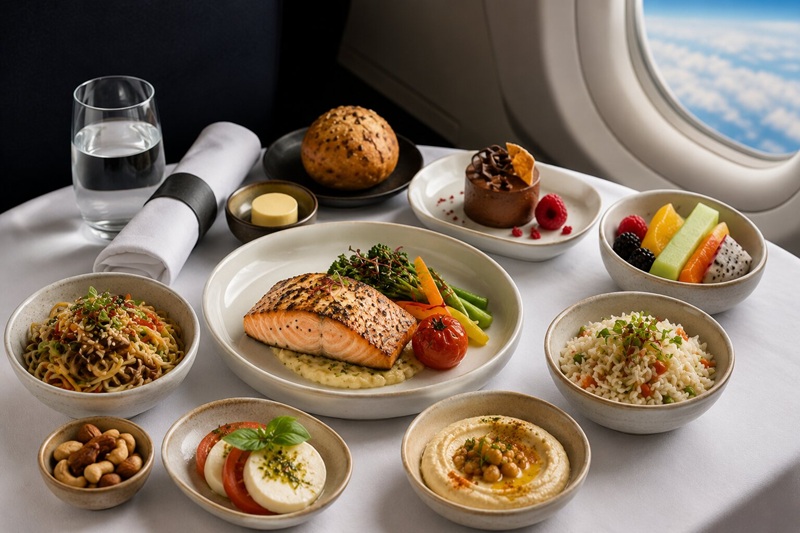
As you board a private jet, everything, including the leather seats and the scent of the freshly cooked food, shows exclusivity. Behind that seamless luxury lies a careful process called inflight catering delivery, which is among the most complicated and time-sensitive processes in the private aviation industry.
In contrast to the commercial airline industry, where meals are standardized and scheduled, in the case of a private jet, the catering is highly personalized. It is built around individual preferences and executed under strict coordination. This blog dives into how inflight catering delivery works at private airports, starting with the client request to the final presentation.
The craft behind every inflight meal
For a VIP catering company, inflight catering is much more than having a meal delivered; it is an orchestration of logistics, culinary innovation and timing. Each order begins with understanding about the passenger, like their preferences, dietary needs, flight duration and cultural aspects. Unlike commercial flights, no two orders are ever alike.
One client may order a five-course French tasting menu, while another may want freshly squeezed juices and vegan sushi rolls. The process starts way before the jet has taken off. From acquiring the best ingredients to managing with the fixed-base operator (FBO), all the steps make sure the food arrives fresh, safe and right on time to the aircraft’s schedule.
Step 1: Taking the order and personalizing the menu
A request is often made by the flight attendant, the broker or the operations manager who is in charge of the flight. They communicate information about the number of passengers, departure time, duration of flight and special requests. At a leading inflight catering company like Dark Wing Inflight, these requests are filled in by a client service department.
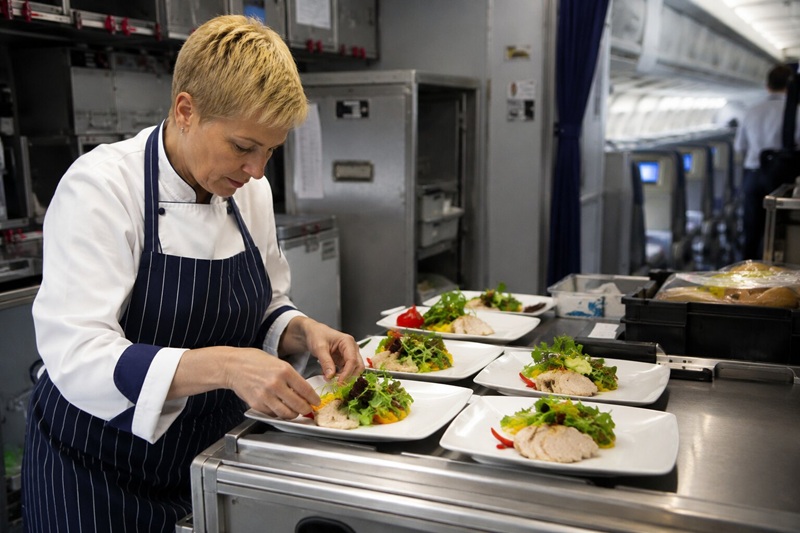
After knowing the preferences, chefs develop a menu based on the request. Since taste buds do not work exactly the same at high altitudes, the chefs consider the air conditions to make sure that all dishes maintain their taste and freshness even after being reheated in the cabin.
Step 2: Choosing fresh ingredients and preparing the dishes
The third step is the choice of ingredients and the preparation of meals. The best VIP inflight caterers rely on reliable suppliers for premium produce, meats, seafood and handcrafted items. All ingredients are inspected on the basis of freshness, hygiene and quality standards.
Sourcing is also about speed in a world where every second matters. Many inflight catering companies have specific procurement services and refrigeration facilities near private airports, which ensures that delivery and preparation take the shortest possible time. After being sourced, the culinary team prepares each dish with restaurant-level accuracy. Food is served in special containers that are designed for reheating and easy service onboard.
Step 3: Smart packaging and quality checks
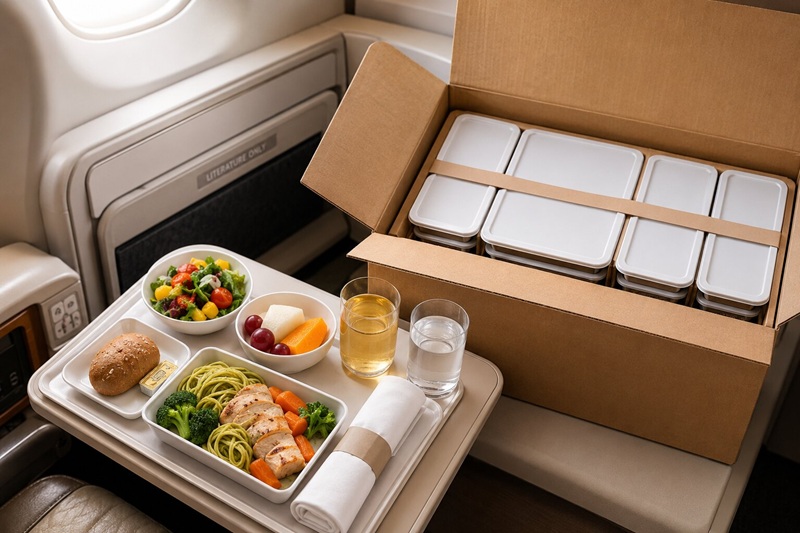
Packaging plays a crucial role in inflight catering. All products should be able to survive transportation, refrigeration and cabin reheating without quality loss. Top private jet catering companies invest in vacuum-sealed containers, insulated boxes and sustainable packaging, which maintain the right temperature of meals. The quality control teams examine all orders prior to delivery.
They check label accuracy, presentation and food safety compliance under HACCP (Hazard Analysis and Critical Control Points) or local civil aviation standards. Food labeling is clearly stated to make it easily identifiable, like “Passenger 1: Gluten-free entrée,” or “Crew: High-protein snack box.”
Since private aviation often involves VIPs, business leaders and celebrities, confidentiality and discretion are paramount. Only authorized personnel handle the order and all the packaging remains sealed until delivery to the aircraft.
Related: Essential Guide to Private Jet Catering: Ensuring Food Safety and Quality
Step 4: Working with the airport and FBO team
As soon as the food has been prepared to be shipped out, the actual logistical task begins- navigating private airport protocols. Unlike commercial terminals, private jets operate through FBOs (Fixed-Base Operators) that manage fueling, catering coordination and ground handling. The catering company contacts the FBO operations team directly to schedule delivery during the departure period.
Meals are typically delivered between 45-90 minutes prior to boarding to maintain freshness. If a flight is delayed, the in-flight catering company will have to adapt, either by keeping the food stored in climate-controlled vehicles or re-cooking certain items.
Security checks are carried out before the delivery vehicle is allowed access into the airside zone. Airport clearance badges are given to trained drivers who follow rigorous access routes. This ensures compliance with the security measures of the airport as well as aviation standards.
Step 5: Safe delivery to the jet
Upon clearance, the catering vehicle drives directly to the aircraft under FBO supervision. The catering crew greets the flight crew (usually the senior flight attendant or the pilot) to deliver the order. The staff cross-checks the order list with each item and makes sure that everything from main courses to condiments and cutlery is taken into consideration.
Delicate food such as desserts or sushi is very carefully handled, often in insulated boxes with ice gels or dry ice to preserve temperature. The flight attendants then take charge and put the food away in a refrigeration unit or warming drawer in the aircraft galley. In bigger jets with full galleys, the meals may also be presented on board, which will offer a five-star restaurant dining experience to passengers.
Also Read: The Ultimate Guide to VIP Inflight Catering Across Aircraft Types
Step 6: Dining in the sky and gathering feedback
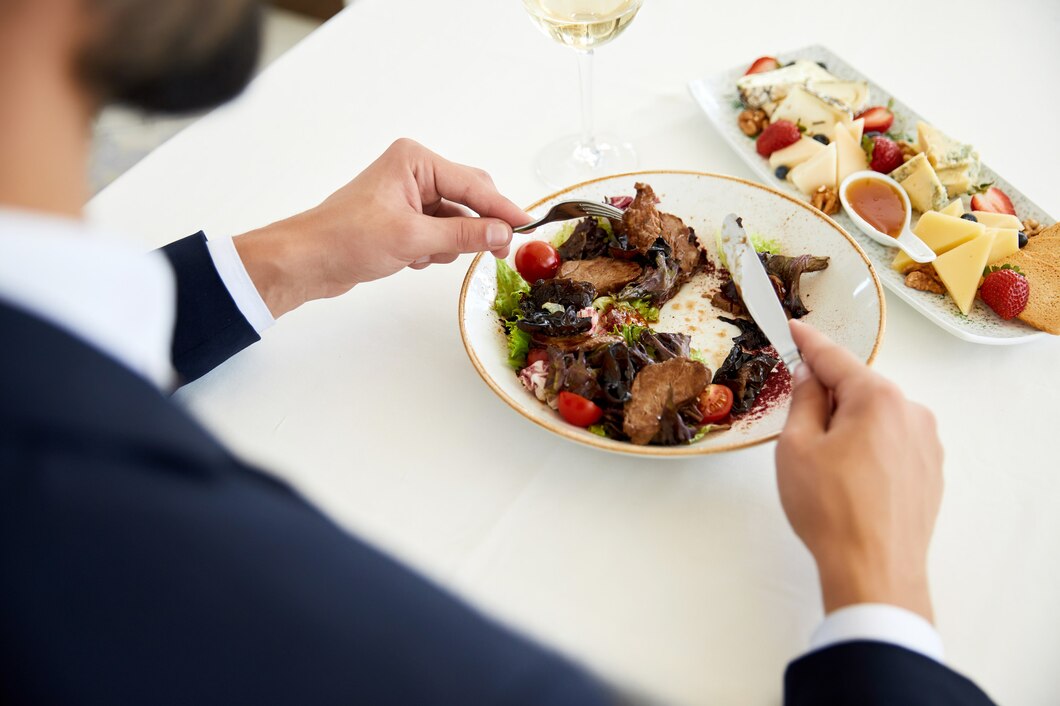
The inflight meal service is a demonstration of the artistry of the catering company. The seamless coordination between ground and air teams comes to life when the passengers enjoy a perfectly plated lobster thermidor or drink freshly squeezed juice above the clouds.
The feedback provided by the crew or passengers becomes crucial after landing. Professional private jet caterers are also keen on getting feedback that would enhance future experience- be it in terms of changing the portion sizes, perfecting flavors or introducing new cuisines.
Inflight catering companies use this feedback system to maintain long-term relationships with private jet operators, charter companies and individual clients who expect consistency every time they fly.
Conclusion
Inflight catering at private airports is a story of coordination, creativity and care. Each action, from receiving a passenger’s preferences to the final handover on the tarmac, shows the commitment of private jet catering companies to deliver perfection. In the case of VIP private jet caterers, the aim is not only to deliver the food but to create an experience that will be as exclusive as the very nature of the private aviation environment.
It is about making sure that all passengers, regardless of where they are flying, feel as though the world’s finest restaurant is traveling with them at 40,000 feet above the ground. Trust Dark Wing Inflight to transform your next flight into a gourmet experience like no other. Contact us today!
Continue Reading: How Dark Wing Brings Superfoods to Your Private Jet Experience